
The Story:
On Monday, October 5, 2026, fresh market calculations released by NutriQuest Business Solutions revealed a dramatic weekly surge in commercial weaner pig profitability, as composite breakeven values climbed $12.25 per head to reach $22.46. The weekly assessment, which integrates industry-representative production expenses with Chicago Mercantile Exchange (CME) lean hog, corn, and soybean meal futures, reflects the financial profile of newly acquired weaned pigs destined to finish and enter commercial slaughter channels in March 2027 based on April 2027 contracts. The sharp turnaround was spearheaded by substantial declines in baseline ration costs, which retreated by $4.36 per head over the prior week, alongside a $0.43 per hundredweight gain in April lean hog futures and a $3.33 per hundredweight improvement in historical basis projections. After several grueling weeks of deep projected feeding deficits, the comprehensive profit potential across the feeding horizon improved by $14.62 per head, effectively erasing the steep operational shortfalls of late September and narrowing the projected net margin to a near-breakeven loss of just $0.57 per head.
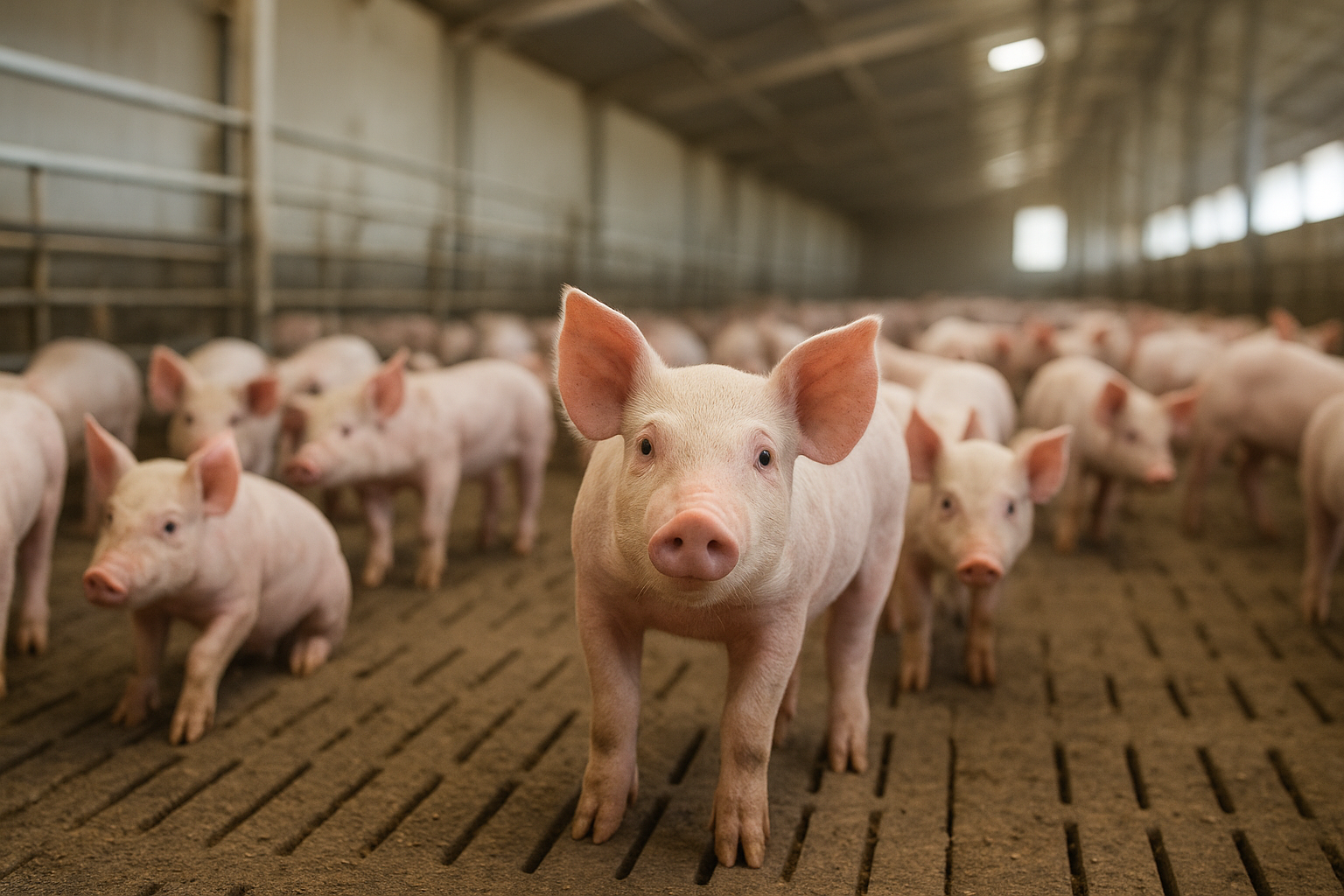
The pricing rebound in weaner breakevens arrived amid robust physical trading liquidity across interior commercial barns, even as negotiated cash purchase prices slipped slightly lower. Cash-traded weaner pig volume reached 100,682 head for the weekly reporting period, marking an impressive 130% of the 52-week moving average and signaling aggressive barn restocking by commercial finishers eager to capitalize on softening fall grain and protein meal values. Spot cash prices for weaners averaged $23.03 per head—down $2.37 from the previous week within a wide negotiated range of $10.00 to $36.00—pegging spot cash at 30.25% of the average six-month lean hog futures curve. Meanwhile, formula-priced weaners contracted under multi-month supply arrangements averaged $42.13 per head, reflecting a $2.02 weekly drop. In the heavier feeder pig category, cash-traded volume came in below historical averages at 11,650 head, with spot feeder pigs fetching an average of $47.79 per head, down $2.80 per head week-over-week as buyers prioritized lighter animals that maximize feed conversion efficiencies against lower projected diet costs.
Crucially, the dynamic between all-in breakeven thresholds and operational space utilization creates starkly bifurcated buying strategies among independent producers and commercial integrators. While the all-in breakeven benchmark of $22.46 accounts for total production costs—including allocated building depreciation, debt service, ventilation utilities, and barn labor—growers operating with uncommitted or empty nursery and finishing capacity operate under a fundamentally distinct economic calculation. For operations facing unavoidable fixed facility overhead, the margin over variable costs establishes an effective purchasing ceiling of $48.57 per head. With negotiated cash prices currently trading at $23.03, finishers possessing available barn space can generate substantial cash-flow contributions of more than $25.00 per head over variable feed, health, and transport expenses. This wide spread between spot acquisition costs and variable-cost breakevens is accelerating competition for open nursery pens across Iowa, southern Minnesota, and eastern North Carolina, transforming unhedged feeding capacity into an active driver of regional animal placements.
Why It Matters:
For commercial feed manufacturers, grain merchandisers, and animal nutritionists, this $4.36 per head drop in feed expenses represents the primary catalyst revitalizing swine feeding margins and resetting ingredient demand expectations across the Corn Belt. Swine nursery and grow-finish diets represent the single largest volume and revenue segment for independent and cooperative feed mills, requiring hundreds of pounds of complete feed per pig marketed. The reduction in projected feeding costs directly mirrors the downward trajectory of interior cash corn bids and crushing-plant soybean meal offers, as early Midwest harvest progress and expanding processor crush capacities ease ingredient basis across key feeding corridors. When finished hog margins approach breakeven territory, commercial producers and contract growers immediately abandon defensive flock and herd management tactics, opting instead to optimize target slaughter weights, extend barn dwell times, and maintain peak nutrient density across grower-finisher feeding phases. This stabilization in producer margins preserves essential mill grind schedules, preventing the premature liquidation of feeding inventories and sustaining steady mill demand for bulk energy grains and vegetable proteins.
Beyond macro commodity grains, the preservation of finishing margins directly impacts high-margin micro-ingredient procurement, synthetic amino acid consumption, and specialty feed additive programs. Modern high-efficiency swine rations rely on precision formulation to minimize excess nitrogen excretion while maximizing lean muscle accretion, requiring dense inclusions of synthetic L-lysine, DL-methionine, L-threonine, and L-tryptophan alongside exogenous phytase enzymes and gut health acidifiers. When feeding economics plunge into deep negative territory, nutritionists are frequently pressured by farm management to adopt austerity rations—slashing additive packages, stripping out specialty health technologies, and stretching amino acid margins to bare nutritional floors. The sudden $14.62 improvement in projected profit potential removes immediate pressure for drastic diet reformulations, enabling commercial compounders and premix manufacturers to maintain standard amino acid fortification levels and safeguard proprietary vitamin-trace mineral blends. Furthermore, with empty-barn operators enjoying a $48.57 margin over variable costs, aggressive barn stocking guarantees uninterrupted throughput for early-stage nursery micro-pellets and creep feeds, which carry the highest commercial margins within the entire feed manufacturing portfolio.
What to Watch:
Moving through mid-October 2026, feed ingredient buyers, commodity risk managers, and swine procurement directors must scrutinize the ongoing harvest pace and interior basis dynamics across the Western and Eastern Corn Belt. While favorable autumn field conditions are accelerating combine runs and expanding local elevator supplies, basis spreads between terminal river export points and interior feed mill dumping pits remain sensitive to regional logistics and river water levels. Feed buyers should monitor whether the current softening in cash corn and soybean meal translates into attractive extended coverage windows for first-quarter 2027 delivery, allowing mills to lock in low-cost feed baselines before seasonal export demand firms interior cash values. Concurrently, market participants must track the CME April 2027 lean hog futures contract, which provided critical support to this week's breakeven surge; any macroeconomic or consumer demand headwinds that erode spring hog futures could quickly erase the recent margin gains, particularly if cash weaner prices begin catching up to formula values.
Simultaneously, feed industry professionals should track shifts in weekly cash weaner transaction volumes and nursery health indicators as heavy animal flows enter commercial grower networks. With cash trading volumes already pacing 30% above the 52-week norm, the rapid concentration of young stock from multiple breeding origins raises disease biosecurity risks across shared transport and sorting facilities. Feed mills and toll compounders must ensure that bulk delivery trucks adhere strictly to rigorous thermal disinfection and truck-wash protocols to avoid circulating endemic pathogens such as Porcine Reproductive and Respiratory Syndrome (PRRS) or Porcine Epidemic Diarrhea Virus (PEDV). Additionally, nutritionists should watch for potential adjustments in nursery formula pricing; if spot weaner pigs continue to clear well below formula contracts, integrators may renegotiate formula indexing terms or shift greater proportions of their pig placement schedules into open-market spot procurement, creating localized volatility in nursery feed delivery routes and bulk feed manufacturing schedules.
The Bottom Line
The $12.25 per head jump in weaner pig breakevens to $22.46 marks a pivotal turning point for the U.S. swine feeding sector, delivering immediate economic relief driven by a $4.36 per head drop in ration expenses, firming April hog futures, and improved basis expectations. With negotiated cash pigs changing hands at $23.03 and uncommitted barn space offering a commanding $48.57 margin over variable costs, producers possess powerful financial incentives to restock empty pens and maintain full feeding capacity heading into the 2026/2027 marketing campaign. For feed manufacturers, ingredient suppliers, and grain originators, this margin recovery stabilizes interior feed grind, protects specialty amino acid and additive inclusion rates, and averts the demand destruction of herd liquidations. Feed industry leaders should capitalize on current harvest basis weakness to secure strategic ingredient coverage, maintain strict biosecurity across feed delivery logistics, and align commercial milling operations with robust winter hog feeding demand.