
The Story:
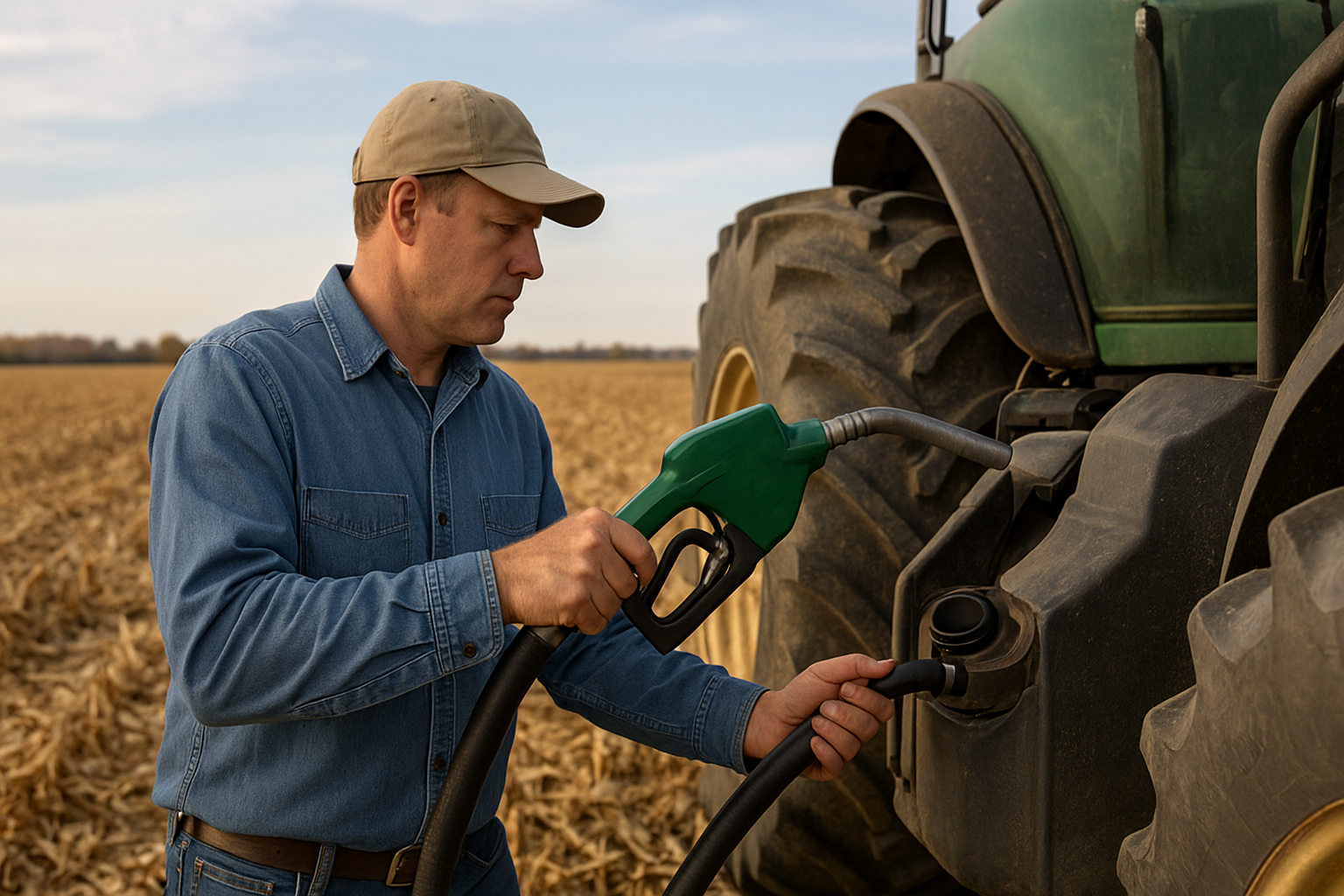
On Tuesday, October 20, 2026, the U.S. Department of Agriculture (USDA), in coordination with President Donald Trump and Agriculture Secretary Brooke Rollins, officially unveiled the Harvest Fuel Relief (HFR) program—an emergency $8 billion federal assistance package funded through the Commodity Credit Corporation (CCC) Charter Act. Administered directly by the USDA's Farm Service Agency (FSA), the initiative delivers rapid, one-time direct payments to American agricultural producers navigating extraordinary harvest-season diesel fuel expenses, heightened machinery operating costs, and persistent agricultural input inflation. Modeled structurally on the earlier Farmer Bridge Assistance (FBA) framework, the program eliminates individual fuel receipt verification in favor of an objective, formulaic loss calculation. Payments will be determined using a national modeled loss average that integrates FSA-certified planted acreage, Economic Research Service (ERS) production cost benchmarks, and the latest October World Agricultural Supply and Demand Estimates (WASDE) price and yield baselines. Crucially for diverse operations, the program does not mandate crop insurance participation, allowing immediate eligibility across row crop producers, specialty crop growers, and commercial livestock enterprises.
The rollout of the $8 billion program comes at the peak velocity of the 2026 U.S. autumn harvest, with national corn harvest advancing past 65 percent and soybean harvest exceeding 64 percent completion across core Midwest growing regions. While favorable, dry fieldwork conditions have enabled producers to operate at an accelerated pace, running heavy combine fleets, high-horsepower grain-cart tractors, on-farm drying systems, and commercial semi-truck transport has generated massive, front-loaded operating expenditures. Off-road dyed diesel prices have remained stubbornly elevated relative to falling commodity values, creating a severe working-capital squeeze for growers who are simultaneously absorbing cash corn bids that have softened toward $4.35 per bushel and cash soybean prices struggling near the $10.00 mark. Leading agricultural advocacy organizations, including the American Farm Bureau Federation (AFBF) and the National Corn Growers Association (NCGA), had actively petitioned the administration for administrative liquidity relief as high commercial interest rates and tightening agricultural credit lines placed unprecedented strain on family farm balance sheets entering the fourth quarter.
Under the regulatory timeline established by USDA and Secretary Rollins, commodity-specific payment schedules for Title I crops—including corn, soybeans, sorghum, wheat, and feed barley—will be officially published in November 2026, with direct electronic disbursements targeted to begin shortly thereafter. Specialized payment formulas for non-Title I producers, including commercial forage growers, specialty crop operations, and livestock feeders facing severe transportation surcharges, will be released in coordinated subsequent tranches. By utilizing the statutory borrowing authorities of the CCC Charter Act, the executive branch bypasses protracted congressional negotiations surrounding the delayed 2026 Farm Bill, delivering immediate liquidity directly into rural banking and production channels. USDA officials emphasized that the strategic objective of the program is to fortify agricultural solvency, prevent distressed asset liquidations, and ensure that commercial grain origination and storage infrastructure remain operationally viable as massive harvest volumes move through country elevators, commercial river terminals, and regional processing facilities.
Why It Matters:
For the commercial animal feed industry, livestock integrators, and grain origination desks, this $8 billion federal liquidity injection fundamentally transforms harvest-season commercial grain marketing behavior and interior basis dynamics. Under normal financial conditions, severe harvest cash-flow deficits compel cash-strapped grain farmers to make substantial 'off-the-combine' spot cash sales to local commercial elevators, feed mills, and soybean processing plants to satisfy immediate fuel invoices, seed notes, and machinery repair bills. This seasonal dumping typically floods regional spot markets, depressing interior basis bids to deep harvest discounts and allowing livestock feeders, swine integrators, and broiler complexes to secure inexpensive fourth-quarter and first-quarter feed grain inventories. However, by infusing $8 billion of non-repayable direct liquidity onto farm balance sheets, the Harvest Fuel Relief program removes the acute necessity for distress selling. Growers now possess the liquid working capital necessary to cover immediate harvest diesel expenses, finance on-farm propane drying costs, and lock their grain securely inside commercial and on-farm storage bins to await post-harvest price recoveries.
Consequently, commercial feed compounders, poultry integrators, cattle feedlots, and pork production systems that have been intentionally delaying forward feed ingredient purchases in anticipation of deepening harvest price weakness must swiftly reevaluate their procurement schedules. With farm-gate financial pressure relieved, country elevators and commercial grain merchandisers will find interior grain origination substantially stiffer throughout late October and November. To incentivize farmers to release physical bushels of corn and soybeans from storage bins, interior processors and commercial feed mills will be compelled to raise spot basis bids, narrowing traditional harvest discounts. Furthermore, this dynamic directly impacts downstream feed manufacturing formulations: as local cash grain supplies tighten and basis firms, feed nutritionists must closely monitor the relative cost-of-gain spreads between whole corn, soybean meal, corn distillers dried grains with solubles (DDGS), and wheat middlings. Commercial livestock operations that fail to recognize this supply-retention shift risk having to chase escalating cash basis bids during late fourth-quarter feed manufacturing cycles.
What to Watch:
Over the next two to four weeks, feed procurement directors, grain merchandisers, and agricultural risk managers must track the Farm Service Agency's impending publication of commodity-specific payment schedules and county-level allocation rates. Feed buyers should scrutinize whether the payment matrix heavily favors specific row crops—such as corn versus soybeans—or establishes tiered payment caps that could influence regional marketing timing across core production states like Iowa, Illinois, Minnesota, and Indiana. Merchandisers must closely monitor country elevator commercial basis trends and daily delivery pace; if interior basis bids strengthen counter-seasonally across the central Corn Belt over the coming weeks, it will provide clear empirical confirmation that the $8 billion liquidity cushion is effectively locking grain in farm bins and curbing elevator throughput. Grain buyers should also observe whether commercial river terminals along the Mississippi and Illinois rivers are forced to raise barge-loading basis to pry grain away from on-farm storage.
Simultaneously, livestock and poultry nutritionists and feed ingredient buyers must monitor downstream processor pricing responses across complementary protein and fiber markets. If whole grain corn origination slows, ethanol dry-grind plants may be forced to bid aggressively for local corn, simultaneously adjusting their spot FOB pricing for ethanol co-products, notably wet and dry DDGS and corn gluten feed. Feed procurement managers should assess whether DDGS spot prices—which recently retreated to $193 per ton—maintain their discount relative to corn or begin rebounding as ethanol grind margins tighten. Additionally, feed buyers must evaluate how soybean processors respond to farmer holding behavior, watching whether soybean crush margins compress and whether crushers attempt to pass higher soybean origination costs through to domestic soybean meal contracts. Managing risk across forward basis contracts, micro-ingredient inclusions (synthetic lysine, methionine, threonine), and bulk feed grain coverage will be paramount as the market absorbs this massive federal intervention.
The Bottom Line
The rollout of the $8 billion Harvest Fuel Relief program delivers an unprecedented injection of Commodity Credit Corporation liquidity directly to American crop and livestock producers, providing an immediate financial buffer against elevated harvest diesel expenses and compressed commodity prices. For commercial feed compounders, poultry integrators, swine operations, and beef cattle feedlots, this policy action effectively eliminates distressed farm-gate grain dumping, stiffening farmer holding power and creating an artificial floor beneath interior cash corn and soybean meal basis. Feed procurement executives and risk managers must immediately pivot away from expectations of prolonged harvest basis erosion: rather than floating spot cash needs into November, operations should proactively evaluate forward ingredient coverage, lock in favorable regional basis baselines before farm bins close, and dynamically balance least-cost rations across corn, DDGS, and crystalline amino acids to insulate livestock production margins against firming fourth-quarter feed grain costs.