
The Story:
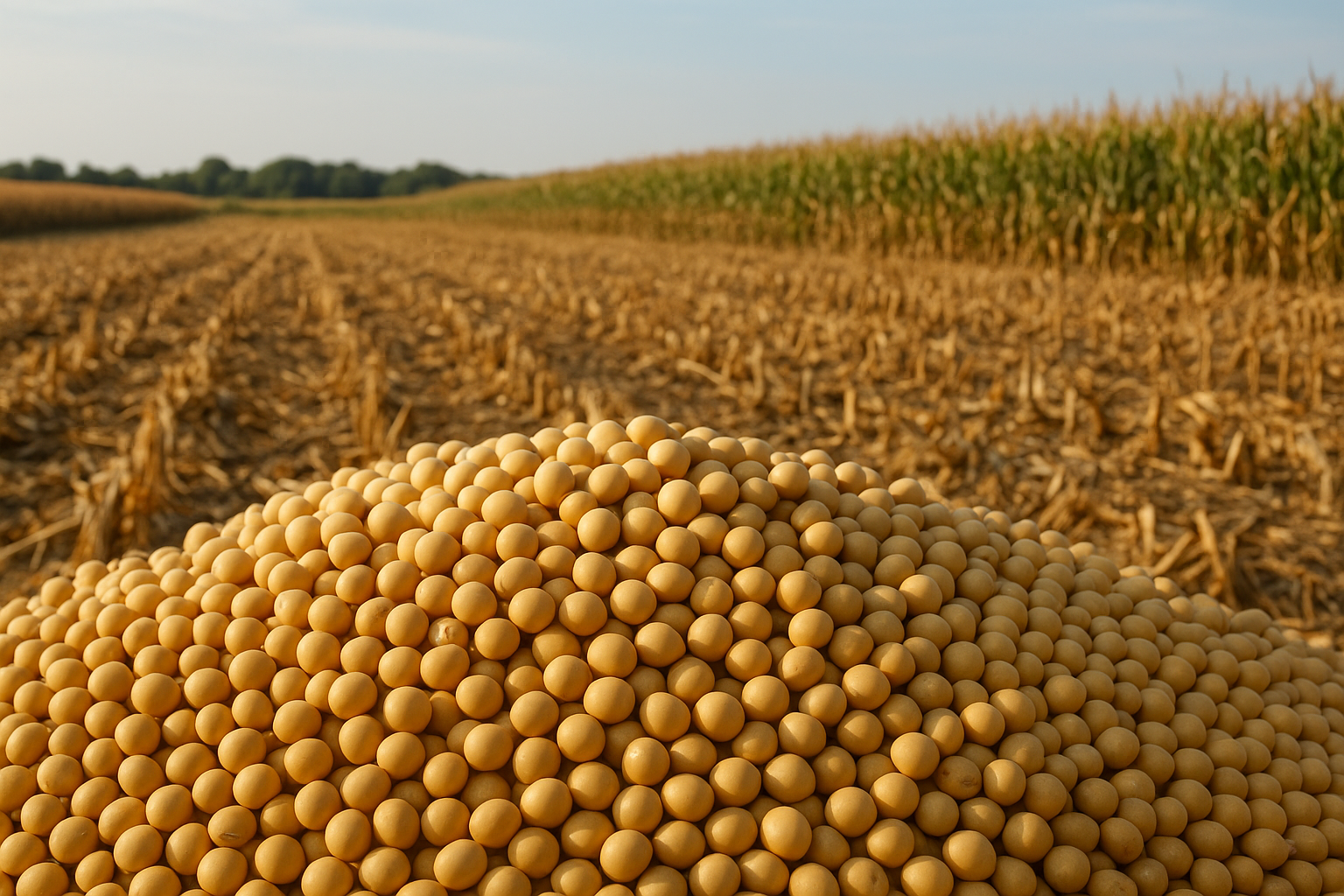
On Friday morning, November 6, 2026, the United States Department of Agriculture's Foreign Agricultural Service (USDA FAS) officially announced fresh private export sales of major agricultural commodities under its daily reporting system, confirming that commercial exporters booked 136,000 metric tons (approximately 5.0 million bushels) of U.S. soybeans for delivery to China and 101,000 metric tons (approximately 4.0 million bushels) of U.S. corn destined for unknown destinations during the 2026/2027 marketing year. The morning transaction disclosures—mandated whenever private commercial exporters sell 100,000 metric tons or more of a single commodity to a single destination in a single business day—reinforce a persistent wave of late-autumn international grain and oilseed purchases that is rapidly siphoning off new-crop supplies from domestic river terminals and deepwater export elevators. The announcement provides immediate evidence that international buyers, led by China's state-owned and commercial crushers, are capitalizing on softened post-harvest futures to secure physical row crops, maintaining aggressive import momentum even as the global agricultural trade navigates volatile foreign exchange rates and evolving trade policy dynamics heading into 2027.
This latest round of flash export bookings arrives immediately on the heels of several massive international procurement commitments, highlighting robust global appetite for North American feedstuffs as the 2026 harvest reaches its final stages. Earlier in the week, USDA confirmed a historic flash sale of 1.73 million metric tons of corn to Mexico split across the 2026/2027 and 2027/2028 marketing years, while Thursday's weekly USDA export sales report logged net commercial corn sales of 1.295 million metric tons and steady soybean sales to European and Asian buyers. The sustained export clearance is providing critical logistical relief to interior commercial grain elevators, shuttle-train loading hubs, and river terminals across the Corn Belt that have faced intense physical congestion following an exceptionally fast combining season. With dry autumn weather allowing Midwestern farmers to harvest over 74 percent of the corn crop and more than 90 percent of the soybean crop ahead of historical averages, commercial handling facilities from Iowa to Ohio have struggled to absorb record field yields without building substantial temporary ground piles and imposing strict elevator delivery allocations.
On the Chicago Board of Trade (CBOT), Friday's export sales announcement helped stabilize commodity derivatives into the weekend, anchoring benchmark December corn futures near $4.41 per bushel while January soybean futures held steady near $11.88 per bushel and December soybean meal traded in a defensive band around $317.00 per short ton. The steadying export tone injects vital equilibrium into a market that had absorbed heavy institutional selling earlier in the week following private analytical forecasts—most notably StoneX Group lifting its 2026 U.S. corn production estimate to a staggering 16.203 billion bushels on a record 183.1 bushels-per-acre yield alongside a 4.725-billion-bushel soybean crop. With commercial grain merchandisers and institutional trading desks aggressively positioning ahead of the USDA's pivotal November World Agricultural Supply and Demand Estimates (WASDE) and Crop Production reports scheduled for release on Tuesday, November 10, the continuous cadence of export clearances demonstrates that heavy domestic supplies are encountering active price-elastic demand from international feed millers and livestock producers.
Why It Matters:
For commercial animal feed manufacturers, integrated swine and poultry producers, and cattle feedlot operators across North America, Friday's export sales disclosures define the physical price floor for core ration ingredients heading into the winter feeding quarter. Feed compounding represents the single largest variable cost in animal production, accounting for 65 to 70 percent of total live production expenses in commercial broilers, market hogs, and fed cattle. While abundant harvest supplies and record yields have significantly depressed cash grain basis across the interior Midwest—leaving interior country elevator bids hovering between $4.18 and $4.26 per bushel—the persistent pull of export sales through the Center Gulf and Pacific Northwest (PNW) prevents an outright collapse in interior cash values. Commercial feed mills operating in rail-deficit feeding territories across the Southeast, North Carolina, and the Southern Plains must recognize that export corridors are competing aggressively for the same unit-train grain allocations, ensuring that local basis bids will firm quickly once the initial wave of post-harvest country elevator deliveries subsides.
Simultaneously, China's sustained booking of U.S. soybeans directly reinforces the operating economics of domestic oilseed processing, which underpins the availability and pricing of high-protein soybean meal for domestic livestock diets. Active export commitments keep domestic crush plants running near peak capacity utilization, generating a steady, abundant supply of solvent-extracted 47.5-to-48-percent crude protein soymeal at historically attractive price levels near $316 to $318 per ton. In contrast, dry-mill ethanol byproduct economics remain structurally dislocated: distillers dried grains with solubles (DDGS) spot prices continue to trade near $180 to $185 per ton, creating an extraordinarily wide and unfavorable price spread relative to $4.40 cash corn ($157 per ton). Consequently, swine and poultry nutritionists are leveraging abundant $317 soymeal and cheap corn to aggressively formulate DDGS down to minimal inclusion rates while optimizing synthetic amino acids—including crystalline L-lysine hydrochloride, DL-methionine, and L-threonine—to maximize feed conversion efficiency and protect producer margins against compressed livestock prices and soft wholesale meat cutouts.
What to Watch:
Over the coming four days, agribusiness executives, feed procurement directors, and livestock risk managers must focus squarely on the USDA's upcoming November WASDE and Crop Production reports, scheduled for official release on Tuesday, November 10, 2026, at 12:00 PM EST. Procurement desks must closely scrutinize whether federal balance sheet analysts follow private forecasters by revising national corn yield higher from the October estimate of 181.2 bushels per acre toward StoneX's 183.1 bpa projection, and whether federal economists simultaneously raise 2026/2027 U.S. export projections to account for this week's massive Mexican commitments and continuous daily flash sales. Desks must also evaluate whether the USDA adjusts projected domestic livestock feed and residual disappearance to reflect autumn slaughter runs and high cattle-on-feed placements, which will dictate whether projected 2026/2027 corn ending stocks surpass 2.1 billion bushels or remain constrained by robust aggregate consumption.
Concurrently, feed manufacturing logistics directors must track freight performance and export terminal throughput across primary bulk transport arteries through late November and December. Desks should monitor downbound Mississippi River barge freight rates, which have recently settled near $23.60 per ton, watching whether lower river water levels or seasonal winter icing slow the transit of grain barges to New Orleans export terminals and temporarily strand supplies in the interior. In parallel, cross-border Class I rail corridors operated by Union Pacific, BNSF Railway, and CPKC should be monitored for equipment velocity and secondary car premiums as shipments under the 1.73-million-ton Mexican corn purchase ramp up alongside export shuttle movements to PNW ports. With benchmark CBOT corn anchored near $4.41 per bushel and soybean meal holding near $317 per ton, feed purchasing directors should utilize current post-harvest market stability to book physical feed grain requirements through the first quarter of 2027 before seasonal winter weather disrupts transport corridors and tightens regional basis.
The Bottom Line
Friday morning's USDA confirmation of private export sales totaling 136,000 metric tons of soybeans to China and 101,000 metric tons of corn to unknown destinations proves that competitive U.S. price levels are successfully stimulating vital international demand to absorb near-record harvest production. While the relentless pace of export clearances establishes a definitive floor that prevents interior cash grain basis from collapsing further, benchmark CBOT corn holding near $4.41 per bushel and solvent-extracted soybean meal anchored at $317 per ton provide North American feed compounders and livestock producers with an exceptional procurement environment ahead of Tuesday's November WASDE report. Agribusiness operators, swine integrators, poultry complexes, and cattle feedlots should capitalize on current harvest liquidity by locking in physical grain and protein needs through the first quarter of 2027, maintaining rigorous quality verification at the mill receiving grate, and optimizing ration density with least-cost corn, low-cost soymeal, and precision amino acids to safeguard operating margins through the winter feeding season.