
The Story:
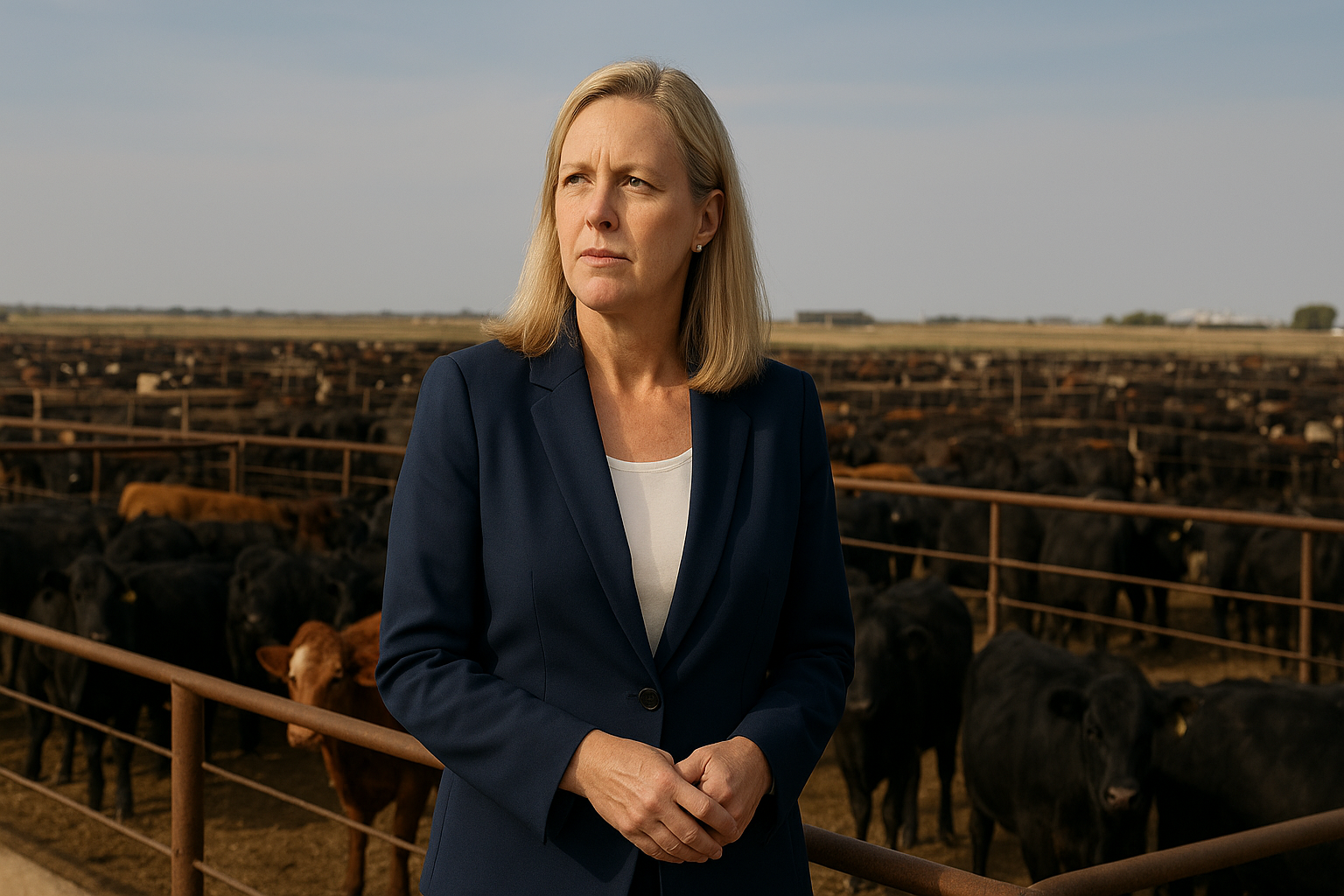
On Wednesday, October 21, 2026, United States Secretary of Agriculture Brooke L. Rollins officially announced a major structural update to the USDA Agricultural Marketing Service's (AMS) Livestock Mandatory Reporting (LMR) system, establishing an expanded regional cash cattle reporting series to restore market transparency across the domestic feeding heartland. Beginning with afternoon reports published on Monday, October 26, 2026, AMS will introduce an additional regional cash cattle report combining fed cattle transaction data from five foundational cattle feeding states: Colorado, Texas, New Mexico, Oklahoma, and Kansas. The targeted federal policy intervention directly addresses a multi-decade collapse in negotiated cash cattle trade, which has plummeted from over 50 percent of all commercial slaughter cattle transactions in 2005 to under 18 percent by 2025. Because major commercial meatpackers have steadily shifted fed cattle procurement toward formula-based purchasing, forward contracts, and Alternative Marketing Agreements (AMAs), the physical volume of openly negotiated cash transactions has repeatedly fallen below the USDA's strict '3/70/20' confidentiality disclosure thresholds. These confidentiality constraints have triggered chronic reporting blackouts across the Southern Plains—frequently leaving feedyard operators, commodity merchandisers, and livestock producers without official, published price benchmarks during critical weekly marketing windows.
Under the newly structured LMR framework, the five-state regional aggregation synthesizes existing packer-reported transaction data already submitted under statutory mandatory reporting requirements, establishing a robust, commercially representative pricing pool without imposing new administrative burdens or compliance costs on covered packers or feedyards. The regulatory reform directly advances the Trump Administration's Executive Orders on 'Supporting American Ranchers' and 'Promoting Fair Competition in Livestock Markets and Expanding Market Access for American Meat Producers.' The update arrives at a historically critical juncture for the domestic cattle feeding sector, as the five-area weekly average negotiated cash cattle price trades at elevated marks near $224 per hundredweight ($/cwt) live, while average steer dressed carcass weights hover near all-time records of 935 to 940 pounds. While individual state transaction volumes across Texas, Oklahoma, and New Mexico have frequently been too thin to clear federal non-disclosure parameters, consolidating Colorado, Kansas, and the Southern Plains into a single contiguous regional reporting zone guarantees that negotiated cash trade volumes consistently surpass federal confidentiality hurdles, delivering uninterrupted daily and weekly price discovery to feedyard risk managers and agricultural lenders.
The structural overhaul of LMR cash reporting addresses an existential pricing paradox in the modern livestock economy: while negotiated cash transactions now represent less than one-fifth of physical slaughter volume, they serve as the foundational base price upon which the overwhelming majority of formula-priced, grid-based, and forward-contracted fed cattle are settled. When thin cash trade leads to regional data suppression, feedyards and regional processors are forced to look outside their geographic trade zones—relying on distant Midwest benchmarks such as Nebraska or Iowa-Minnesota that fail to reflect Southern Plains freight costs, local basis differentials, or specific feed conversion economics. For commercial cattle feeders, independent ranchers, and feedyard managers overseeing more than 6.5 million head of cattle on feed across the Southern Plains and Western feeding corridors, the introduction of the five-state report provides an essential institutional safeguard against asymmetric packer procurement leverage, reinstating credible, transparent negotiated market discovery across the nation's most concentrated feeding belt.
Why It Matters:
For commercial animal feed manufacturers, grain merchandisers, and feedyard consulting nutritionists, transparent fed cattle pricing is fundamentally tied to feedlot margin solvency, cattle placement velocity, and regional grain disappearance. In the major cattle feeding hubs of Texas, Kansas, and Colorado, commercial feedyards operate as high-volume, capital-intensive manufacturing centers where finishing rations account for 70 to 80 percent of total yard operating costs outside of the feeder cattle purchase. A typical 50,000-head commercial feedyard consumes roughly 1,250 to 1,400 short tons of complete finishing ration every single day, formulating dense, high-energy diets centered on steam-flaked corn (typically 65 to 70 percent of dry matter inclusion), wet distillers grains with solubles (WDGS, 15 to 20 percent), chopped roughage, and targeted liquid mineral-vitamin suspensions. When fed cattle price discovery breaks down due to reporting blackouts, feedlot executives face severe unhedged basis risk and cash flow uncertainty, leading to defensive feeder cattle bidding, deferred cattle marketing, or extended days on feed that distort daily grain consumption patterns. Reliable, continuous cash cattle benchmarks enable feedyard managers and feed procurement desks to accurately calculate marginal cost of gain against real-time cattle values, lock in forward grain basis, and optimize intake curves without the threat of unexpected packer grid discounting.
At the nutritional formulation desk, clear regional fed cattle pricing directly influences dietary energy density adjustments, co-product substitution strategies, and days-on-feed projections as feedlots manage record carcass weights alongside shifting commodity markets. With new-crop cash corn softening to $4.35 to $4.60 per bushel across interior elevators and Midwest spot DDGS adjusting toward $190 to $195 per ton, commercial feedlot cost of gain has retreated significantly from prior-year highs, providing strong financial incentives to feed cattle to maximum finish and pursue higher quality grade premiums. However, holding heavy cattle on finishing rations requires exceptional nutritional discipline, as prolonged days on feed escalate maintenance energy overhead, lower feed efficiency ratios, and increase the risk of subacute ruminal acidosis. Nutrition directors rely heavily on predictable slaughter marketing timetables to calibrate dietary net energy for maintenance (NEm) and net energy for gain (NEg), fine-tune steam-flaking flake density, and balance distillers co-product ratios against supplemental roughage. By delivering reliable regional price signals, the expanded LMR report allows feed manufacturers and nutritionists to align feeding duration with actual market incentives, sustaining robust daily corn and co-product disappearance across Southern Plains feed mills.
What to Watch:
Over the coming weeks, commercial feedlot executives, feed mill managers, and livestock commodity analysts must closely monitor the formal rollout of the new five-state regional report starting Monday afternoon, October 26, 2026. Merchandisers and risk managers should verify whether the combined reporting zone completely eliminates confidentiality suppression across daily afternoon releases and weekly summaries, particularly during periods of light early-week trade. Procurement directors should track the price spread between the new Colorado-Texas-New Mexico-Oklahoma-Kansas regional benchmark and the traditional Northern feeding region (Nebraska and Iowa-Minnesota). Historically, Northern dressed prices have carried a $2.00 to $4.00/cwt premium over Southern live trade due to regional carcass yield differences and intense local packer competition; watching how this regional spread behaves under the consolidated report will reveal whether Southern Plains feedyards can leverage enhanced market visibility to narrow the regional margin discount and capture fairer value for finished cattle.
Simultaneously, feed procurement directors, grain elevator managers, and feedlot risk teams must monitor how restored price transparency affects autumn feeder cattle placements and forward feed ingredient contracting across the High Plains. With the USDA Cattle on Feed report scheduled for release on Friday, October 23, industry participants should evaluate whether strong fed cattle values ($224/cwt live) combined with lower harvest feed costs trigger accelerated placements of yearling calves into commercial yards. Feedyards should utilize the improved price clarity to lock in winter grain supplies, securing physical delivered corn basis and forward distillers grains contracts through the first quarter of 2027 before winter freeze restrictions and rail tariffs escalate. Furthermore, feed manufacturers and commodity groups should monitor congressional reactions, as lawmakers and cattle associations evaluate whether this administrative LMR expansion sufficiently satisfies industry demands for competitive transparency or accelerates calls for statutory cash trade mandates in upcoming Farm Bill debates.
The Bottom Line
The USDA's rollout of an expanded five-state regional cash cattle report uniting Colorado, Texas, New Mexico, Oklahoma, and Kansas marks a vital policy breakthrough for livestock market transparency, effectively dismantling the chronic confidentiality blackouts that have long obscured negotiated price discovery for Southern Plains feedyards. For commercial animal feed manufacturers, grain merchandisers, and cattle nutritionists, restoring reliable price transparency provides the economic certainty required to manage feedlot margin volatility, calibrate feeding timetables, and optimize high-energy finishing diets consuming thousands of tons of steam-flaked corn, distillers co-products, and essential supplements every day. As the new reporting series takes effect on October 26 alongside favorable harvest grain basis, feedyard operators and nutrition directors should leverage transparent fed cattle benchmarks to lock in Q1 2027 feed ingredient coverage, align energy-dense rations with clear market exit signals, and reinforce operational profitability across the commercial cattle feeding complex.