
The Story:
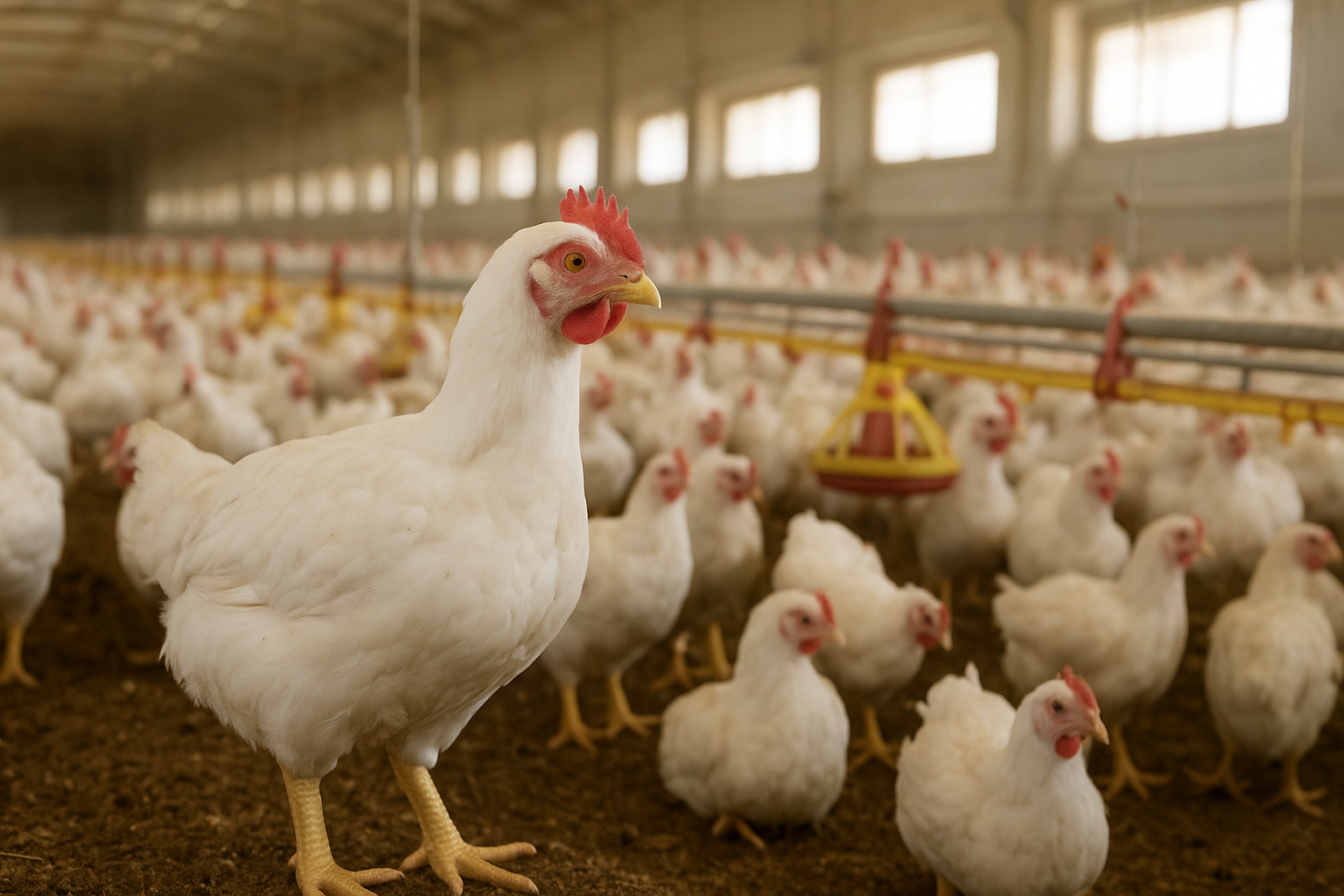
On Friday, October 16, 2026, the U.S. Department of Agriculture officially published its updated poultry supply and demand outlook, significantly increasing production forecasts across the domestic broiler, commercial turkey, and table egg industries for both 2026 and 2027. According to detailed data reported from the USDA’s World Agricultural Supply and Demand Estimates (WASDE) and the Livestock, Dairy, and Poultry Outlook, federal analysts lifted projected 2026 U.S. broiler meat production by 100 million pounds from September to 49.72 billion pounds. This upward revision reflects accelerating weekly commercial slaughter runs, expanding hatchery egg sets, and notably heavier average live bird weights at primary processing plants across the Southeast and mid-Atlantic broiler belts. For 2027, the USDA raised its broiler output projection by an additional 150 million pounds to a record 50.15 billion pounds, signaling sustained multi-year volume expansion. Commercial integrators have maintained high processing chain speeds to satisfy robust domestic supermarket meat-case demand and brisk export commitments to Caribbean and Latin American destinations, confirming that the broiler sector is operating at peak physical throughput heading into the final quarter of the year.
In parallel with the broiler expansion, the USDA raised production estimates for commercial turkeys and table eggs, demonstrating a comprehensive flock recovery across North American poultry production complexes. National turkey meat production for 2026 was adjusted upward by 35 million pounds to 5.134 billion pounds, with 2027 output projected to advance further to 5.18 billion pounds as commercial grow-out operations rebound from prior disease-related depopulations and respond to elevated whole-bird market prices averaging approximately 175.5 cents per pound. Concurrently, commercial table egg production forecasts were raised by 20 million dozen to 9.16 billion dozen for 2026, with the 2027 outlook climbing to 9.32 billion dozen as commercial egg producers aggressively repopulate layer barns and expand productive hen inventories. However, this substantial expansion in aggregate poultry supplies has begun to weigh on wholesale product valuations. The USDA lowered its price projections for both broilers and table eggs for the final quarter of 2026 and into 2027, creating a divergent economic landscape where expanding physical bird volumes must contend with gradually softening wholesale realizations in retail and foodservice channels.
This widespread production growth across broilers, turkeys, and laying flocks directly translates into a major surge in physical feed ingredient disappearance throughout the United States. Poultry feeding operations represent the single largest consumer of manufactured animal feeds and account for more than 50 percent of total domestic high-protein soybean meal consumption. Commercial poultry integrators have taken full operational advantage of tumbling harvest-time feed grain costs, triggered by the USDA’s recent WASDE yield shock that lifted national corn production to 16.034 billion bushels on an extraordinary 181.1 bushels per acre. Cheaper cash corn trading below $4.20 per bushel in major feeding corridors has provided integrators with strong financial incentives to feed birds to heavier finishing weights. Nevertheless, because wholesale meat and egg prices are facing downward revisions while cash soybean meal basis remains stubbornly supported by robust export competition, the economic imperative for poultry complexes is rapidly pivoting from sheer volumetric expansion toward rigorous dietary cost discipline and biological feed conversion optimization.
Why It Matters:
For animal feed manufacturers, commercial poultry nutritionists, and ingredient procurement directors, the USDA’s higher production benchmarks mandate an aggressive operational focus on least-cost ration formulation and precision amino acid balancing. As live bird weights push higher—with commercial broiler processing weights frequently exceeding 6.5 to 7.0 pounds in the deboning segment—late-stage feed conversion efficiency naturally erodes, as heavier birds require significantly more feed energy for metabolic maintenance rather than lean muscle synthesis. In an environment of softening wholesale meat prices, feed formulation desks cannot afford excessive dietary protein safety margins. Swine and poultry nutritionists are aggressively utilizing synthetic crystalline amino acids—most notably DL-methionine, L-lysine HCl, L-threonine, and supplemental L-valine—to trim crude protein levels by 1.5 to 2.0 percentage points. By substituting expensive 48% crude protein soybean meal with synthetic amino acids and moderate inclusions of high-protein corn distillers dried grains (DDGS), commercial feed mills can reduce finished broiler feed costs by $10.00 to $18.00 per ton while safeguarding breast meat yields and preventing excessive carcass fat deposition.
At the integrated enterprise level, the combination of heavier bird tonnage and softening product prices places severe margin pressure on live-production operations heading into 2027. Feed expenses represent between 65 and 70 percent of total live poultry grow-out costs. When wholesale chicken and egg prices soften by even a few cents per pound or dozen, fractional differences in the whole-flock feed conversion ratio (FCR)—typically targeting 1.75 to 1.88 pounds of feed per pound of live gain—dictate the boundary between positive enterprise cash flow and substantial operating deficits. In response, live-production directors are upgrading barn environmental controls, fine-tuning automated feed pan heights, and implementing advanced feed additive programs. Integrators are increasingly incorporating high-potency phytase enzymes to maximize digestible phosphorus release, alongside non-starch polysaccharide (NSP) xylanase cocktails that lower digesta viscosity in cereal-based diets, unlocking additional metabolizable energy and defending integrator profitability against tight meat margins.
What to Watch:
Over the next four to eight weeks, poultry agribusiness executives, feed procurement directors, and livestock risk managers must closely monitor weekly USDA Broiler Hatchery reports to gauge the trajectory of commercial chick placements across the 19 primary producing states. Tracking whether weekly egg sets sustain their recent 2 to 3 percent year-over-year gains will provide vital intelligence on whether integrators intend to maintain current aggressive grow-out schedules or whether processing plants will begin trimming placement volumes to prevent a wholesale meat surplus from depressing broiler cutout values. Concurrently, commodity merchandisers must track weekly USDA Foreign Agricultural Service (FAS) export sales and inspections, paying particular attention to dark meat leg quarter shipments to key export hubs such as Mexico, Cuba, and Colombia, which serve as the primary relief valve preventing domestic cold storage inventories from building up.
Simultaneously, feed ingredient purchasing directors and mill operations managers must monitor regional cash grain basis developments and autumn biosecurity risks as the migratory waterfowl season reaches its peak along the Mississippi and Atlantic flyways. While commercial containment protocols have improved substantially, any seasonal cluster of Highly Pathogenic Avian Influenza (HPAI) in key broiler-breeding or egg-laying regions could trigger immediate movement restrictions, distort chick availability, and disrupt local feed mill run-rates. In parallel, feed mills must track local harvest-time corn basis discounts across the Eastern and Western Corn Belts. With country grain elevators handling massive autumn receipts, alert feed procurement desks have an advantageous window to lock in winter corn and soybean meal delivery contracts before export rail and barge commitments tighten interior freight capacity.
The Bottom Line
The USDA’s October 16, 2026 upward revisions to U.S. broiler, turkey, and commercial egg production forecasts confirm that North American poultry production is expanding at a rapid pace, driving record feed grain and protein meal disappearance across domestic feeding channels. However, while abundant harvest corn supplies have provided vital cost relief, expanding meat and egg availability is softening wholesale price realizations, narrowing integrator profit margins heading into 2027. For commercial feed manufacturers, poultry nutritionists, and integrated producers, navigating this margin-sensitive market demands decisive operational precision: locking in favorable harvest ingredient basis, formulating diets to least-cost amino acid specifications, deploying advanced enzyme technologies to optimize feed conversion, and maintaining rigid barn biosecurity to safeguard flock performance across an intensely competitive commodity landscape.