
The Story:
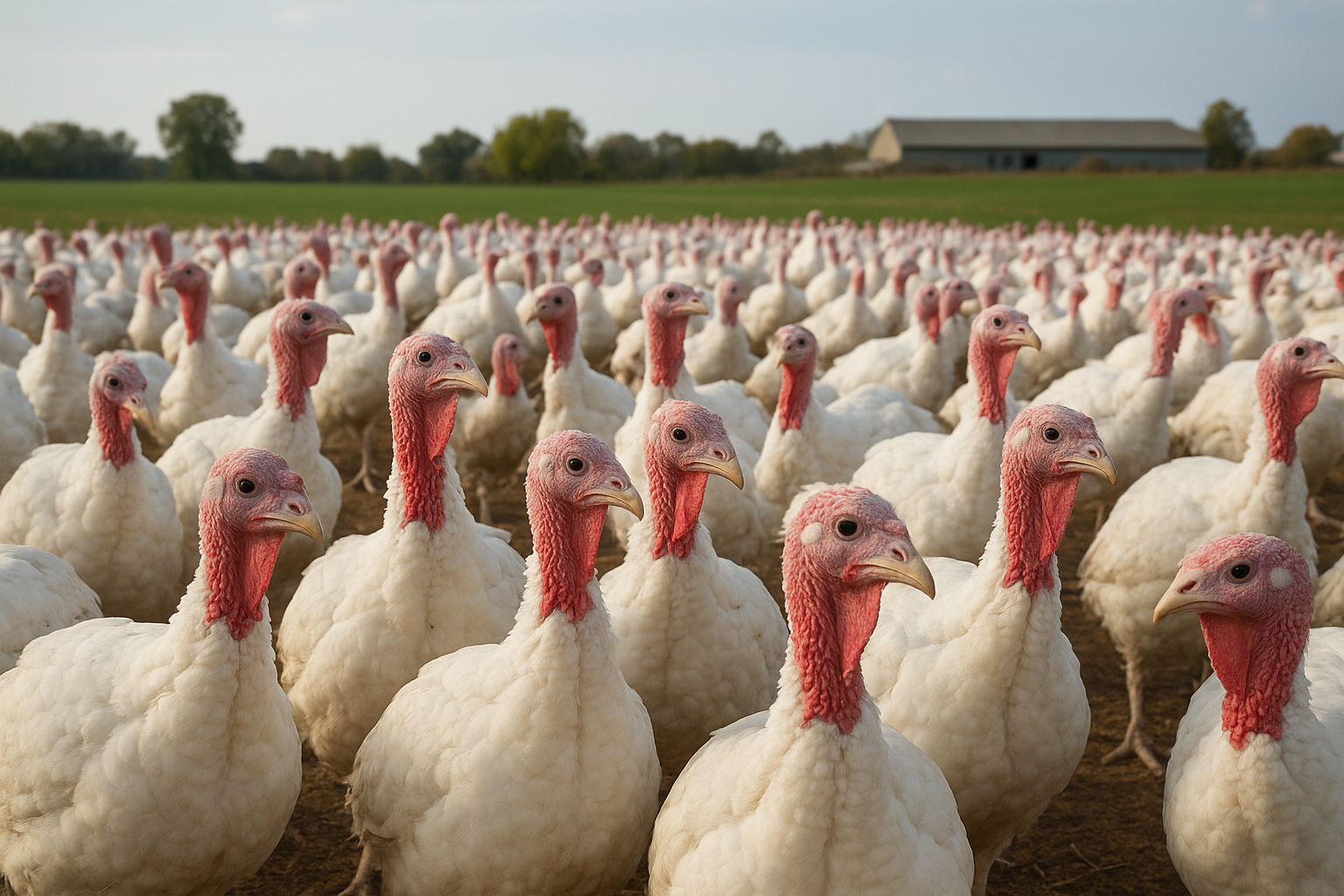
On Friday, September 25, 2026, the U.S. Department of Agriculture's National Agricultural Statistics Service (USDA NASS) released its comprehensive annual Turkeys Raised report, delivering definitive data that confirms a structural production rebound across the commercial poultry sector following years of severe disease disruptions. According to the federal survey, total U.S. turkeys raised in 2026 is projected to reach 198.5 million head, representing an unambiguous 3% increase over the 192.7 million birds raised during 2025. This expansion marks a pivotal recovery milestone for commercial growers, integrators, and processors who have spent the past two production cycles rebuilding parent breeding flocks, modernizing biosecure grow-out facilities, and navigating persistent highly pathogenic avian influenza (HPAI) challenges. Concurrently, NASS released its monthly Poultry Slaughter report for August 2026, documenting that commercial turkey processing surged 8% year-over-year to 550 million certified ready-to-cook pounds, with average live bird slaughter weights climbing 3% to 32.4 pounds per bird. Together, these official benchmark figures indicate that North American poultry integrators are successfully scaling grow-out numbers and pushing bird weights higher to replenish wholesale protein pipelines ahead of the critical autumn and holiday consumption windows.
A detailed geographic examination of the USDA survey reveals significant regional divergence in commercial production trajectories, led by substantial expansions throughout key Upper Midwest grain-belt states. Minnesota retained its long-standing status as the premier turkey-producing state in the nation, raising an estimated 34.0 million birds in 2026, up 1% from 2025 levels. Meanwhile, other core Midwestern producing states registered even sharper year-over-year gains: Missouri expanded its commercial flock by 9% to 16.0 million head, Iowa increased total birds raised by 6% to 11.5 million head, Ohio expanded by 2% to 6.3 million head, Michigan posted a 5% gain to 4.5 million head, and South Dakota lifted production by 6% to 1.9 million head. Indiana maintained steady output at 20.0 million head, while Arkansas slipped 2% to 21.0 million head and North Carolina maintained substantial commercial volume in the Southeast. This geographic concentration of growth in the Western Corn Belt underscores how commercial poultry integrators are intentionally aligning flock expansion with localized grain supplies, capitalizing on proximal corn and soybean processing capacity while minimizing long-distance interstate rail freight exposure.
The supply rebound arrives at an economically delicate moment for commercial cold storage reserves and downstream wholesale pricing. Alongside the flock survey and slaughter metrics, USDA NASS published its monthly Cold Storage report on September 25, revealing that total frozen turkey supplies in commercial refrigerated warehouses stood at 418 million pounds at the close of August 2026, down 3% from the prior month and 2% below year-ago levels. Whole-bird inventories in cold storage registered even tighter positions, reflecting aggressive retail forward-purchasing and seasonal export shipments to key Latin American destinations. As processors accelerate autumn slaughter runs to meet holiday demand commitments, the combination of a 3% larger annual flock, 8% higher monthly processing volume, and lean freezer inventories is creating a highly dynamic operating environment. Rather than creating supply gluts, the additional 5.8 million birds raised in 2026 are actively being absorbed into commercial supply chains, providing integrated agribusinesses with improved slaughter throughput while fundamentally altering the autumn feed formulation and ingredient procurement balance.
Why It Matters:
For commercial feed manufacturers, grain merchandisers, and animal nutritionists, this 3% expansion in the national turkey flock carries profound, immediate implications for physical feed ingredient grind rates and regional logistical flows. The commercial turkey sector represents an exceptionally intensive consumer of compound feed, characterized by extended grow-out cycles spanning 14 to 20 weeks and rigorous nutritional specifications that demand substantially higher crude protein and amino-acid concentrations than standard broiler or swine rations. Over a complete grow-out phase, a commercial tom turkey consumes roughly 75 to 95 pounds of feed to attain a finished market weight exceeding 32 pounds, maintaining an average cumulative feed conversion ratio between 2.45 and 2.70. Raising an additional 5.8 million birds translates directly into approximately 220,000 to 260,000 short tons of incremental finished feed demand across North American mills between late summer and early winter. In turkey-dense production corridors across central Minnesota, northern Iowa, and southwestern Missouri, regional feed mills must run higher daily mill throughput, consuming roughly 8.0 to 9.5 million additional bushels of whole corn and over 85,000 short tons of high-protein soybean meal to support birds currently on feed.
Beyond bulk calorie consumption, the flock rebound exerts immense structural leverage over micro-ingredient purchasing, synthetic amino-acid markets, and supplemental fat formulation economics. Because commercial turkey rations require aggressive dietary nutrient density to support rapid skeletal and muscular development, starter and grower diets frequently demand crude protein levels ranging from 26% down to 20%, requiring substantial inclusions of supplemental DL-methionine, L-lysine, L-threonine, and crystalline tryptophan. With recent federal antidumping tariff rulings sharply increasing the delivered cost of imported synthetic lysine and threonine, commercial nutritionists cannot simply rely on inexpensive imported crystalline amino acids to balance high-density turkey rations. Instead, feed formulators are forced to balance expensive synthetic supplements against domestic intact vegetable proteins like soybean meal and animal-protein meals. Furthermore, with average turkey live slaughter weights increasing 3% to 32.4 pounds, finishers are utilizing higher dietary energy levels via blended poultry grease and feed-grade fats to maintain daily gain efficiency. Consequently, feed mills catering to expanding turkey flocks are experiencing elevated working capital requirements and complex least-cost ration adjustments to protect grower margins against volatile ingredient pricing.
What to Watch:
As the market digests the September 25 USDA data, feed procurement executives, grain elevator managers, and poultry complex directors must closely track autumn basis movement and harvest logistics across the Upper Midwest. With the 2026 Midwest corn and soybean harvests rapidly accelerating, commercial turkey feed mills in Minnesota, Iowa, and Missouri face an urgent operational window to capture local harvest basis discounts and secure physical storage space. Buyers should monitor localized rail car availability, short-line freight surcharges, and truck freight rates, particularly as competing export channels via the Pacific Northwest and Mississippi River corridors draw grain away from domestic feed alleys. Additionally, procurement teams must monitor regional corn quality parameters, specifically test weights, moisture levels, and potential mycotoxin presence—such as deoxynivalenol (vomitoxin) and zearalenone—as turkeys exhibit acute physiological sensitivity to fungal toxins, which can trigger severe feed refusal, enteritis, and fatal flock mortality if left undetected in incoming grain deliveries.
Simultaneously, agribusiness stakeholders must monitor downstream wholesale turkey meat cutouts, freezer stock drawdowns through the fourth quarter, and biosecurity threats heading into the autumn wild waterfowl migration. While current cold storage reserves are 2% below year-ago benchmarks, the continuation of elevated slaughter throughput—averaging 8% higher ready-to-cook production—will test whether wholesale breast meat, tom drums, and thigh meat pricing can remain resilient under expanded supplies. If wholesale meat prices soften under seasonal processing volume while Midwest corn futures hold firm, integrated poultry operations will see live finishing margins compress rapidly, prompting nutritionists to aggressively reduce synthetic amino-acid over-formulation and search for alternative co-products like corn distillers dried grains with solubles (DDGS). Finally, as migratory birds begin their southward journey along the Mississippi and Central flyways, commercial flock biosecurity compliance will be the ultimate wildcard determining whether this 198.5-million-bird flock completes its harvest without catastrophic localized disease depopulations.
The Bottom Line
The USDA's September 25 Turkeys Raised report establishes a decisive 3% expansion in the national flock to 198.5 million birds, confirming that commercial poultry integrators are successfully overcoming historical disease setbacks to rebuild domestic production capacity. With August turkey slaughter surging 8% to 550 million pounds, average live weights reaching 32.4 pounds, and cold storage inventories remaining 2% below year-ago levels, this flock rebound is generating upwards of a quarter-million short tons of incremental feed demand across key Upper Midwest production hubs like Minnesota, Missouri, and Iowa. For feed manufacturers, grain merchandisers, and procurement specialists, capitalizing on this structural recovery requires aggressive autumn ingredient originations, strict mycotoxin screening, and dynamic ration optimization to navigate high-protein formulation costs and defend operating margins through peak holiday processing.