
The Story:
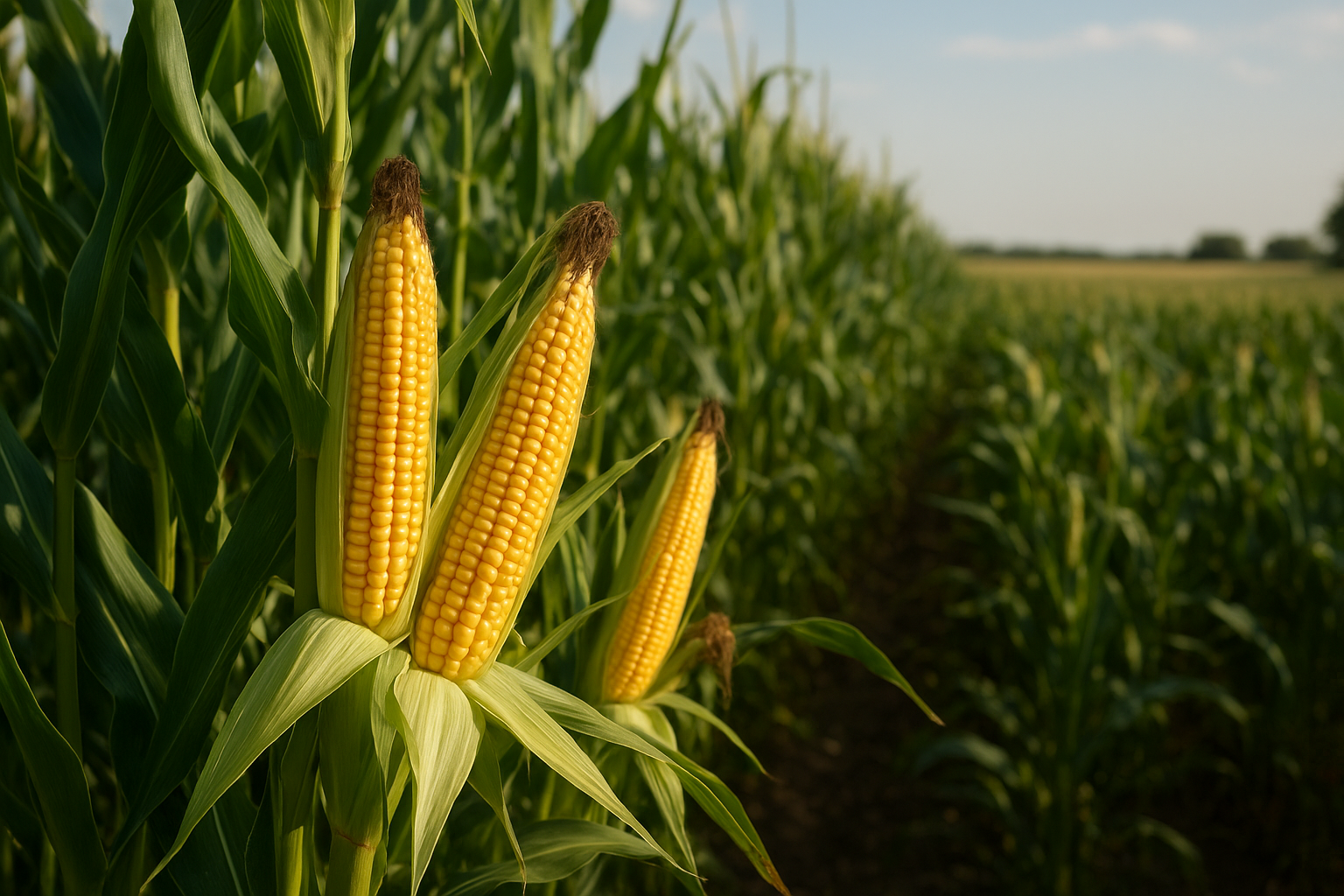
In a widely anticipated pre-WASDE release that injected fresh bearish momentum into North American commodity markets on Thursday, financial services and agricultural analytics firm StoneX Group lifted its official estimate of the 2026 United States corn harvest to a staggering 16.203 billion bushels. The updated production projection represents an 88-million-bushel upward revision from the firm's October forecast of 16.115 billion bushels, driven by an exceptional late-season national yield calculation of 183.1 bushels per acre (bpa)—up a full bushel per acre from the prior month. StoneX's farmer-subscriber field survey and quantitative yield models also ratcheted up national soybean production, elevating projected oilseed output to 4.725 billion bushels on an average yield of 55.0 bushels per acre, up from 54.1 bpa in October. Coming just days before the U.S. Department of Agriculture releases its official November World Agricultural Supply and Demand Estimates (WASDE) and Crop Production reports on Tuesday, November 10, the private survey solidifies commercial expectations that North American grain and oilseed bins will enter the winter marketing window swollen with near-record physical inventory.
The upward revision arrives as the North American harvest heads into its final stretch under broadly open autumn skies, allowing rapid field clearance across the Corn Belt. USDA National Agricultural Statistics Service data showed the national corn harvest crossing 74 percent completion earlier this week, with key producing states such as Iowa, Illinois, and Minnesota pushing past the 80 percent threshold, while soybean combining is effectively winding down at 90 percent complete nationwide. StoneX's customer-driven yield intelligence highlights that while late-summer dryness clipped yields in localized pockets of the Eastern Corn Belt and parts of the Ohio Valley, these deficits were more than compensated for by historic kernel depth, test weights, and ear counts across the heart of the Western Corn Belt. Heavy yields logged throughout Iowa, southeast South Dakota, southern Minnesota, and eastern Nebraska confirmed that optimal early-season planting windows and subsoil moisture reserves successfully carried the crop through seasonal August and September precipitation shortfalls.
The sheer physical magnitude of StoneX's 16.203-billion-bushel corn projection immediately weighed on the Chicago Board of Trade, pinning benchmark December corn futures into a defensive trading range between $4.42 and $4.45 per bushel during Thursday's trading session. Cash markets across the interior grain handling network reflected identical pressure, as commercial country elevators, river terminals, and shuttle-train rail hubs struggle to absorb the unrelenting influx of newly combined grain. Country elevator spot basis bids across Iowa, central Illinois, and Nebraska have softened by an additional 3 to 7 cents per bushel over the past 48 hours, leaving cash corn bids at interior processing hubs hovering around $4.20 to $4.28 per bushel. Rather than having to compete aggressively against international export programs, interior grain origination points are increasingly dependent on domestic processing outlets—namely animal feed manufacturing and corn wet- and dry-mill ethanol plants—to manage swollen elevator storage piles and keep physical handling channels fluid.
Why It Matters:
For commercial livestock producers, integrated poultry and swine operations, cattle feedlots, and feed manufacturing directors, StoneX's upgraded crop projections provide an extraordinarily favorable feed cost environment heading into the first quarter of 2027. Feed represents between 60 and 70 percent of total live-production operating expenses across commercial broiler, turkey, swine, and beef feedlot systems. With StoneX confirming a 16.2-billion-bushel corn harvest alongside a 4.725-billion-bushel soybean crop, the domestic feeding complex is effectively insulated against any sharp pre-winter energy or protein feed price spikes. This persistent supply cushion is especially critical for integrated hog and cattle operations currently battling intense revenue compression. CME December lean hog futures have touched contract lows near 57.40 cents per pound, wholesale pork cutouts have settled down to $72.81 per hundredweight, and fed cattle packer margins remain under strain. Depressed feed grain prices provide an essential financial buffer, reducing the breakeven cost of gain and preserving operating margins that would otherwise be entirely wiped out by soft wholesale meat values.
At the formulation console, the simultaneous surplus of cheap yellow dent corn and heavily discounted high-protein soybean meal—with CBOT benchmark meal futures trading near $318 to $320 per short ton—creates ideal economic conditions for precision least-cost diet reformulation. With domestic corn basis depressed and soybean processing capacity running at near-record rates, nutritionists have clear economic incentive to maximize corn and soybean meal inclusion while actively reducing fibrous co-products like distillers dried grains with solubles (DDGS). Midwest FOB DDGS prices have remained stubbornly elevated at $175 to $195 per ton due to strong regional demand and steady biorefinery pricing, making distillers grains economically uncompetitive against the raw energy and amino acid density of corn and soymeal. By leveraging the corn-soy spread and fine-tuning supplemental crystalline amino acids—specifically L-lysine HCl, DL-methionine, L-threonine, and L-tryptophan—swine and poultry nutritionists can drop total crude protein safety margins while perfectly satisfying standardized ileal digestible (SID) requirements, capturing direct ration savings of $7.00 to $12.00 per ton of finished feed without compromising animal performance.
What to Watch:
Over the next five business days, feed procurement directors, grain merchandisers, and livestock risk managers must focus squarely on the USDA's upcoming November Crop Production and WASDE reports, set for release at 12:00 PM EST on Tuesday, November 10. Industry participants will scrutinize whether federal statisticians validate StoneX's yield increases or maintain their October baseline of 183.8 bpa, while closely tracking adjustments to domestic feed and residual use, ethanol grind, and export projections. Any upward revision to 2026/27 ending stocks above the 2.1-billion-bushel mark will cement low feed grain prices well into the spring. In the physical spot market, buyers should monitor post-harvest basis movements at local country elevators and river loading points. As field combines wrap up work over the next ten days, commercial elevators will begin transitioning from harvest panic-selling to commercial carry management, establishing a firm floor under spot basis bids once temporary storage gluts are absorbed.
Simultaneously, agribusiness purchasing managers must track key transport logistics and secondary feed ingredient markets heading into late November. Freight fluidities along Class I rail corridors—notably BNSF and Union Pacific grain shuttles—and downbound Mississippi River barge rates, currently hovering around $23.60 to $24.00 per ton out of St. Louis, will determine how quickly interior grain surpluses move toward Gulf and Pacific Northwest export terminals. Additionally, buyers should monitor commercial soybean crush margins and synthetic amino acid supply chains. With large domestic crushers running hard to capitalize on healthy crush spreads, prompt soybean meal availability should remain exceptionally liquid. Feed mill managers should utilize current market weakness to book physical corn and meal delivery contracts covering needs through February 2027, locking in historically favorable basis levels before post-harvest logistical adjustments or unexpected winter freight disruptions emerge.
The Bottom Line
StoneX's upward revision of the 2026 U.S. corn crop to 16.203 billion bushels on a 183.1 bu/acre yield and soybeans to 4.725 billion bushels confirms that domestic animal feed manufacturers and livestock producers will operate amidst an expansive supply surplus heading into 2027. With benchmark corn futures pinned near $4.44 per bushel, soybean meal hovering around $318 per ton, and interior elevator basis severely discounted, feed mills and integrated livestock integrators enjoy significant procurement leverage. Agribusiness decision-makers and consulting nutritionists should immediately capitalize on these market dynamics by securing forward ingredient commitments through the first quarter of 2027, reformulating rations to favor corn, high-protein soymeal, and precision crystalline amino acids over costly DDGS, and utilizing cheap feed costs to protect live-production margins against broader macroeconomic volatility.