
The Story:
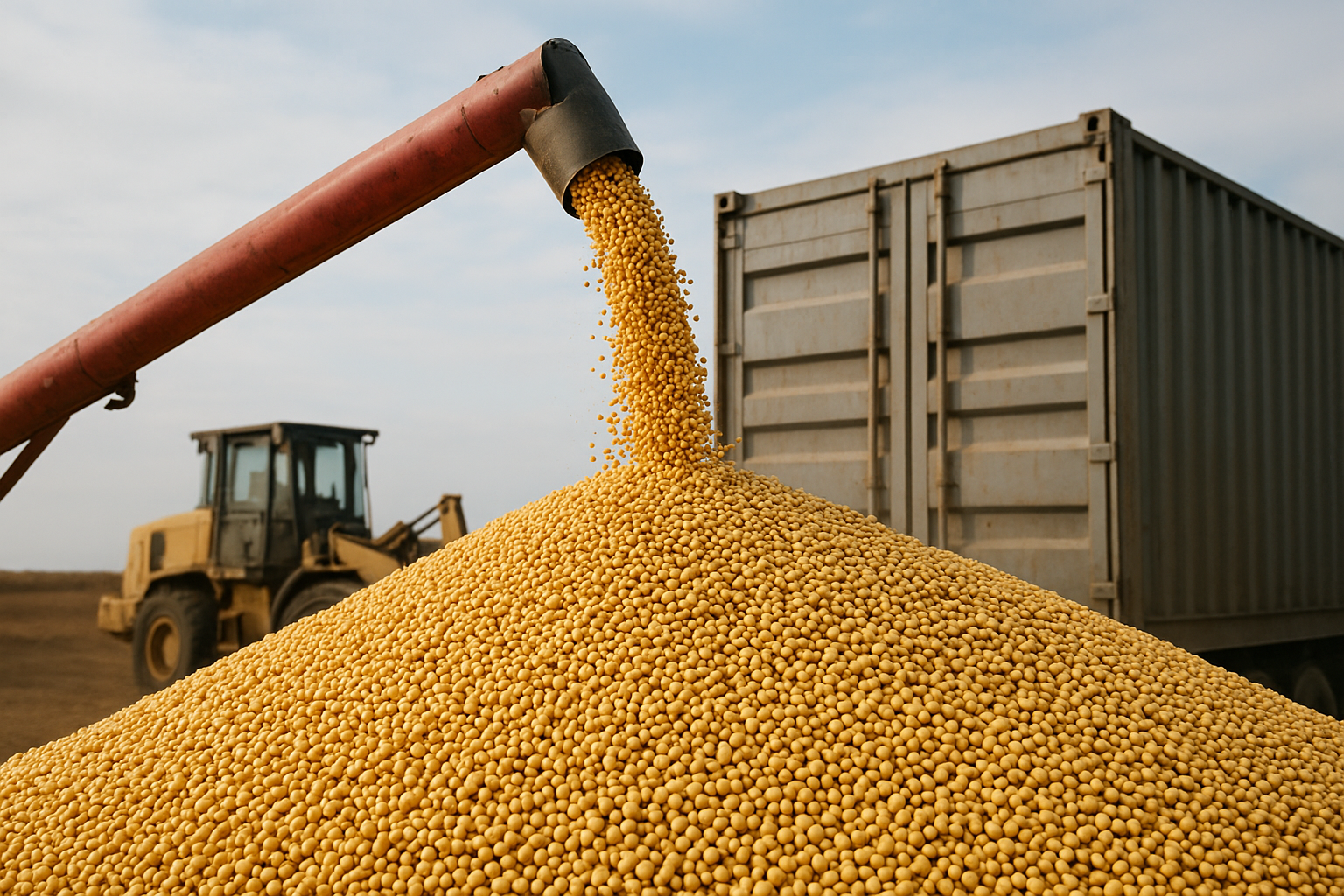
On Monday, October 19, 2026, the U.S. Department of Agriculture's Federal Grain Inspection Service (USDA FGIS) released its weekly Export Inspections report for the week ending October 16, 2026, revealing that official export inspections of U.S. soybeans surged to 2.00 million metric tons—equivalent to approximately 73.49 million bushels. This massive outward movement represents an 80.2 percent surge over the 1.11 million metric tons inspected during the preceding week and substantially surpasses the 1.59 million metric tons cleared during the corresponding week in 2025. Deepwater terminal facilities across the Center Gulf and the Pacific Northwest (PNW) operated near maximum throughput capacity over the weekend, with Chinese buyers accounting for the predominant share of cleared vessel volume alongside active loadings destined for European and Southeast Asian destinations. Concurrently on Monday morning, the USDA Foreign Agricultural Service (USDA FAS) issued announcements under its mandatory daily reporting program confirming private exporter sales of an additional 375,000 metric tons of soybeans for 2026/27 marketing year delivery, including 114,000 metric tons bound for China and 261,000 metric tons designated for unknown destinations. These combined federal disclosures confirm that international buying appetite is accelerating rapidly during the peak of North American harvest, absorbing physical supplies before they can accumulate in domestic interior storage channels.
The substantial acceleration in physical export inspections reflects an intense logistical pull across major Midwestern interior transport networks. Commercial grain elevators, river loading terminals, and merchandisers along the Upper Mississippi, Illinois, and Ohio River corridors have mobilized extensive barge linehaul capacity to feed coastal export terminals at New Orleans and Baton Rouge. This logistical surge follows a precipitous 29 percent drop in Mississippi River barge freight rates late last week to $28.86 per ton, which sharply reduced the landed cost of moving interior grain to coastal ports and incentivized international agribusiness trading houses to accelerate immediate export vessel loadings. While weekly inspections for U.S. corn slipped to 672,475 metric tons—directed primarily across southern border rail routes into Mexico—and wheat inspections softened to 240,308 metric tons, the sheer volume of whole soybeans entering export pipelines is commanding major river terminal throughput and barge equipment. Commercial country elevators that had been bracing for severe storage capacity deficits from accelerating corn harvest activity are instead actively directing shuttle trains and barge tows toward export gateways, steadily siphoning raw oilseeds away from regional processor networks.
For domestic animal feed manufacturers, commercial swine integrators, and poultry complexes, this outward export drain is generating immediate price and basis consequences throughout the protein complex. On the Chicago Board of Trade (CBOT), benchmark November 2026 soybean futures climbed 6.25 cents on Monday morning to trade near $10.18 per bushel, while December 2026 soybean meal futures pushed upward by $2.40 to $362.40 per short ton. This international export momentum is actively insulating soybean meal from the severe seasonal downturn impacting feed grains, where country elevator cash corn bids plummeted to national averages of $4.35 per bushel earlier on Monday morning. Domestic soybean processing facilities across central Illinois, Iowa, and Indiana—which had anticipated expanding crush margins and softening raw bean acquisition costs as combines rolled—are now compelled to raise cash processor basis bids by 3 to 5 cents per bushel to prevent interior farmer deliveries from bypassing local crush plants in favor of river export terminals. As a result, wholesale soybean meal basis in key processing hubs like Decatur, Illinois, has firmed, denying animal feed formulators the price relief they had anticipated based on the USDA's record 4.56-billion-bushel national soybean crop projection.
Why It Matters:
For animal nutritionists, commercial feed mill operators, and livestock production executives across the swine, broiler, and turkey industries, this export-driven firmness in soybean meal solidifies an extreme economic spread between dietary energy and dietary protein. With cash corn trading at approximately $155 per ton and distillers dried grains with solubles (DDGS) holding near $193 per ton, dietary starch and metabolizable energy are accessible at multi-year valuation discounts, yet high-protein soybean meal remains stubbornly elevated above $360 per ton at interior processing points. This 2.3:1 price ratio places intense economic pressure on unadjusted least-cost feeding matrices. Integrated poultry operations in the Southeast and commercial pork systems throughout the Western Corn Belt cannot afford to absorb high intact protein expenses while pork cutout values remain constrained and broiler production costs demand rigorous margin discipline. Consequently, feed formulation teams must immediately execute aggressive diet recalibrations, systematically curtailing intact soybean meal inclusion rates by 2.0 to 3.5 percentage points across grow-finish swine diets and broiler grower-finisher rations.
To safely execute these intact soybean meal reductions without compromising standardized ileal digestible (SID) amino acid balances, animal growth rates, or carcass lean yields, commercial feed mills must substantially increase their inclusion of supplemental crystalline amino acids. Feed manufacturers are aggressively deploying synthetic L-lysine hydrochloride, L-threonine, DL-methionine, and L-tryptophan to backfill the digestible amino acid gaps created by displacing soybean meal. By pairing cheap $4.35 cash corn with discounted DDGS and targeted crystalline amino acid supplementation, feed compounders can reduce finished feed formulation costs by $5.20 to $8.50 per ton while maintaining animal performance and nitrogen retention. Furthermore, for feed procurement executives, the aggressive export pace indicates that waiting for a post-harvest collapse in soybean meal basis carries severe operational risk. Feed mills that delay locking in fourth-quarter 2026 and first-quarter 2027 meal basis contracts risk encountering localized processor supply shortages if ocean export demand continues to divert raw soybeans away from domestic plants throughout the remainder of the autumn shipping season.
What to Watch:
Over the next two to three weeks, commodity procurement directors, feed grain merchandisers, and livestock risk managers must closely monitor weekly export inspection reports and daily flash sales disclosures released by the USDA FAS and FGIS. Market analysts will evaluate whether the 2.0-million-metric-ton inspection milestone represents an isolated seasonal peak or the beginning of a sustained export surge that will extend heavily into November. Market participants should also evaluate the USDA National Agricultural Statistics Service (NASS) weekly Crop Progress report released on Monday afternoon to assess national soybean harvesting velocity, which trade expectations place near 65 to 70 percent completion. If Midwest weather remains dry and harvesting concludes rapidly, expanding country elevator receipts could briefly temper processor origination pressures; conversely, any localized weather interruptions coupled with continuous Gulf vessel arrivals will intensify commercial bidding between exporters and domestic crushers, driving interior basis levels significantly higher.
Simultaneously, feed ingredient purchasing directors must monitor domestic crush operational data and international synthetic amino acid supply chains. Procurement teams should track monthly crush updates from the National Oilseed Processors Association (NOPA) and evaluate regional processor maintenance schedules to determine whether domestic processing plants can maintain full operational run-rates in the face of elevated raw bean costs. In parallel, feed manufacturers must scrutinize lead times, container freight rates, and import tariffs for synthetic amino acids originating from fermentation plants in Asia. As North American feed mills collectively expand crystalline lysine, threonine, and methionine usage to displace expensive soybean meal, domestic distributor inventories of feed-grade amino acids will tighten rapidly. Feed purchasing executives should establish disciplined 60-to-90-day forward delivery contracts for essential amino acids to safeguard against logistics bottlenecks or sudden price spikes at regional distribution warehouses.
The Bottom Line
The USDA's October 19, 2026 Export Inspections report confirming a surge to 2.00 million metric tons of soybean clearances—amplified by 375,000 MT of fresh daily flash export sales—proves that robust international demand is rapidly channeling raw oilseeds into Gulf and PNW export positions, insulating soybean meal prices from the broader harvest downturn and firming interior processor basis bids. For animal feed manufacturers, commercial pork producers, and poultry integrators, this vigorous export pace prevents anticipated relief on wholesale protein costs, maintaining the soybean-meal-to-corn price ratio near an extreme 2.3:1. To protect livestock feeding margins, industry professionals must pursue a coordinated two-part strategy: consulting nutritionists should immediately reformulate least-cost diets around cheap cash corn, discounted DDGS, and precision crystalline amino acids to displace high-cost intact soybean meal, while procurement teams must lock in forward meal basis coverage and secure synthetic amino acid inventory before ongoing export pull further tightens domestic ingredient pipelines.