
The Story:
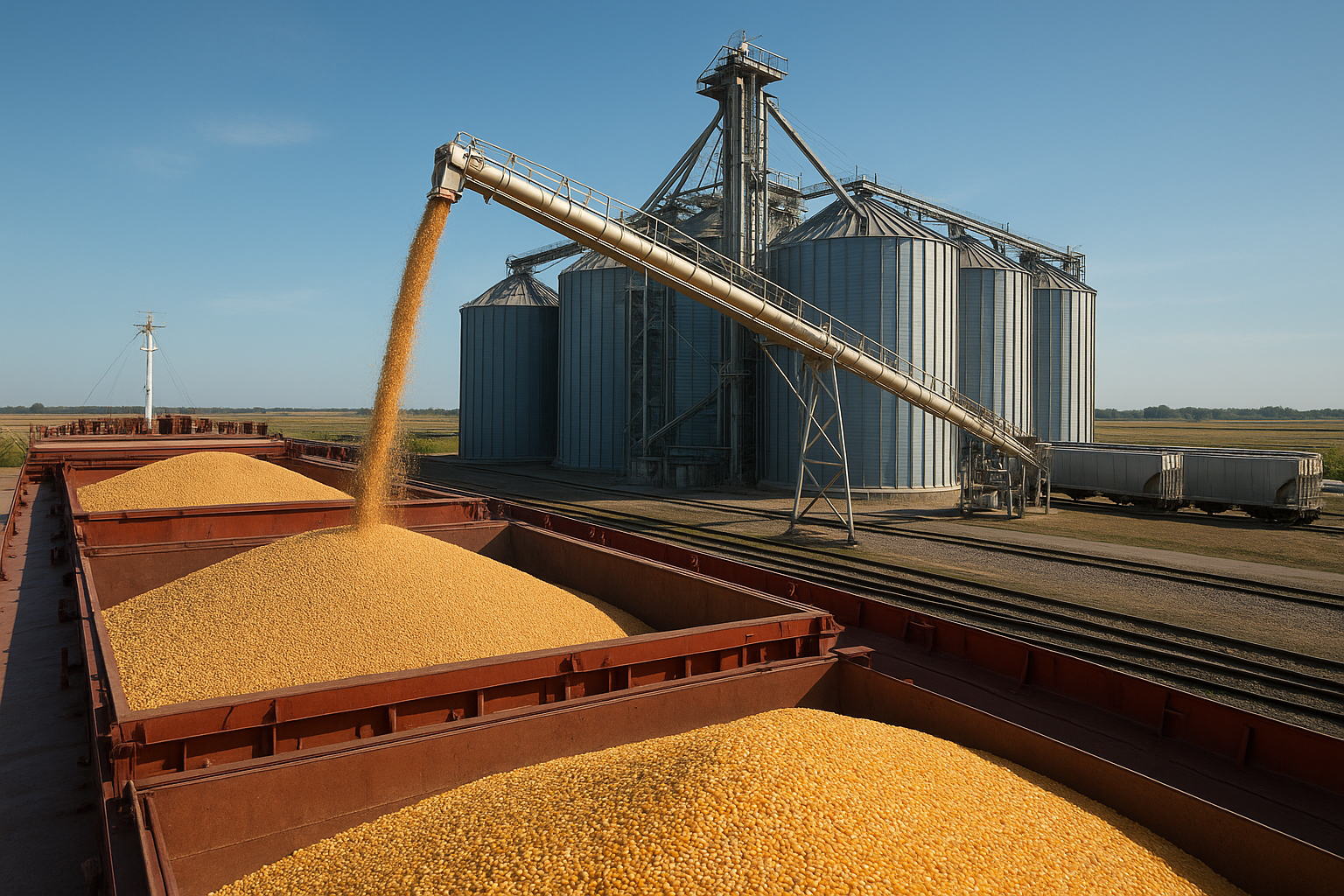
On Monday morning, September 28, 2026, the U.S. Department of Agriculture's Agricultural Marketing Service (USDA AMS) and Federal Grain Inspection Service (FGIS) officially released the weekly Export Inspections report for the marketing week ending September 24, 2026. The empirical trade data revealed a dramatic late-September surge in offshore commodity movement, headlined by an aggressive 49.4% week-over-week acceleration in soybean inspections. U.S. soybean export inspections jumped to 1,150,000 metric tons (approximately 42.25 million bushels), up sharply from 769,698 metric tons recorded the preceding week and soaring nearly 88% above the 610,633 metric tons inspected during the identical calendar week in 2025. This volume represents the strongest single-week export inspection tally for whole soybeans since the current marketing year began on September 1, confirming that ocean bulk vessels are loading at a blistering pace across primary export gateways. Primary maritime departure points included Mississippi River terminals in the U.S. Gulf, Pacific Northwest (PNW) deepwater elevator berths, and Texas coastal facilities, which handled the vast majority of physical inspections bound for international processing hubs across the European Union, Southeast Asia, and Latin America.
Simultaneously, U.S. corn export inspections demonstrated sustained physical strength, totaling 1,570,000 metric tons (approximately 61.81 million bushels) for the week ending September 24. While dipping slightly from the previous week's elevated figure of 1,960,000 metric tons, the current inspection volume easily surpassed the 1,540,000 metric tons recorded at the same juncture last year, underscoring resilient international demand for American feed grains. Mexico remained the dominant destination for rail and maritime shipments, accompanied by active bulk vessel departures headed toward Japan, Colombia, and South Korea. In stark contrast to feed grains and oilseeds, U.S. wheat inspections slumped to 310,635 metric tons—sliding from 339,955 metric tons the prior week and plunging 64.4% below the 873,578 metric tons inspected during the corresponding period in 2025. In aggregate, the USDA documented more than 3.03 million metric tons of major grains and oilseeds moving through export inspection channels over the seven-day period, establishing intense competition for interior grain handling equipment and export terminal elevation capacity just as the 2026 Midwest harvest enters its most active operational window.
This export surge occurs at a critical commercial inflection point for the agricultural supply chain, arriving directly on the heels of the newly announced U.S.-China bilateral tariff schedules and ahead of the impending October 1 contract expiration across East Coast and Gulf container ports. While private Chinese crushers remain constrained from purchasing U.S. raw soybeans under an ongoing 10% duty, state-backed commitments and diversified global buying programs from commercial importers in Europe, Southeast Asia, and Central America are aggressively capturing newly harvested Midwest bushels. At the same time, restored Most-Favored-Nation (MFN) tariff access for U.S. feed corn into Asian channels has galvanized export terminal bids along the upper and lower Mississippi River. Commercial grain merchandisers and elevator networks are mobilizing heavy barge tows and unit trains to feed coastal export berths, creating an abrupt operational pull that is siphoning dry-bulk grain and oilseeds away from regional interior processing hubs and livestock feeding basins at the onset of peak harvest combines.
Why It Matters:
For commercial animal feed manufacturers, swine integrators, poultry operations, and feedlot cattle nutritionists, this sudden export drain fundamentally alters local harvest basis economics and ingredient procurement balance sheets. Traditionally, late September delivers a seasonal collapse in interior cash grain and oilseed basis as newly combined crops flood regional country elevators, providing livestock feeders their most cost-effective annual window to establish forward coverage. However, with Gulf and PNW export terminals absorbing 1.57 million metric tons of corn and 1.15 million metric tons of soybeans in a single week, export bids are establishing an aggressive cash floor that prevents interior basis softening. Commercial feed mills across the western Corn Belt, the Mississippi Delta, and river-adjacent feeding corridors are finding local elevator bids uncharacteristically firm. Feed procurement managers who delayed forward contracting in anticipation of harvest-time cash discounts now face tighter regional supplies and rising cash basis premiums, directly elevating the baseline ingredient cost for standard broiler diets and swine finishing rations.
Furthermore, the heavy physical drain of whole raw soybeans into export channels introduces new friction into domestic oilseed processing runs and secondary feed ingredient availability. Domestic soybean crushers have ramped operations to maximum capacity to capitalize on strong crush margins and satisfy domestic demand for high-protein (48%) solvent-extracted soybean meal. However, aggressive export elevator bidding at Mississippi River terminals is actively competing for newly harvested field-run soybeans, tightening local processor pipeline inventories and forcing interior crush plants to bid defensively to secure daily grind requirements. Any disruption to bean deliveries at domestic crush facilities risks curtailing meal output just as livestock producers depend on steady co-product supplies to offset elevated costs in alternative protein feeds, such as meat and bone meal and volatile milling by-products. Compounding this margin pressure, the massive mobilization of covered hopper railcars and river barge capacity toward coastal export terminals is tightening inland transportation equipment, driving up secondary freight tariffs for commercial feed shipments into feed-deficit livestock regions throughout the Southeast and Southern High Plains.
What to Watch:
Moving into early October, feed buyers, commodity merchandisers, and integrated livestock producers must scrutinize the upcoming USDA Grain Stocks report and the weekly USDA Export Sales summaries for empirical evidence of whether this export velocity will persist. The Grain Stocks report, scheduled for release on Wednesday, September 30, will deliver the definitive accounting of old-crop soybean and corn ending stocks as of September 1, establishing whether old-crop pipeline reserves are sufficient to buffer domestic processing grinds while export loaders clear new-crop volume. Concurrently, market participants should track weekly commercial barge freight quotations on the Illinois, Ohio, and Lower Mississippi Rivers via the USDA Grain Transportation Report. If high export throughput coincides with low-water navigation restrictions on the middle Mississippi River, barge freight rates could spike rapidly, creating severe regional basis dislocations that strand grain in upper Midwest river pools while starving lower Gulf export terminals and inflating domestic rail freight surcharges.
Simultaneously, commercial feed formulators and nutrition directors should closely monitor interior soybean meal basis offerings alongside least-cost formulation thresholds across monogastric and ruminant production complexes. If intense export competition for raw soybeans sustains processor cash bids and prevents domestic meal basis from weakening further, nutritionists must re-evaluate inclusion levels for synthetic amino acids—specifically crystalline L-lysine HCl, DL-methionine, L-threonine, and L-tryptophan. Feed mills should prepare to adjust dietary crude protein matrix values, leveraging precision synthetic amino acid supplementation to safely reduce high-priced soybean meal inclusion rates without compromising standardized ileal digestible (SID) amino acid ratios or bird and herd performance. Additionally, feed plant logistics managers should evaluate storage bin turnarounds and lock in secondary rail freight commitments early to ensure uninterrupted bulk deliveries of corn, distillers co-products, and supplemental micro-ingredients through the remainder of the fourth quarter.
The Bottom Line
The September 28 USDA Export Inspections report signals aggressive offshore demand and rapid logistics deployment at the start of the 2026 harvest, highlighted by a 49% surge in soybean inspections to 1.15 million metric tons and robust corn movement of 1.57 million metric tons. By siphoning more than 3 million metric tons of major feedstuffs into coastal export terminals within seven days, export elevators are asserting powerful competition against domestic feed manufacturers and oilseed crushers, setting a firm floor under cash basis and constricting regional freight equipment. Commercial feed procurement managers, livestock integrators, and nutrition directors cannot count on a prolonged seasonal harvest discount; they must actively protect feeding margins by locking in nearby grain and meal basis, recalibrating least-cost amino acid matrix formulations, and securing freight logistics to navigate autumn supply chain volatility.