
The Story:
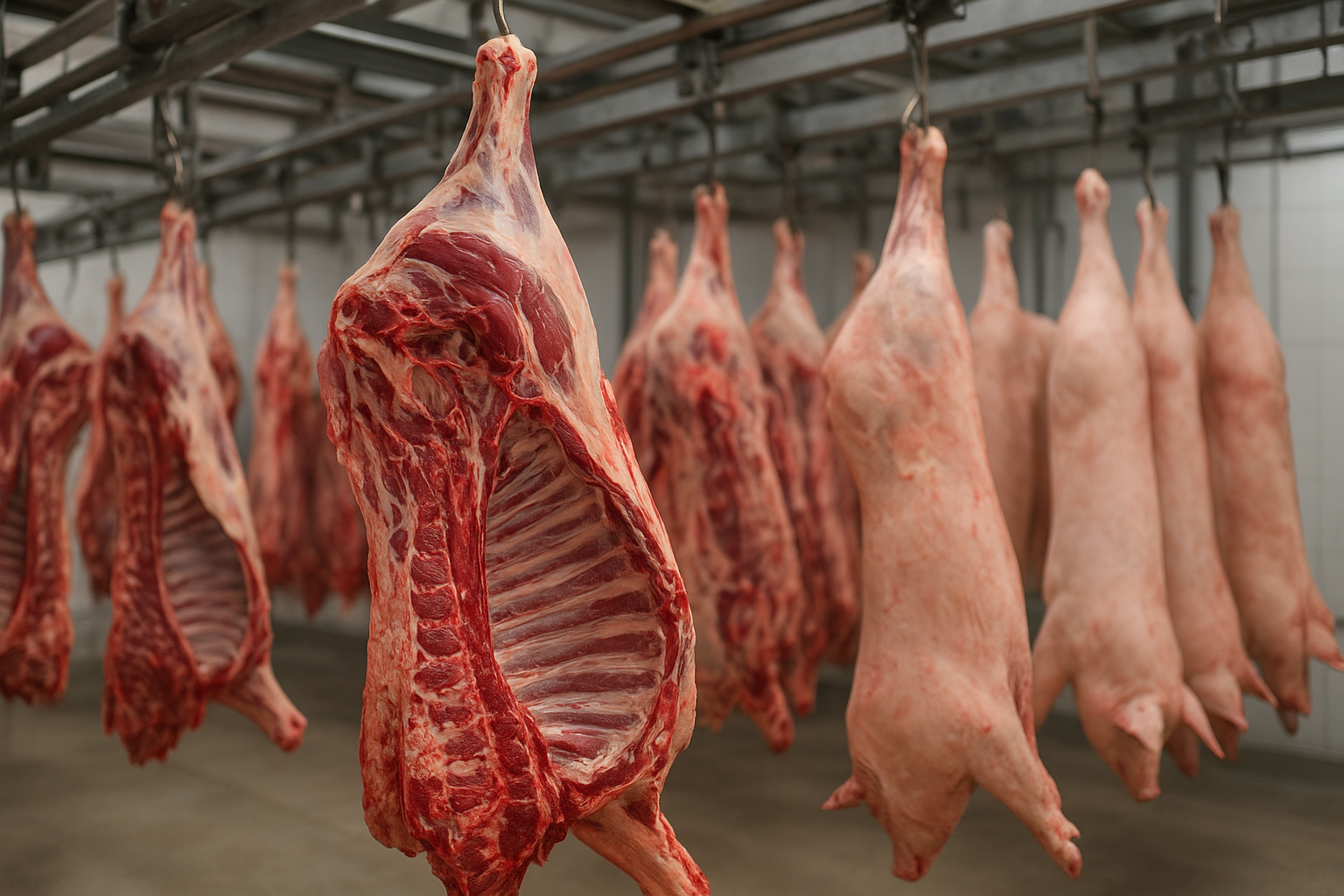
The U.S. Department of Agriculture's National Agricultural Statistics Service (USDA NASS) released its monthly Livestock Slaughter report on Thursday afternoon, detailing a significant structural contraction across domestic commercial meat packing operations during September 2026. Commercial red meat production across the United States totaled 4.32 billion pounds, registering a 4 percent decline compared to the 4.51 billion pounds processed during the corresponding period in September 2025. This downturn extends a broader multi-quarter trend across the domestic livestock complex, pulling cumulative red meat output for January through September 2026 to 38.9 billion pounds, down 2 percent from the 39.7 billion pounds recorded during the first nine months of the previous year. The monthly supply reduction was driven by simultaneous contractions in both the beef and pork sectors, with total commercial cattle slaughter dropping 7 percent year-over-year to 2.30 million head, yielding 2.04 billion pounds of commercial beef—a 6 percent drop from September 2025. Concurrently, commercial hog slaughter declined 3 percent to 10.6 million head, trimming total pork production by 3 percent to 2.27 billion pounds, while commercial calf slaughter tumbled 15 percent to just 7,900 head and sheep and lamb slaughter slipped 5 percent to 176,000 head.
While head counts at packing facilities contracted sharply, the USDA report highlighted a defining countervailing trend that is actively reshaping commercial feeding economics: animal live weights surged to elevated levels across both cattle and swine. Commercial cattle slaughter weights averaged an impressive 1,447 pounds per head in September, surging 14 pounds above the 1,433-pound average recorded in September 2025 and establishing a historically heavy baseline for early autumn marketing. Similarly, commercial hog slaughter weights averaged 287 pounds per head, up 1 pound from year-ago levels and sustaining an elevated carcass scale that has characterized the autumn slaughter run. This structural increase in market weights reflects a deliberate operational response by commercial feedlot operators, custom backgrounders, and swine integrators seeking to maximize total saleable poundage and capitalize on highly favorable feed conversion economics. Facing a persistent scarcity of replacement feeder cattle following multi-year herd liquidation and steady feeder calf premiums, feedyards have systematically extended days on feed for steers and heifers, utilizing abundant, lower-cost grain rations to build carcass mass before sending animals to slaughter hooks.
The decision to push market-ready animals to heavier final weights is being powered by the rapid deflation of baseline feed ingredient costs across the Corn Belt and Southern Plains. With the 2026 national corn harvest advancing rapidly under favorable autumn weather and benchmark CBOT December corn futures hovering near $4.60 per bushel, cash corn delivered into regional feeding hubs has fallen to harvest lows between $4.35 and $4.55 per bushel. Concurrently, benchmark CBOT soybean meal futures settled near $347.30 per short ton, while spot distillers dried grains with solubles (DDGS) across Midwest ethanol corridors have remained competitively priced between $190 and $195 per ton. This dramatic softening of primary energetic and protein inputs has lowered daily cost-of-gain metrics significantly, creating a powerful economic incentive for feedlot managers and hog finishers to keep animals in the bunks for an extra 10 to 20 days. At commercial merchandising desks from Omaha to Amarillo, grain elevators and feed compounders report that high-volume finishing ration shipments have sustained robust seasonal demand, as the sheer tonnage of feed consumed per head during the late-finishing window offsets the volume deficit created by reduced aggregate slaughter numbers.
Why It Matters:
For commercial feed manufacturers, mill operations directors, and integrated livestock nutritionists, the divergence between shrinking head counts and rising carcass weights carries profound nutritional and logistical implications. In ruminant nutrition, the physiological reality of late-stage feed conversion dictates that every incremental pound of gain achieved above 1,350 pounds in beef steers requires exponentially higher net energy for maintenance and gain (NEm and NEg), as biological energy is partitioned toward fat deposition rather than lean muscle growth. To sustain positive daily gains of 3.2 to 3.8 pounds per head during these extended finishing periods, nutritionists must formulate energy-dense finishing rations featuring high inclusions of steam-flaked or rolled corn (60 to 70 percent of total dry matter), alongside 15 to 20 percent wet or dry distillers grains, and 2 to 3 percent supplemental tallow or animal-vegetable fat blends. Consequently, feed mills serving major feedlot alleys in Kansas, Nebraska, and Texas are experiencing accelerated inventory turnover of processed grain and fat supplements, requiring tight synchronization of rail hopper deliveries and liquid storage capacities to avoid ration disruptions.
Across the commercial swine sector, packing hogs to 287 pounds alters finishing diet dynamics and amino acid fortification protocols. As market hogs enter the final late-finishing phase past 240 pounds, their voluntary daily feed intake peaks above 6.5 to 7.0 pounds of feed per day, yet their dietary requirements for crude protein and synthetic amino acids shift toward lower percentage concentrations but higher absolute daily grams of intake. Swine nutritionists and toll-mill operators are actively adjusting late-stage finishing formulations to optimize the digestible lysine-to-calorie ratio, utilizing synthetic crystalline L-lysine, DL-methionine, and L-threonine to balance lower-crude-protein corn-soy diets without causing excessive backfat thickness or packer grade deductions at the plant. Furthermore, for commercial feed compounders operating across the Midwest, the steady appetite for finish-stage swine and cattle rations provides a vital volume cushion, allowing mills to absorb new-crop grain receipts and maintain high milling throughput during a period when sow herd contraction and poultry sector adjustments have tempered starter and nursery feed volumes.
What to Watch:
Over the coming four to six weeks, commodity purchasing desks, feed mill managers, and livestock market participants must closely track the upcoming USDA NASS monthly Cattle on Feed report, scheduled for release on Friday, October 23, to assess whether feedyard placements confirm the ongoing scarcity of feeder supplies. Industry analysts widely project September feedlot placements to contract between 7 and 9 percent year-over-year, which would mark the third consecutive monthly decline and solidify expectations for persistently tight market-ready slaughter availability well into the first half of 2027. Concurrently, procurement directors must monitor packer operating margins and slaughter paces through November; if wholesale boxed beef cutouts and pork cutout values encounter consumer pushback against heavy primal cuts, packers may widen discount grids for overweight carcasses (such as carcasses exceeding 1,050 pounds in cattle or 220 pounds in hogs), which could suddenly truncate the economic incentive for feedlots to prolong feeding durations and prompt an abrupt liquidation of heavy cattle.
Simultaneously, feed ingredient merchandisers and commercial nutritionists should rigorously monitor basis levels and freight logistics for key energy and protein inputs across the rail and river transport network. With the Mississippi River barge navigation maintaining stable draft levels following mid-autumn dredging and rail transit times remaining fluid, regional basis differentials for distillers grains and soybean meal have begun to stabilize. Formulation desks must calculate the relative cost per unit of net energy across alternative high-energy ingredients, evaluating whether to increase inclusions of condensed corn distillers solubles, feed-grade tallow, or high-oil DDGS as winter cold weather approaches. In the swine belt, mill managers must coordinate closely with integrators to monitor herd health conditions, specifically keeping watch for seasonal spikes in Porcine Reproductive and Respiratory Syndrome (PRRS) and swine influenza, which could disrupt average daily gain trajectories and force managers to revise finishing feed delivery schedules and slaughter weight targets across contract grow-finish sites.
The Bottom Line
The USDA NASS September Livestock Slaughter report delivers a clear, actionable signal to the animal feed manufacturing and livestock production sectors: while structural herd contraction continues to suppress aggregate slaughter volumes, the domestic livestock industry is aggressively substituting cheap harvest grain for scarce animal numbers by driving carcass weights to historically heavy baselines. With commercial red meat output falling 4 percent to 4.32 billion pounds but cattle weights jumping 14 pounds to 1,447 pounds and hog weights anchoring at 287 pounds, commercial feedyards and finishing operations are burning substantial volumes of energy-dense finishing rations to extract maximum value from every animal on feed. As harvest pressure keeps CBOT corn near $4.60 per bushel and soybean meal near $347 per ton, feed mill operators, procurement directors, and consulting nutritionists hold an exceptional opportunity to capture profitable manufacturing margins. Navigating this environment successfully requires formulation agility: optimizing energy-to-protein ratios to sustain efficient late-stage gains, securing forward winter supplies of corn and distillers grains at current harvest discounts, and maintaining active hedging strategies to protect against shifts in packer carcass discount grids.