
The Story:
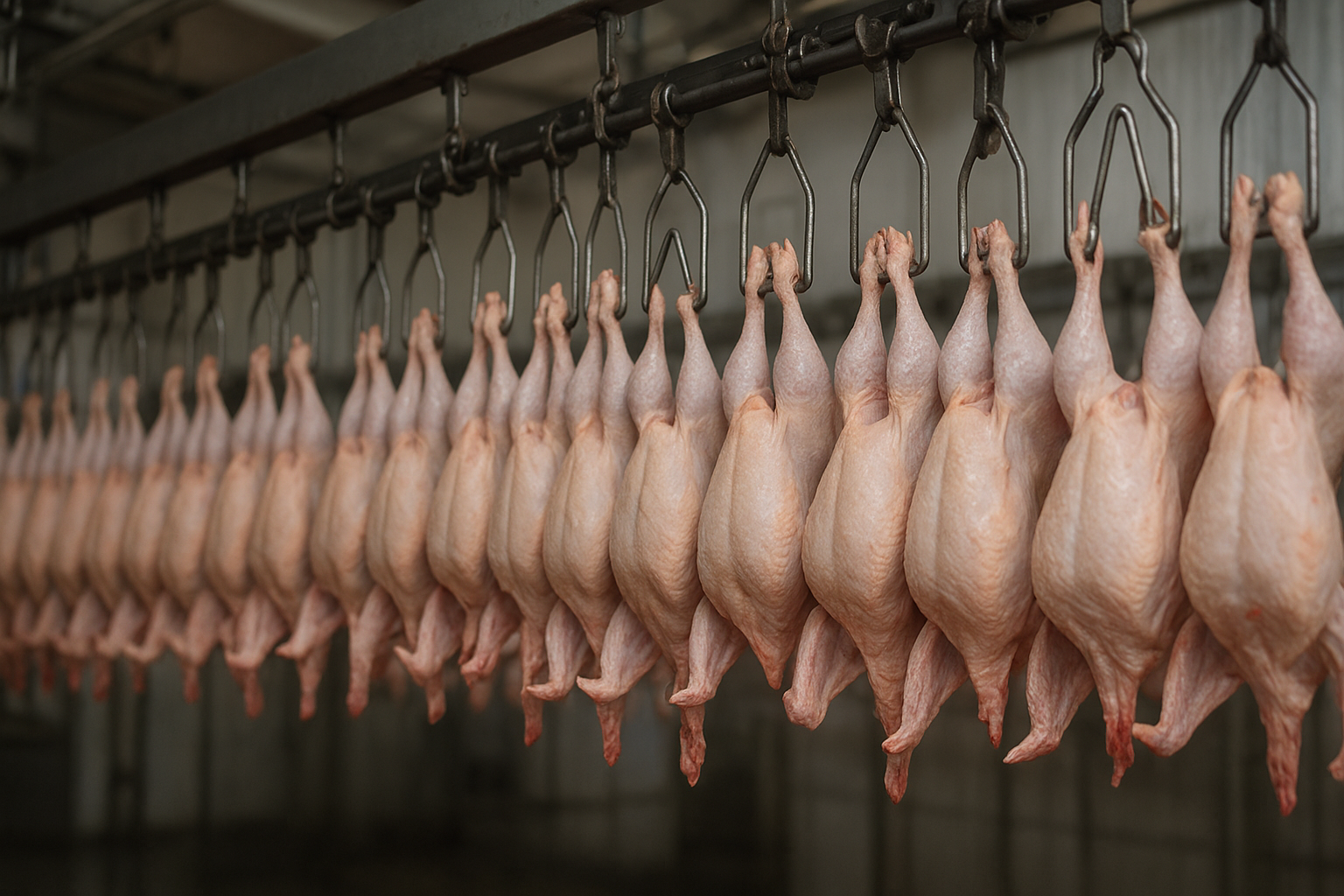
On Friday afternoon, October 23, 2026, the U.S. Department of Agriculture's National Agricultural Statistics Service (NASS), operating under the Agricultural Statistics Board, issued its monthly Poultry Slaughter report, providing authoritative commercial slaughter metrics for September 2026. According to the federal report, poultry certified wholesome across federally inspected processing plants reached 4.74 billion pounds on a ready-to-cook (RTC) basis, slipping fractionally below the volume recorded during September 2025. Concurrently, NASS revised its August 2026 certified wholesome volume upward to 4.65 billion pounds, representing a solid 4 percent expansion over the August 2025 benchmark. Preliminary total live weight across all federally inspected commercial poultry during September stood at 6.22 billion pounds, easing marginally from the 6.25 billion pounds registered in the corresponding month twelve months prior. Across commercial processing lines, ante-mortem condemnations totaled 14.5 million pounds, representing 0.23 percent of total live weight inspected compared to 0.20 percent a year ago, while post-mortem condemnations totaled 24.6 million pounds, representing 0.52 percent of inspected quantities down from 0.58 percent in 2025, demonstrating excellent biological health and processing line sanitation across domestic facilities.
A comprehensive examination across individual poultry categories revealed contrasting operational trajectories between commercial broiler operations and the heavy turkey finishing sector. Inspected young chickens (broilers) totaled 5.53 billion pounds in preliminary live weight during September, representing a 1 percent decline compared to September 2025 volumes. Average live bird weights for young chickens slipped to 6.67 pounds per bird, down 0.06 pound from the 6.73-pound average recorded in September 2025, reflecting disciplined harvest timing and controlled pen turnover among major broiler integrators. In contrast, mature chickens—comprising culled commercial table egg layers and spent broiler breeder hens—totaled 76.8 million pounds, marking a 5 percent increase over year-ago levels, with average bird weights rising to 7.41 pounds (up 0.28 pound). Commercial turkey slaughter delivered the report's most notable volume surge: federally inspected turkey inspections climbed to 594 million pounds, representing a robust 7 percent jump over September 2025. Slaughtered turkeys averaged a heavy 33.44 pounds per bird, surging 1.20 pounds per bird heavier than last year, while commercial duck slaughter jumped 24 percent to 18.5 million pounds.
These diverging slaughter weights and processing volumes underscore deliberate managerial decisions executed across vertically integrated poultry operations in response to feed input economics, grow-out durations, and retail seasonal demand commitments. Commercial broiler complexes concentrated throughout Georgia, Arkansas, North Carolina, Alabama, and Mississippi maintained rapid flock throughput, processing birds at slightly lighter target weights to optimize feed conversion ratios and satisfy steady supermarket tray-pack specifications without accumulating excess breast meat in cold storage. Conversely, commercial turkey operations spanning Minnesota, North Carolina, Indiana, Iowa, and Virginia deliberately extended feeding programs to finish exceptionally heavy toms and hens ahead of peak fourth-quarter Thanksgiving and winter holiday retail distribution. The substantial 1.20-pound year-over-year expansion in average turkey slaughter weight represents one of the largest single-month weight surges observed in recent seasons, reflecting intensive finishing feeding programs and high nutritional plane management across major Midwest and Mid-Atlantic turkey grow-out sheds.
Why It Matters:
For commercial animal feed manufacturers, grain elevator merchandisers, and agricultural nutrition suppliers, the USDA's monthly poultry slaughter data provides the definitive baseline for domestic feed grain and protein meal consumption. The commercial poultry industry represents the single largest demand engine for animal feed in North America, absorbing more than 50 percent of domestic feed-grade soybean meal alongside hundreds of millions of bushels of yellow dent corn, distillers dried grains with solubles (DDGS), feed-grade fats, and micro-ingredients. The slight reduction in young chicken average live weights to 6.67 pounds confirms that commercial broiler integrators prioritized biological efficiency, moderating per-bird intake of high-cost finishing rations while maintaining high weekly chick placement cadences. This steady bird turnover stabilizes daily feed mill grinding schedules across the Southeastern poultry belt, ensuring consistent bulk grain off-take without straining mill storage bins or creating localized delivery bottlenecks during the ongoing autumn harvest across the Corn Belt.
Simultaneously, the dramatic 7 percent volume surge in turkey slaughter and the heavy 33.44-pound average finishing weight have immediate, concentrated consequences for commercial feed formulators and protein ingredient desks. In commercial turkey production, dry matter feed intake escalates exponentially during the final four to six weeks of the grow-out cycle, with heavy toms consuming massive quantities of high-density finishing rations to achieve target breast meat yields and muscular finish. These late-stage diets demand elevated caloric density provided by supplemental poultry fat and vegetable oils, paired with high inclusion rates of crude protein and synthetic amino acids, notably DL-methionine, L-lysine, L-threonine, and choline chloride. The robust expansion in heavy turkey tonnage has absorbed substantial quantities of high-protein soybean meal and specialty amino acids across the Upper Midwest and Mid-Atlantic, providing crucial demand support that helps firm interior cash basis for corn co-products and oilseed meals amidst heavy seasonal crop supplies arriving at river terminals and processing plants.
What to Watch:
Over the coming 30 to 60 days, commodity risk managers, feed procurement desks, and commercial poultry nutritionists must closely monitor weekly USDA Broiler Hatchery reports and chick placement metrics through AMS market tracking. With weekly broiler chick placements running approximately 1 to 2 percent ahead of 2025 volumes, commercial integrator feed mills will sustain elevated daily grinding schedules well through November and December. Feed purchasing directors must evaluate delivered cash basis for corn and soybean meal, taking full advantage of the temporary harvest logistics window to lock in favorable interior basis values for first-quarter 2027 feed manufacturing. Furthermore, feed buyers should monitor Class I rail tariff adjustments and barge freight conditions along the Mississippi and Ohio River corridors, ensuring that destination feed mills maintain adequate ingredient safety stocks before winter weather disrupts Midwest transport corridors.
Concurrently, feed formulators and ingredient merchandisers should scrutinize synthetic amino acid availability and pricing trends heading into the new year. As commercial layer operations continue expanding flock numbers following recent USDA data showing layer populations reaching 385 million birds, and turkey complexes wrap up heavy-bird holiday marketings, domestic synthetic methionine and lysine demand will remain highly active to optimize nitrogen retention and rein in feed conversion costs. Nutritionists should evaluate precision ingredient matrices, including corn gluten meal, wheat middlings, and high-protein DDGS, to balance dietary energy and amino acid profiles as wholesale poultry cut-out margins respond to post-holiday cold storage inventories. Agribusiness leaders must also track export sales data to key international markets, including Mexico, Canada, and East Asia, confirming whether foreign demand can comfortably absorb heavy fourth-quarter poultry supplies.
The Bottom Line
The USDA's September Poultry Slaughter report delivers a clear, reassuring signal of operational stability across the American poultry and feed manufacturing complex: steady 4.74-billion-pound wholesome meat production highlights resilient domestic protein demand, while diverging weights between broilers and turkeys reveal strategic operational flexibility. While broiler integrators prioritized biological efficiency with slightly lighter 6.67-pound harvest weights, commercial turkey producers drove slaughter volume up 7 percent to 594 million pounds with birds averaging a heavy 33.44 pounds, generating substantial demand for high-energy finishing diets and synthetic amino acids. For commercial feed manufacturers, ingredient traders, and livestock nutritionists, these figures confirm strong underlying baseline feed grain off-take, reinforcing the value of disciplined commodity procurement, strategic harvest basis coverage, and precision ration formulation as the industry powers through peak fourth-quarter production across North America.