
The Story:
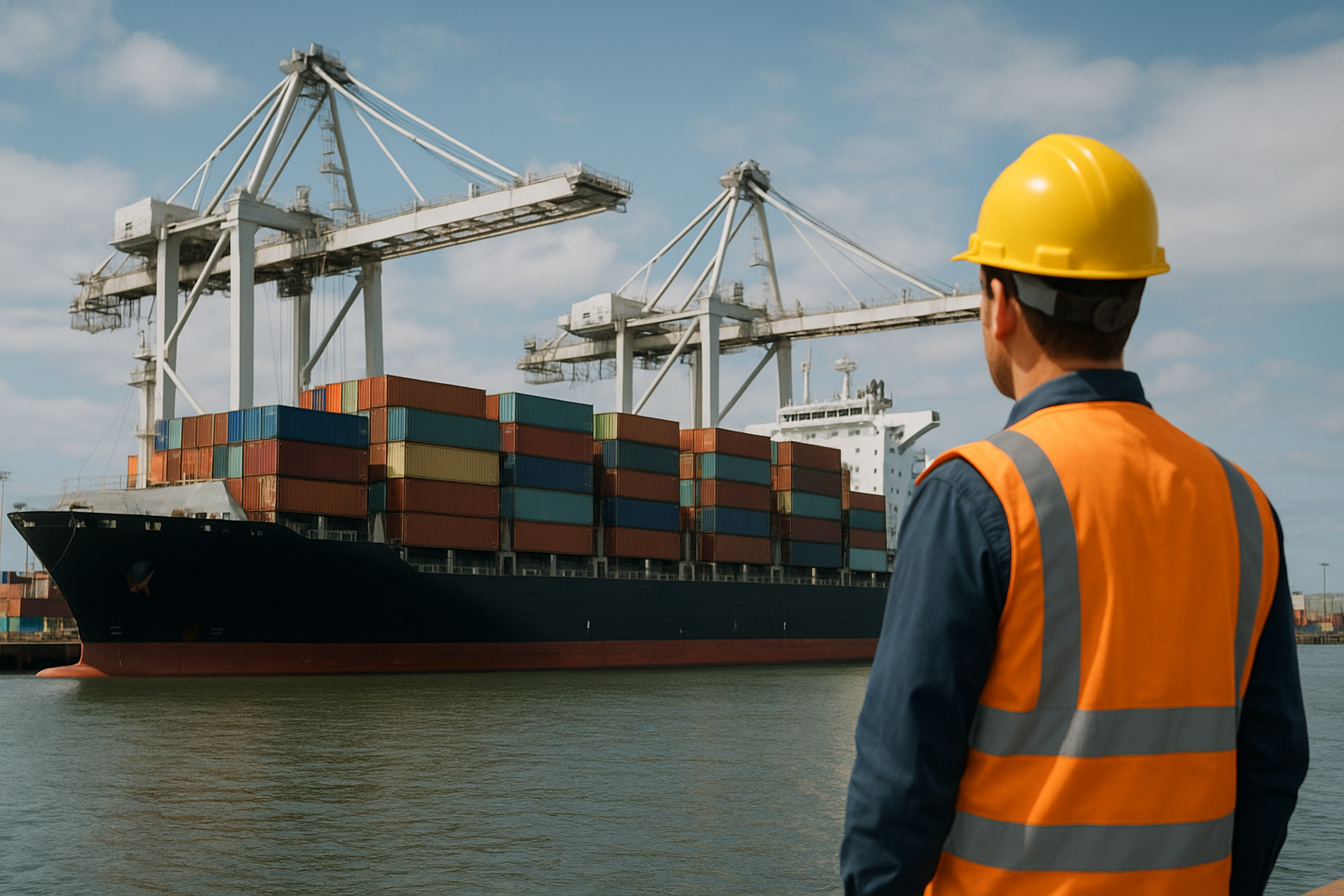
Late Thursday evening, October 3, 2026, the International Longshoremen's Association (ILA) and the United States Maritime Alliance (USMX) reached a decisive tentative agreement on wages, abruptly suspending their three-day coast-wide strike and immediately reopening 36 major deepwater container ports spanning from Maine to Texas. Under the terms of the breakthrough deal negotiated with federal mediation, port employers agreed to a landmark 62 percent wage increase over the six-year life of the master contract, elevating top hourly longshore wages from $39 to approximately $63. In exchange, the 45,000 striking dockworkers agreed to resume cargo operations and container gate traffic effective Friday morning, October 4, while formally extending their existing Master Contract through January 15, 2027. This contract extension creates a 104-day collective bargaining window allowing both negotiating committees to resolve remaining contentious contractual provisions, most notably union demands for strict, legally binding prohibitions against semi-automated and fully automated container crane and gate technologies at marine terminals across the Atlantic and Gulf coasts.
The sudden cessation of the work stoppage provides immense, immediate relief to the U.S. agricultural sector, which was facing acute logistical paralysis at the exact seasonal peak of the autumn grain and oilseed harvest. The 36 shuttered container gateways—including the Port of Virginia in Norfolk, the Port of Savannah, the Port of Charleston, the Port of Houston, Baltimore, and New Orleans—collectively handle more than 70 percent of total American containerized agricultural export volumes, representing an estimated $318 million per week in disrupted farm goods. Critical animal feed commodities that rely almost exclusively on specialized intermodal shipping containers rather than bulk ocean vessels—including distillers dried grains with solubles (DDGS), processed 48 percent solvent soybean meal, bagged specialty feeds, identity-preserved non-GMO soybeans, and dehydrated alfalfa pellets—had ground to a complete halt at origin transloading terminals across the Midwest and Ohio River Valley. In response to the agreement, Class I rail carriers, including Norfolk Southern and CSX, immediately announced the phased lifting of preemptive export container embargoes and intermodal gate cutoffs, enabling inland terminals to resume loading hopper-to-container transload lines.
Simultaneously, the strike suspension halts an escalating emergency across domestic livestock slaughter networks and inbound feed ingredient pipelines. Major Atlantic and Gulf container terminals represent the vital exit corridor for American refrigerated animal proteins, moving tens of thousands of metric tons weekly of frozen broiler leg quarters, chicken paws, and chilled pork cuts to international buyers in the Caribbean, Central America, Africa, and East Asia. With container berths closed, port-adjacent cold storage warehouses in North Carolina, Georgia, and Virginia had pushed past 90 percent occupancy, threatening forced line-speed reductions at regional processing complexes that would have backed up live birds and finishing hogs in farm barns. Furthermore, the resumption of vessel discharge unblocks vital incoming container shipments of essential micro-ingredients manufactured offshore, including synthetic amino acids (such as DL-methionine and L-threonine), vitamin premixes, choline chloride, and trace mineral chelates. Ocean carriers, including Maersk, MSC, and Hapag-Lloyd, have begun rescinding or reviewing emergency port disruption surcharges that reached $1,000 to $3,000 per container, restoring forward trade continuity for livestock integrators and commercial feed manufacturers.
Why It Matters:
For commercial feed manufacturers, grain merchandisers, and integrated livestock producers, the rapid resolution of the port strike averts an imminent structural collapse in domestic protein and co-product basis values. Had the shutdown extended into a second or third week, hundreds of thousands of tons of containerized DDGS and soybean meal contracted for overseas destinations would have been stranded in the domestic interior. Because dry-mill ethanol biorefineries and soybean crush complexes possess limited on-site storage capacity, processors would have been forced to dump surplus meal into local truck and rail corridors at steep price discounts to keep industrial processing plants running, severely depressing spot feed co-product valuations across the Midwest and Southern Plains. By reopening export corridors to high-volume buyers across Southeast Asia, Latin America, and Europe, the tentative agreement preserves robust international demand channels that have kept DDGS values trading near $175 per short ton, preventing regional co-product basis crashes while maintaining orderly formulation price spreads against intact benchmark soybean meal.
Beyond commodity market stability, the resumption of container operations protects feed mill nutrition precision and integrated livestock balance sheets during a vulnerable margin environment. Feed formulators rely on uninterrupted maritime delivery of offshore synthetic amino acids and micro-ingredients to formulate modern, low-crude-protein diets. An extended port paralysis would have triggered spot ingredient stockouts at feed mills, forcing nutritionists to replace scarce synthetic amino acids with intact oilseed meals, which would have increased mixed ration production costs by an estimated $8.00 to $14.00 per finished ton while increasing dietary nitrogen excretion. Furthermore, by averting line curtailments at poultry and pork processing plants, the settlement prevents live animal holding patterns that rapidly inflate feed conversion ratios (FCR) and consume high volumes of maintenance feed without generating slaughter returns. The prompt reopening preserves feed mill operational schedules, protects integrator cash flows, and shields the livestock sector from compounded feed cost spikes during autumn inventory building.
What to Watch:
Over the next two to four weeks through late October 2026, feed mill logistics directors and grain procurement desks must navigate severe lingering terminal congestion and container chassis deficits. While longshore labor has returned to terminal berths, marine operators confront an immediate backlog of dozens of container vessels that were forced to anchor offshore or drift in holding areas along the Atlantic Seaboard and Gulf Coast. Maritime analysts estimate that clearing vessel queues, processing stranded import containers, and repositioning empty container chassis back to inland agricultural transload hubs will take between two and three full weeks of 24/7 gate operations. Purchasing managers must anticipate ongoing container equipment shortages, transit delays of 7 to 14 days on scheduled export shipments, and secondary rail dwell times across Midwest ramps as intermodal networks work through peak post-strike freight surges. Buyers should maintain frequent contact with ocean draymen and transloading partners to adjust shipping schedules and avoid demurrage fees.
Looking further ahead to the January 15, 2027 contract expiration deadline, agricultural trade associations and corporate risk managers must closely track negotiations over port automation. While the 62 percent wage agreement resolved the economic core of the dispute, the master contract extension leaves the contentious issue of terminal automation and digital container handling completely unresolved. The ILA leadership maintains a staunch stance demanding total contractual bans on automated machinery, while ocean carriers and terminal operators assert that modernization is vital to keep American maritime infrastructure globally competitive. With both parties returning to the bargaining table under federal oversight, agricultural shippers face renewed labor uncertainty and potential strike threats in mid-January 2027—a critical export window for new-crop soybean and corn shipments. Feed industry executives should use the current operational reprieve to review forward freight commitments, explore secondary routing options through West Coast and Pacific Northwest ports, and build adequate safety stocks of critical imported feed micro-ingredients well before the January deadline.
The Bottom Line
The breakthrough tentative wage agreement between the ILA and USMX suspending the coast-wide port strike delivers decisive, critically timed salvation to the U.S. animal feed, grain, and livestock industries, reopening 36 East and Gulf Coast deepwater ports and unblocking $318 million in weekly containerized agricultural trade at the peak of autumn harvest. By averting catastrophic domestic DDGS and soybean meal surpluses, lifting rail embargoes, restoring vital export outlets for refrigerated meat, and releasing trapped shipments of essential synthetic amino acids, the deal safeguards feed mill production schedules and stabilizes livestock production economics. However, with severe two- to three-week port congestion backlogs ahead and unresolved terminal automation disputes looming before the January 15, 2027 contract expiration, feed industry buyers, nutritionists, and merchandisers must aggressively manage near-term logistics snarls while fortifying ingredient supply chains against future maritime disruptions.