
The Story:
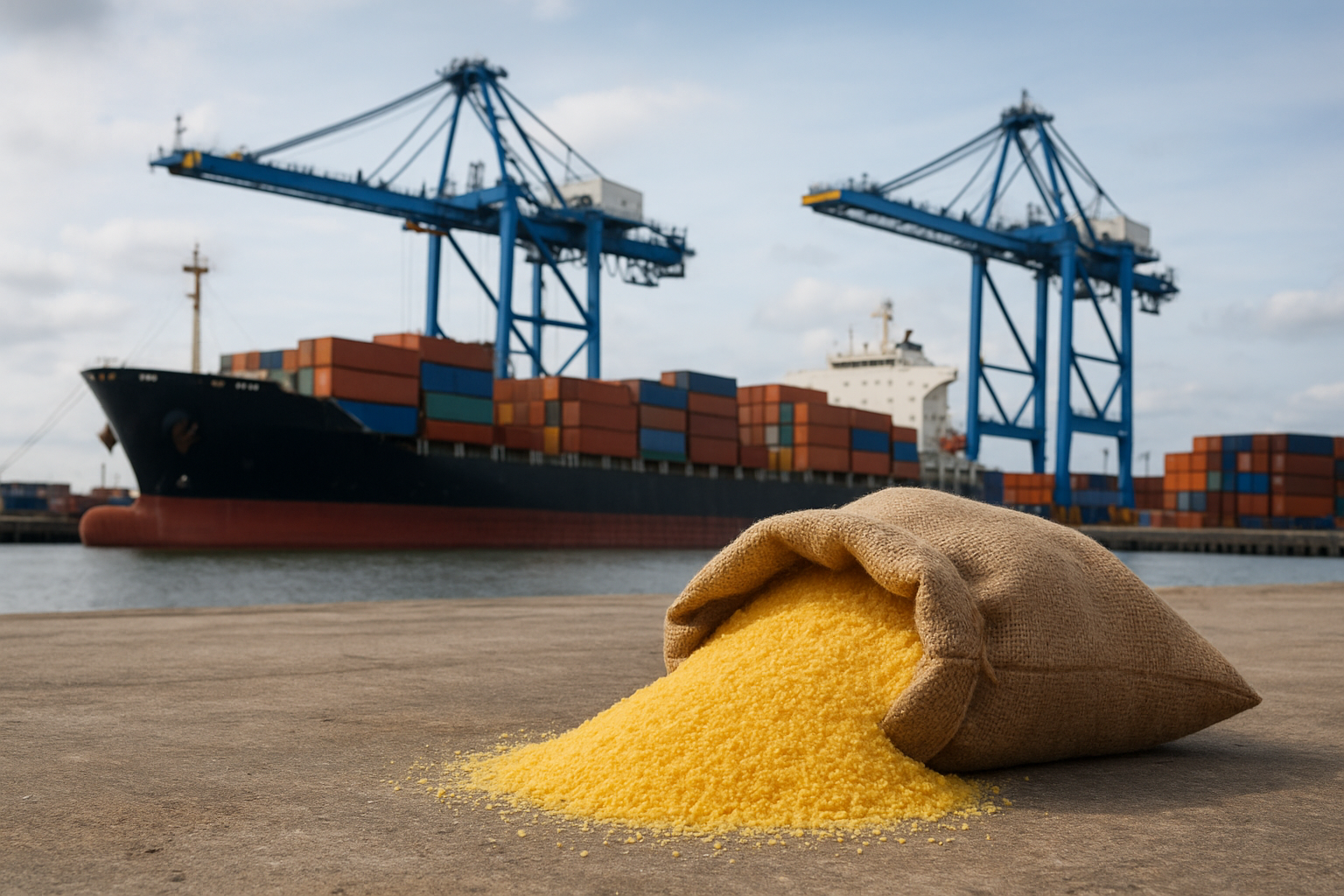
A catastrophic supply chain disruption is confronting the U.S. animal feed, grain, and livestock sectors as negotiations between the International Longshoremen's Association (ILA) and the United States Maritime Alliance (USMX) remain completely deadlocked ahead of a midnight September 30 contract expiration. The impending strike threatens to shut down 36 major deepwater container ports spanning from Maine to Texas at 12:01 AM on Wednesday, October 1, 2026, idling approximately 45,000 maritime dockworkers in the first coast-wide labor walkout along the Atlantic and Gulf since 1977. Key agricultural export and import gateways—including the Port of Virginia (Norfolk), the Port of Savannah, the Port of Charleston, the Port of Houston, Baltimore, and New Orleans—are preparing to suspend all container gate and terminal vessel loading operations. While bulk grain terminals utilizing dedicated elevators will remain technically open, the ports facing total shutdown handle more than 55% of total U.S. containerized imports and exports and more than 70% of all American containerized agricultural export volume. Critical feed-related commodities—including containerized distillers dried grains with solubles (DDGS), processed soybean meal, identity-preserved soybeans, animal feed premixes, and specialty forage—face immediate paralysis across international shipping corridors.
The looming shutdown is already triggering severe operational fallout and preventative logistical restrictions throughout inland transportation networks. Class I rail carriers, led by Norfolk Southern and CSX, have implemented preemptive embargoes and strict gate cutoffs for export-bound intermodal shipping containers moving toward East Coast marine terminals, aiming to prevent massive railcar logjams and gridlock across inland intermodal ramps. Midwest agricultural transloading facilities—which transfer bulk DDGS, corn co-products, and soybean meal from rail hopper cars into marine shipping containers—are halting packing lines as empty container chassis become unavailable and regional drayage carriers suspend port deliveries. Concurrently, major ocean carriers, including Maersk, Mediterranean Shipping Company (MSC), Hapag-Lloyd, and CMA CGM, have issued formal notices implementing emergency port disruption and operational surcharges ranging from $1,000 to $3,000 per twenty-foot equivalent unit (TEU) effective October 1. These immense freight penalties, coupled with accelerating detention and demurrage liabilities, are stranding contracted feed co-products at inland origin facilities and burdening agricultural shippers with severe cash flow penalties.
In parallel, the impending work stoppage threatens catastrophic consequences for cold chain logistics and vital feed additive supply chains. East Coast and Gulf marine terminals serve as the primary exit corridor for American refrigerated animal protein shipments, moving tens of thousands of metric tons weekly of frozen broiler leg quarters, chicken paws, and export pork cuts to destinations in the Caribbean, Latin America, Africa, and East Asia. With container vessel berths shuttered, port-adjacent refrigerated warehouses across Virginia, North Carolina, and Georgia are reaching maximum storage capacity, forcing poultry and swine processing plants to contemplate immediate slaughter curtailments that will back up live animals on farms and alter regional rendering meal production. Simultaneously, the shutdown cuts off inbound flows of indispensable feed micro-ingredients. The U.S. livestock feeding industry depends heavily on East Coast container berths to receive imported synthetic amino acids, vitamin premixes, choline chloride, feed-grade enzymes, and trace mineral chelates manufactured in Europe and Asia, leaving commercial feed manufacturers facing sudden ingredient stockouts just as peak autumn livestock feeding demands accelerate.
Why It Matters:
For integrated feed mills, commercial livestock producers, and grain merchandisers, a prolonged East and Gulf Coast port closure threatens to abruptly destabilize regional basis relationships and trap hundreds of thousands of tons of co-product proteins in the domestic interior. In the distillers grains complex—where strong international container shipments have paced 13% ahead of year-ago levels, sustaining Midwest processor prices at $170.00 to $180.00 per short ton—the sudden shutdown of overseas export channels will redirect massive volumes of bulk meal back into local truck and rail markets. Because dry-mill ethanol plants cannot store excessive co-product meal on-site without halting biofuel distillation, processors will be forced to aggressively discount spot DDGS to incentivize domestic feedlot, swine, and dairy inclusion, placing intense downward pressure on regional co-product valuations. Similarly, commercial soybean crush plants facing canceled or deferred export meal movements will divert supply into domestic livestock corridors, altering protein pricing dynamics against benchmark 48% solvent soybean meal and overturning feed mill purchasing budgets across the Corn Belt and Southeast.
Even more critically, the disruption of imported feed additive arrivals and the backup of finished meat processing threatens to compromise both animal nutrition precision and integrator operational solvency. Commercial feed formulators rely on a steady pipeline of supplemental synthetic amino acids—such as L-lysine, DL-methionine, L-threonine, and L-tryptophan—to balance crude protein diets and manage finished ration costs. If maritime delays strand imported amino acid shipments at offshore anchorages, nutritionists will be forced to reformulate swine and broiler diets using higher concentrations of intact soybean meal, driving up mixed ration costs by $8.00 to $15.00 per ton while simultaneously increasing dietary nitrogen excretion. At the same time, any cold-storage bottlenecks that force poultry integrators and hog slaughterhouses to reduce daily processing line speeds will extend animal days on feed in grower barns, inflating feed conversion ratios and consuming scarce feed inventories without generating slaughter revenue. These compounding pressures threaten to erase livestock producer margins during a critical seasonal transition.
What to Watch:
Over the next 72 hours leading up to the October 1 midnight deadline, agricultural commodity buyers, feed procurement directors, and logistics managers must closely monitor federal regulatory developments and emergency political intervention. A broad coalition of more than 175 agricultural, food, and manufacturing trade organizations—spearheaded by the American Feed Industry Association (AFIA), the National Grain and Feed Association (NGFA), the Agriculture Transportation Coalition (AgTC), and the National Pork Producers Council (NPPC)—has urgently petitioned the Biden administration to intervene in the labor impasse. The industry coalition is demanding that the White House invoke the national emergency provisions of the 1947 Taft-Hartley Act, which empowers the President to seek a federal court injunction ordering an 80-day cooling-off period that would reopen container gates while negotiations proceed. Feed industry executives must monitor announcements from the White House and the Federal Mediation and Conciliation Service (FMCS), as the administration's decision will determine whether maritime commerce continues under federal mediation or halts entirely.
Simultaneously, commercial feed manufacturers, premix producers, and livestock procurement managers must execute immediate risk-mitigation strategies to safeguard feed production continuity. Procurement executives must immediately conduct comprehensive audits of on-hand micro-ingredient inventories, verifying stocks of imported vitamins, synthetic amino acids, and specialized feed additives to establish accurate operational runouts across every mill facility. Buyers should establish direct communications with domestic ingredient manufacturers and regional distributors to secure spot replacement volumes accessible via domestic overland trucking routes. In parallel, feed mill managers must monitor Class I rail carrier performance bulletins and secondary railcar auction premiums, as stranded container traffic could quickly ripple into railcar availability for covered hopper fleets moving bulk corn, soybeans, and co-products. Formulators should proactively create alternative least-cost ration matrices to seamlessly adapt to localized protein discounts and potential micro-ingredient substitutions.
The Bottom Line
The looming October 1 dockworkers strike across 36 East and Gulf Coast deepwater ports represents an acute, systemic supply chain emergency for the U.S. animal feed and livestock industries, threatening immediate paralysis of containerized DDGS, soybean meal, and poultry exports while cutting off critical imported synthetic amino acids and feed additives. With Class I rail carriers already enforcing export container embargoes, ocean shipping lines applying emergency disruption surcharges up to $3,000 per container, and port-adjacent cold storage facilities facing total gridlock, the economic reverberations will rapidly spread from coastal container yards directly into Midwest feed mills and livestock production barns. As agricultural trade groups urge emergency federal invocation of the Taft-Hartley Act to avert nationwide logistics paralysis, feed industry executives and nutritionists must proactively audit ingredient pipelines, secure overland additive replacements, and prepare least-cost formulation strategies to safeguard animal performance and business stability.