
The Story:
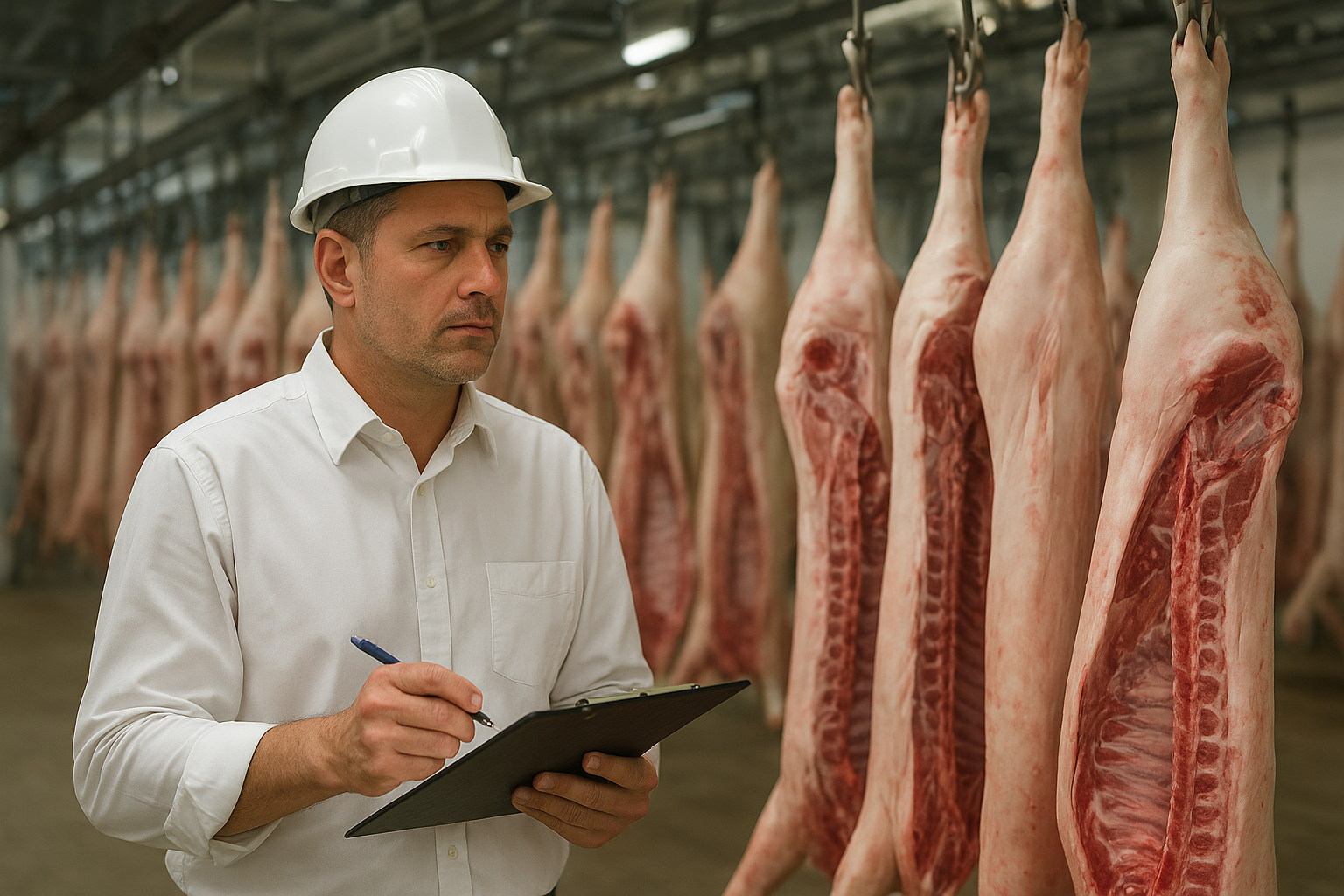
On Tuesday afternoon, September 29, 2026, commodity economic advisory firm Sterling Marketing released its weekly Pork Profit Tracker for the week ending September 26, reporting that U.S. pork packer operating margins rebounded to an average of $6.98 per head. The strong financial recovery marks the packing sector's most profitable operating week since the end of January, driven by a sharp and sudden divergence between resilient wholesale retail meat values and softening live animal acquisition costs across the Midwest. While the benchmark wholesale pork cutout held essentially steady at $87.31 per hundredweight (cwt)—slipping a negligible four cents from $87.35/cwt the prior week—the Western Corn Belt negotiated lean carcass value fell by $3.73/cwt, or 4.5%, dropping to an average of $79.49/cwt compared to $83.22/cwt the preceding week. The widening price spread between falling live procurement costs and firm wholesale cutout values allowed commercial meat processors to extract substantially wider gross processing spreads across primary harvesting facilities in the western and eastern Corn Belt.
Capitalizing on wider gross processing margins and expanding autumn market hog supplies, commercial packing plants ramped slaughter line speeds aggressively across the central United States. Sterling Marketing reported that average pork processing plant utilization jumped to 93.8% of daily operational capacity, up sharply from 89.9% recorded just one week earlier. The surge in weekly slaughter volume reflects a heavy seasonal influx of market-ready barrows and gilts moving out of finishing barns as autumn temperatures moderate and animal daily feed intake rebounds toward seasonal highs. Despite total U.S. hog and pig inventories standing 1.5% below year-ago levels according to last week's USDA quarterly inventory report, sustained structural improvements in swine breeding productivity—highlighted by an all-time record 11.96 pigs saved per litter during the summer quarter—have maintained a steady, heavy flow of slaughter animals into commercial processing channels, providing packing plants with ample physical volume to maximize facility throughput.
However, the economic windfall observed across commercial packing plants presents a stark and concerning contrast to the deteriorating financial conditions confronting independent and integrated hog producers. Sterling's benchmark farrow-to-finish producer margins eroded to an average of $27.08 per head last week, down from $28.47 per head the previous week and collapsing by 66.4% compared to the robust $80.53 per head margins captured during the same period in 2025. Complementing Sterling's assessment, updated economic projections from Iowa State University’s livestock returns model and agricultural economists at the University of Missouri indicate that farrow-to-finish returns are rapidly converging toward operational breakeven for the full 2026 calendar year, with widespread net losses projected for the upcoming winter and early 2027. With cash carcass receipts dropping below the psychological threshold of $80.00/cwt, the margin cushion built during the summer marketing window has evaporated, refocusing urgent executive attention onto finishing feed manufacturing costs and dietary formulation efficiencies.
Why It Matters:
For commercial animal feed manufacturers, swine nutrition directors, and integrated livestock producers, this rapid compression in live hog margins places immense, direct pressure on feed procurement balance sheets. Feed expenditures historically represent between 65% and 70% of total cash operating costs in a commercial swine finishing barn; when live hog revenue falls to $27.08 per head with breakeven in sight, every fractional change in feed cost per pound of gain directly dictates enterprise solvency. Although benchmark wholesale ingredient prices have seen moderate relief compared to historical highs, localized delivery dynamics remain highly challenging. In primary swine-producing states such as Iowa, southern Minnesota, and North Carolina, recent harvest delays and persistent rain have propped up nearby cash corn basis, while weather-related logistical bottlenecks have kept spot 48% solvent soybean meal firm at $320.00 to $335.00 per short ton. Caught between declining hog checkoff values and stubborn delivered ingredient costs, swine production executives are instructing nutrition desks to aggressively shave per-ton ration expenses without sacrificing average daily gain or feed conversion efficiency.
From a feed mill operations and ingredient merchandising perspective, the combination of high packing plant utilization (93.8%) and tight producer margins triggers two immediate structural adjustments across the feed manufacturing supply chain. First, near-term feed mill throughput and bulk delivery schedules must operate at maximum capacity to satisfy peak daily feed disappearance from heavy finishing cohorts, accelerating inventory turnover for energy and protein feedstuffs. Second, nutrition formulators are systematically re-evaluating dietary inclusion rates for alternative co-products and concentrated synthetic amino acids to lower finished feed costs. Feed mills are maximizing the dietary inclusion of corn distillers dried grains with solubles (DDGS)—currently pricing at an attractive 80% to 85% relative value to cash corn—while aggressively utilizing crystalline L-lysine hydrochloride, L-threonine, DL-methionine, and L-tryptophan to displace expensive intact soybean meal. By pushing crude protein levels down by two to three percentage points and balancing digestible amino acids synthetically, integrated mills can reduce grow-finish ration costs by $8.00 to $14.00 per ton, providing the vital margin buffer needed to keep finishing cohorts cash-flow positive.
What to Watch:
Over the coming four to eight weeks, feed buyers, grain merchandisers, and swine production executives must closely monitor weekly slaughter volumes and regional cash hog carcass bids to evaluate whether negotiated prices stabilize or continue their downward trajectory. If western Corn Belt lean carcass values break decisively below $75.00/cwt while packer utilization remains above 93%, commercial producers will be forced to market pigs at lighter live weights to curtail expensive late-stage finishing feed consumption, where feed conversion ratios deteriorate above 3.1 pounds of feed per pound of gain. Commodity procurement managers should also monitor the USDA AMS Daily National Ethanol Report and regional DDGS auction sheets; any sudden export disruption or rail congestion stemming from coastal port logistics could trap additional distillers grains within interior Corn Belt trucking radii, creating immediate opportunities for feed mills to secure distressed spot co-product loads at steep discounts.
Simultaneously, feed industry nutritionists and livestock risk management teams must watch forward basis movements on soybean meal and corn following Wednesday's release of the USDA Quarterly Grain Stocks report. With old-crop inventory figures setting the definitive carryout baseline ahead of full-scale autumn harvest combining, any unexpected tightening in grain reserves could spark sudden upward volatility in cash grain basis, widening the cost-price squeeze on livestock operations. Feed manufacturers must also track commercial synthetic amino acid availability and pricing. As formulators rely heavily on crystalline amino acids to replace intact protein, any supply bottlenecks or import freight surcharges on imported L-lysine and L-threonine will limit formulation flexibility, forcing nutritionists back into higher-protein soybean meal diets. Maintaining forward coverage on key synthetic micro-ingredients will be essential for feed manufacturers seeking to protect producer margins through the fourth quarter.
The Bottom Line
The rebound in pork packer margins to an eight-month high of $6.98 per head—underpinned by 93.8% plant utilization and a sharp decline in Western Corn Belt lean carcass values to $79.49/cwt—has widened the economic chasm between packing profitability and on-farm producer viability across the livestock sector. With farrow-to-finish returns sliding to $27.08 per head and modeled university projections pointing toward winter deficits, commercial swine operations cannot afford inefficiencies in their nutritional programs. As feed mills navigate peak seasonal feed disappearance across finishing complexes, ingredient buyers and feed formulators must execute aggressive least-cost strategies—leveraging cost-advantaged corn DDGS and precision synthetic amino acid supplementation—to suppress per-ton ration expenses, optimize feed conversion ratios, and protect producer liquidity in an increasingly unforgiving livestock margin environment.