
The Story:
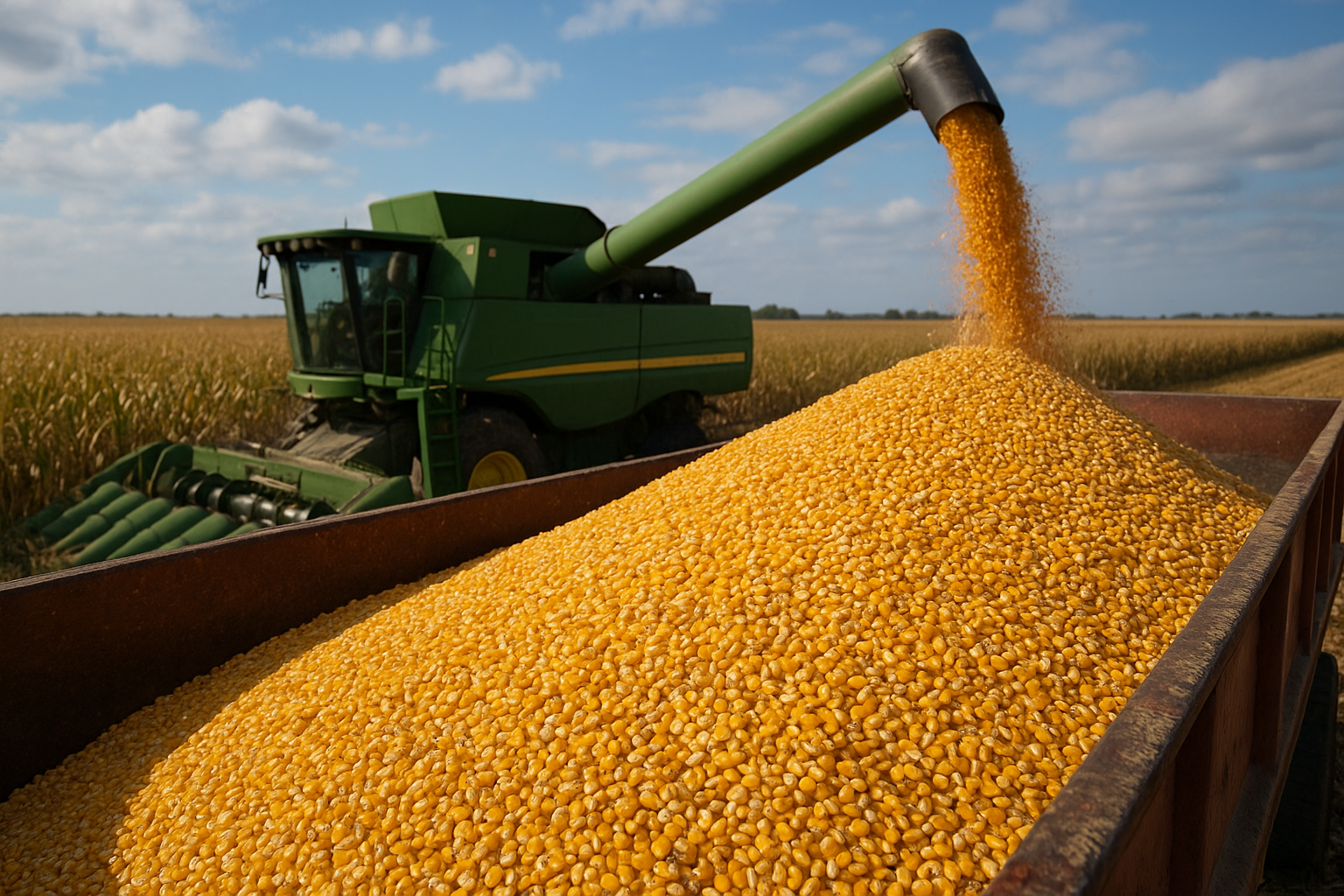
On Monday morning, November 2, 2026, the U.S. Department of Agriculture’s Foreign Agricultural Service (USDA FAS) officially announced that private commercial exporters reported massive flash export sales totaling 1,729,740 metric tons (approximately 68.1 million bushels) of U.S. corn destined for Mexico. Under the USDA’s mandatory daily export reporting program—which requires private exporters to report any daily sales activity of 100,000 metric tons or more of a single commodity—the commercial transaction ranks among the largest single-day bilateral corn purchase commitments recorded in recent marketing history. According to federal trade disclosures, the volume is split across two distinct marketing periods: 1,135,380 metric tons (44.7 million bushels) are designated for physical delivery during the current 2026/2027 marketing year ending August 31, 2027, while an additional 594,360 metric tons (23.4 million bushels) were booked for forward delivery during the 2027/2028 marketing year. Concurrently, USDA reported a separate private export sale of 136,000 metric tons of soybeans to China for 2026/2027 delivery, reinforcing strong foreign commercial appetite for U.S. row crops as the North American harvest advances past peak activity.
The sheer magnitude and forward duration of the Mexican purchase underscore Mexico's structural reliance on U.S. feed grains to sustain its expanding livestock, swine, and commercial poultry feeding sectors. Over 80 percent of Mexico’s annual yellow corn imports are channeled directly into commercial animal nutrition, supplying intensive feedlot operations in northern Mexico, integrated poultry complexes in Jalisco and Veracruz, and commercial swine finishing networks in Sonora and Puebla. Notably, the forward booking of nearly 600,000 metric tons into the 2027/2028 marketing year represents an aggressive risk-mitigation strategy by Mexican feed compounders and multinational grain procurement desks. By securing multi-year forward physical supplies at current price levels, Mexican buyers are insulating their supply chains against ongoing bilateral trade uncertainties surrounding the United States-Mexico-Canada Agreement (USMCA) biotechnology dispute over genetically modified corn, while simultaneously hedging against anticipated cross-border rail freight congestion and future currency volatility between the Mexican peso and the U.S. dollar.
This multi-million-ton export commitment enters the marketplace at an acute inflection point for Midwest grain origination, cross-border freight logistics, and commercial elevator operations. With the 2026 U.S. corn harvest crossing 65 percent completion nationwide and regional storage elevators operating near peak seasonal capacity, this massive physical export commitment provides an immediate commercial outlet for heavy country bushels. However, because Mexican delivery commitments rely almost exclusively on overland Class I rail logistics—primarily moving via Union Pacific (UP), BNSF Railway, and Canadian Pacific Kansas City (CPKC) through high-volume border gateways at Laredo, Eagle Pass, and El Paso—the sudden influx of 1.73 million metric tons will tie up thousands of covered grain hoppers and unit shuttle trains over the coming months. Commercial grain elevators in the Western Corn Belt, Nebraska, Kansas, and Iowa with direct rail access to Mexican border interchanges are already repositioning rolling stock and firming physical origin basis bids, abruptly shifting the interior flow of cash grain away from local domestic river terminals and processing plants.
Why It Matters:
For commercial animal feed manufacturers, livestock integrators, and independent feed mills across the United States, this massive export sale injects immediate competition for physical feed grains and alters regional basis dynamics heading into the winter feeding season. Whole corn constitutes between 50 and 70 percent of total complete feed volume across domestic broiler, turkey, swine, and beef cattle diets. Domestic feed compounders have spent recent weeks counting on heavy harvest-time delivery pressure and overflowing elevator bins to soften delivered cash grain prices and ease local interior basis. Instead, the sudden earmarking of 68 million bushels of corn for Mexican cross-border shuttle transit acts as a powerful price floor. Feed mills in Nebraska, Iowa, and the Southern Plains now face direct competition against aggressive export origin bids posted by rail-loading terminals servicing the border corridor. Furthermore, as Class I railroads prioritize lucrative cross-border unit train movements to satisfy prompt vessel and interchange commitments, domestic secondary railcar freight spreads are tightening, elevating delivered grain costs for non-rail-origin feed manufacturers and livestock complexes situated outside the immediate Corn Belt, particularly throughout the Southeast and Mid-Atlantic poultry belts.
The resulting firmness in physical cash corn bids forces commercial nutritionists, feed formulators, and commodity risk managers to accelerate least-cost ration re-optimization and expand alternative ingredient inclusion. With spot and forward corn basis resisting post-harvest deflation, commercial feed compounders are actively adjusting matrix parameters to maximize inclusion rates of energy- and protein-dense co-products, notably Distillers Dried Grains with Solubles (DDGS) and wheat middlings. With domestic ethanol production sustaining robust operating grinds near 1.1 million barrels per day, spot DDGS prices have traded at attractive relative discounts, making high-inclusion co-product strategies biologically and economically compelling. However, substituting higher percentages of DDGS into swine and broiler finishing rations demands heightened precision in amino acid supplementation. To prevent performance lag, preserve Feed Conversion Ratios (FCR), and avoid excessive crude protein waste, feed mills are expanding synthetic amino acid fortification—relying heavily on supplemental crystalline L-lysine, DL-methionine, and L-threonine. Procurement desks must simultaneously lock in forward coverage for synthetic amino acids to safeguard against tightening fourth-quarter chemical supply chains and holiday freight slowdowns.
What to Watch:
Over the coming four to six weeks, feed procurement directors, grain merchandisers, and livestock operations managers must closely track cross-border rail transit fluidities, border gateway dwell times, and weekly USDA Export Inspections summaries to monitor the actual physical movement of this sale. Stakeholders should track weekly rail performance metrics published by the Surface Transportation Board (STB) and freight advisories from CPKC and Union Pacific, focusing specifically on border crossing congestion at Laredo and Eagle Pass. If border processing delays or crew shortages accumulate, rail equipment turnaround cycles will lengthen, creating localized railcar shortages at Midwestern loading origins that could spike secondary railcar certificate values. Concurrently, feed buyers must evaluate the weekly USDA Foreign Agricultural Service Export Sales reports released every Thursday morning, assessing whether private exporters announce additional flash commitments or if foreign commercial demand from secondary buyers in Colombia, Japan, or South Korea steps in to challenge Mexico’s aggressive procurement pace.
Simultaneously, feed industry participants must scrutinize domestic basis sheets across key interior rail junctions and track the forthcoming USDA World Agricultural Supply and Demand Estimates (WASDE) report scheduled for release on November 8. Market participants should watch whether federal balance sheet analysts make upward revisions to official 2026/2027 U.S. corn export projections, which currently face tightening ending stocks if harvest yields fail to expand in final combine surveys. Nutritionists and mill operations teams should monitor regional cash basis spreads between Chicago Board of Trade (CBOT) futures settlements and local delivered elevator bids across interior feeding corridors in the Western Corn Belt and High Plains. In addition, feed compounders should track spot prices for ethanol co-products and synthetic amino acids, ensuring that least-cost formulation models accurately capture delivered freight surcharges and forward carry spreads before winter weather disrupts truck and rail logistics.
The Bottom Line
The USDA’s confirmation of 1,729,740 metric tons in U.S. corn flash sales to Mexico—spanning both the 2026/2027 and 2027/2028 marketing years—delivers a decisive commercial jolt that sets a firm floor under interior cash grain values and tightens cross-border rail logistics for the North American feed complex. By demonstrating aggressive multi-year procurement discipline, Mexican livestock and poultry integrators are securing critical physical feed supplies while pulling millions of bushels directly out of domestic commercial channels. For U.S. feed manufacturers, integrated livestock producers, and feed procurement executives, this substantial export pull eliminates expectations of a post-harvest basis collapse, requiring immediate procurement discipline, tactical ration re-balancing toward cost-competitive co-products like DDGS, and precision synthetic amino acid supplementation to defend feeding margins through the winter production cycle.