
The Story:
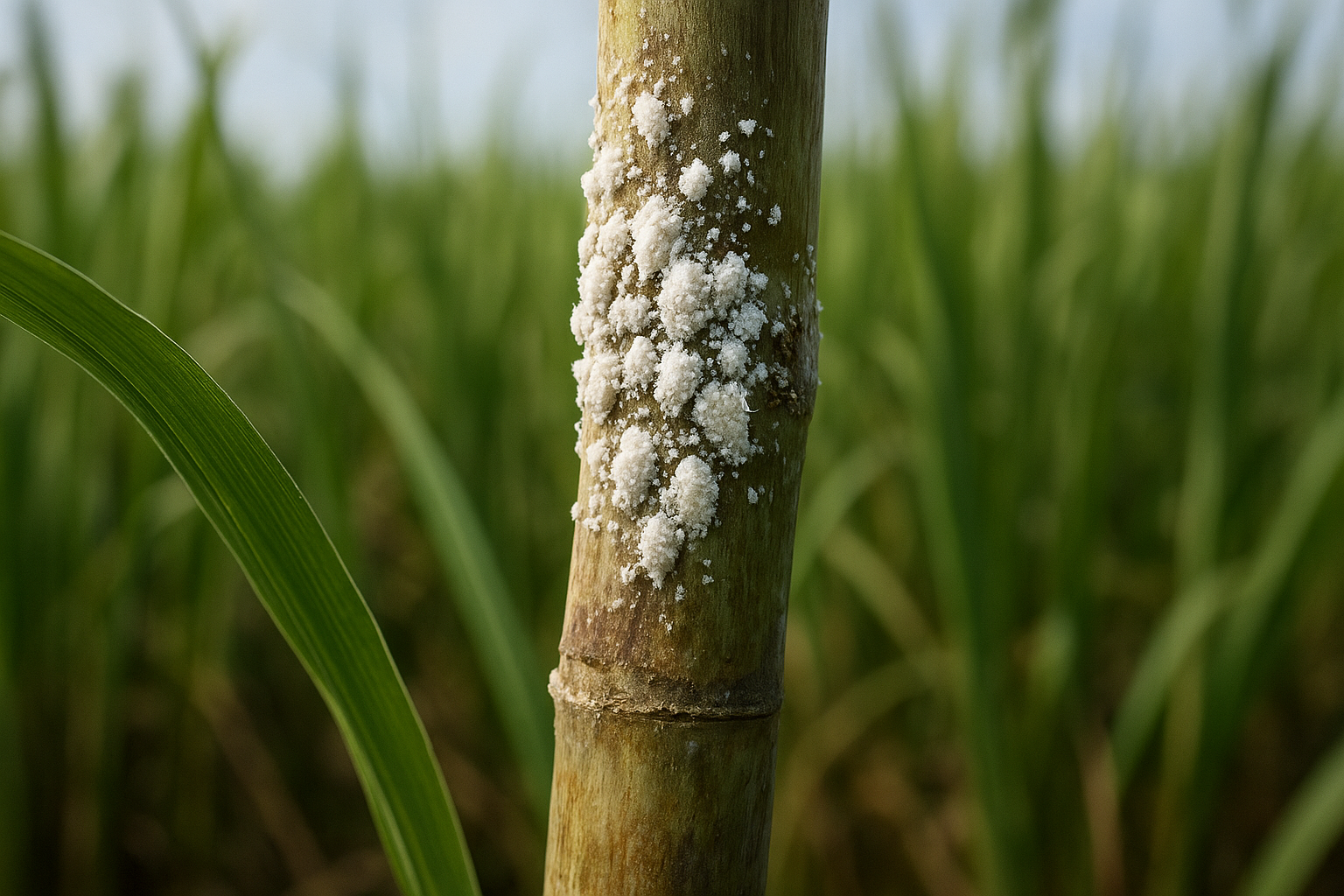
An emerging entomological crisis across the Gulf Coast and Deep South is rapidly reverberating through the North American feed manufacturing and commercial livestock nutrition sectors. Agricultural extension specialists and entomologists from the University of Florida Institute of Food and Agricultural Sciences (UF/IFAS) and the Louisiana State University AgCenter (LSU AgCenter) have issued urgent advisories confirming widespread, severe infestations of the invasive pasture mealybug (Heliococcus summervillei). First detected in the Gulf region in late 2025, this destructive sap-sucking grass specialist has experienced an explosive population surge across central and southern Florida, southern Louisiana cane parishes, and coastal Texas. The insect infests root crowns, stalks, and leaf sheaths of perennial warm-season grasses and commercial sugarcane stands, injecting toxic salivary compounds that trigger rapid canopy yellowing, stunted internode elongation, and severe pasture dieback. With the autumn commercial sugarcane harvest and milling campaign actively ramping up across the Everglades Agricultural Area and Louisiana bayous, agronomists warn that heavy insect pressure is severely curbing cane biomass tonnage and extractable sucrose recovery, directly constricting the anticipated seasonal production of raw cane sugar and its vital industrial co-product—feed-grade blackstrap cane molasses.
This biological disruption has created an acute structural crisis for livestock producers and commercial feed compounders known across the Southeast as a compounding 'double-whammy.' Across major cattle-grazing belts, the mealybug's devastation of foundational pasture forages—including limpograss, bahiagrass, and hybrid bermudagrass—has wiped out vital late-season grazing reserves and decimated final autumn hay cuttings. As pasture carrying capacities collapse weeks ahead of historical frost dates, cow-calf operations, stocker producers, and commercial backgrounders are being compelled to initiate emergency supplemental feeding immediately. Consequently, regional demand for energy-dense liquid feeds, free-choice pasture tubs, and concentrated mineral licks has surged dramatically. However, the simultaneous damage inflicted by the pest upon commercial sugarcane acreage threatens to throttle the very foundation of those supplemental rations. Because cane molasses represents the indispensable liquid carrier, fermentable carbohydrate source, and binder for pasture lick tanks and range blocks, the industry faces an unprecedented supply-demand squeeze where input demand is hitting multi-year seasonal highs just as local byproduct availability faces severe disruption.
At commercial river terminals and inland distribution facilities across New Orleans, Tampa, and Mobile, merchandising desks report that spot supplies of standard 79.5° Brix blackstrap cane molasses have tightened precipitously, with regional distributors placing industrial buyers on strict contract allocation. Bulk liquid ingredient quotes have appreciated sharply, with Gulf-delivered cane molasses climbing toward $185 to $210 per short ton, up more than 15 percent from late-summer baseline expectations. Commercial feed compounding mills and premix manufacturers from Georgia and Alabama to the Southern Plains are encountering freight surcharges and delayed tanker truck logistics as distributors prioritize local contract commitments. With commercial sugar mills only beginning their processing run and full assessment of cane yield loss ongoing, commodity purchasing directors are rapidly confronting an unseasonal tightness in liquid energy and binding agents, complicating fall ration formulation and driving volatility into regional cattle feeding economics.
Why It Matters:
For commercial feed manufacturers, integrated livestock nutritionists, and mill operations superintendents, cane molasses is far more than a simple liquid carbohydrate—it is a critical functional processing aid. In high-throughput automated feed mills, blackstrap molasses serves as the standard industrial binder and lubricant for pelleted beef, swine, and dairy rations, reducing die friction, lowering electrical kilowatt draw per ton of throughput, and dramatically suppressing airborne grain dust in elevator legs and mixing bays. Crucially, molasses inclusion between 2 percent and 5 percent in commercial pellets provides the binding strength necessary to maintain high Pellet Durability Index (PDI) scores above 92 percent, preventing pellet fracture, excessive fines accumulation, and bag breakage during automated transport. A structural shortage or price spike in cane molasses forces mill managers to evaluate alternative binding chemistries—such as lignosulfonates, gelatinized starches, or bentonite clays—which require distinct liquid inclusion tanks, longer conditioning steam exposure, and recalibrated die compression ratios, adding immediate operational friction and ingredient cost to finished feed lines.
Across the ruminant feeding complex, the squeeze on cane molasses directly imperils winter herd maintenance strategies and elevates cow-calf cost structures. Commercial liquid feed supplements formulated with 30 percent to 50 percent cane molasses combined with urea and phosphoric acid provide the optimal vehicle for delivering non-protein nitrogen (NPN) and readily fermentable sucrose directly into the rumen, stimulating cellulolytic microbial populations to digest low-quality standing winter forages and dry hay. As ranchers face depleted pastures from mealybug dieback alongside higher supplemental liquid feed costs, per-head winter carrying costs are projected to escalate by $35 to $55 per cow through early 2027. Nutrition directors are forced to explore partial substitutes such as condensed corn distillers solubles (CCDS) from Midwest ethanol plants, condensed liquid whey from dairy processors, or desugared beet molasses from the Red River Valley. However, each alternative carries significant trade-offs: Midwest beet molasses and CCDS face steep long-haul freight tariffs into the Deep South, distinct viscosity and flowability characteristics in cold ambient temperatures, and divergent sulfur or mineral profiles that require extensive mineral premix redesign to prevent metabolic toxicity.
What to Watch:
Over the next four to six weeks, feed procurement teams, commodity merchandisers, and agricultural analysts must closely monitor initial milling reports from the Florida Sugar Cane League and the American Sugar Cane League of Louisiana as harvest campaigns reach full operational stride. Processing metrics regarding net sucrose extraction percentages, juice purities, and final gallons of blackstrap molasses produced per ton of harvested cane will establish whether early yield damage estimates are fully realized or if late-season dry weather mitigated stalk degradation. Concurrently, industry stakeholders must track regulatory actions from the USDA Animal and Plant Health Inspection Service (APHIS) and state departments of agriculture regarding potential phytosanitary quarantine restrictions or movement protocols on raw forage, sugarcane seed-cane, and vegetative material to prevent the transport of pasture mealybug nymphs into uninfested grazing counties across northern Florida, Alabama, and Mississippi.
Simultaneously, feed mill formulation desks, purchasing directors, and commercial nutritionists should immediately model parity pricing thresholds for liquid energy and pelleting binders across the regional supply chain. Procurement managers must track spot freight differentials for rail tank cars of Upper Midwest beet molasses and Midwest condensed distillers solubles delivered into Southeastern rail junctions against local truck-delivered cane molasses. Mill engineers and quality control directors must conduct pilot conditioning trials to evaluate how substituting alternative liquid coproducts alters pellet durability, mixer cleanout times, and tank storage stability, particularly regarding the risk of sugar caramelization or ingredient separation during cooler winter weather. Furthermore, cattle nutritionists must monitor regional hay availability and coordinate with livestock producers to test standing forages for protein and fiber content, ensuring that liquid supplement rations are precisely formulated to maximize ruminal digestion without exceeding dietary sulfur thresholds when combining distillers co-products with alternative liquid feeds.
The Bottom Line
The sudden emergence of the invasive pasture mealybug as a destructive dual threat to Southeastern forage pastures and commercial sugarcane crops delivers a sharp wake-up call to the animal feed manufacturing and livestock nutrition complex, demonstrating how localized biological disruptions can instantly upend ingredient availability and ration economics. With cane molasses production constrained and regional herd demand for liquid supplements surging to offset decimated pastures, feed mill operators and cattle integrators cannot afford a wait-and-see posture. Procurement directors and nutritionists that promptly audit bulk liquid storage capacities, establish forward physical contracts for alternative liquid co-products like beet molasses and condensed distillers solubles, and recalibrate mill pelleting parameters to protect finished product durability will successfully insulate their operations against regional ingredient bottlenecks and maintain cost-effective livestock performance heading into the winter feeding season.