
The Story:
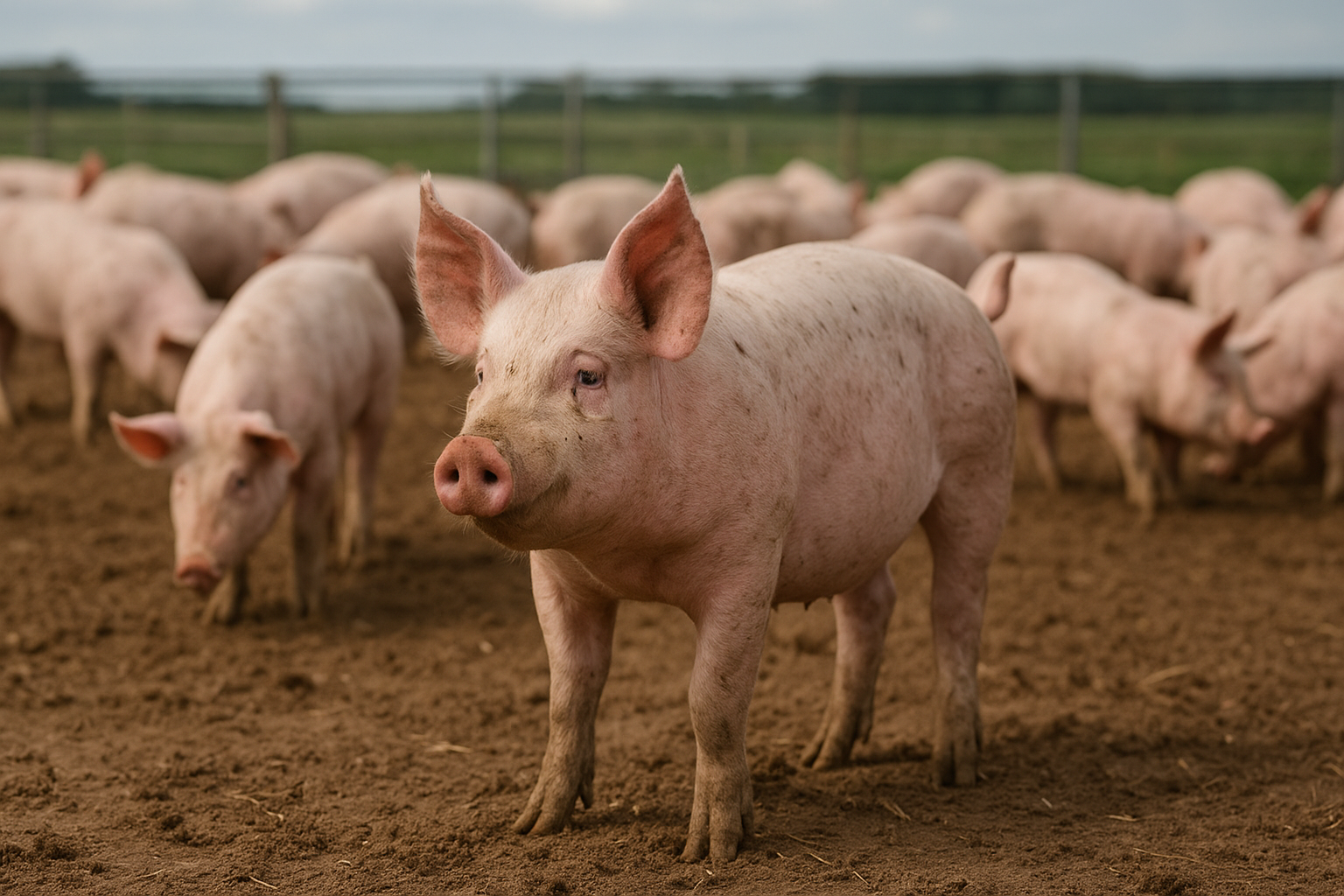
On Wednesday afternoon, November 4, 2026, the Chicago Mercantile Exchange (CME) lean hog futures complex suffered intense liquidation into the market close, with front-month contracts breaking down through major support levels to touch fresh life-of-contract lows. Benchmark December 2026 lean hog futures dropped heavily to settle at 57.400 cents per pound ($57.40 per hundredweight), extending a steep multi-week decline that has erased autumn premium across the forward curve. Deferred contracts followed in tandem, with February 2027 lean hogs dropping to 64.250 cents per pound and April 2027 sliding to 68.800 cents per pound as commodity index funds and speculative accounts expanded short exposure. The market's technical breakdown followed another day of heavy slaughter plant activity, with the U.S. Department of Agriculture's Agricultural Marketing Service (USDA AMS) estimating Wednesday's daily federally inspected hog slaughter at 493,000 head, matching Tuesday's robust pace and bringing week-to-date slaughter to 1.478 million head—running nearly 2 percent ahead of corresponding 2025 volumes. Despite seasonal hopes for retail promotional clearing, the relentless volume of market-ready hogs moving through Midwest packing plants has outpaced wholesale demand, leaving commercial processors and packers with substantial leverage over spot cash bids.
Compounding the downward pressure on live hog and futures values, the wholesale pork cutout experienced continued softness during Wednesday trading. The USDA AMS afternoon National Daily Pork Report showed the composite pork carcass cutout slipping to $71.73 per hundredweight across 183.89 total loads, weighed down by significant pressure in belly and rib primals. Pork bellies dropped $1.85 to average $98.42 per cwt, while spareribs fell $1.12 to $118.50 per cwt, reflecting cautious grocery chain purchasing and persistent consumer resistance to discretionary high-value retail cuts. While picnic cuts and loins displayed modest stability, they failed to offset broader primal weakness, dampening packer operating realizations. Consequently, commercial meatpackers curtailed negotiated cash bids across interior Iowa, southern Minnesota, and the Western Corn Belt, with national weighted average negotiated cash hog prices dropping below $58.00 per cwt on a carcass basis. With retail meat cases stocked with competitively priced broiler meat—further evidenced by Wednesday's USDA Broiler Hatchery report showing weekly chick placements up 1 percent to 190 million head—wholesale pork has faced stiff competition for domestic consumer protein dollars, preventing wholesale prices from rebounding.
This combination of contract-low hog values and eroding wholesale cutouts has triggered a severe margin squeeze across the commercial swine production sector. According to updated university and industry enterprise models, average farrow-to-finish producer margins have plunged to -$14.56 per head marketed, plunging the sector deep into operating deficits following a brief period of near-breakeven performance in early autumn. Even with bumper Midwest crop harvests—highlighted by Wednesday's CBOT December corn closing at $4.44 1/4 per bushel and December soybean meal trading near multi-month lows at $318.60 per ton—lower feed ingredient prices have not fallen fast enough to counterbalance the rapid drop in live animal receipts. Because feed accounts for approximately 65 to 70 percent of the total cost of finishing a market hog from weaning to slaughter, independent pork producers and integrated swine enterprises across Iowa, Illinois, Indiana, and North Carolina are facing escalating liquidity pressures that are forcing farm managers to make critical nutritional and marketing adjustments before winter weather arrives.
Why It Matters:
For swine enterprise executives, consulting animal nutritionists, and commercial feed mill managers, Wednesday's drop in December lean hogs to $57.40 and the erosion of farrow-to-finish returns to -$14.56 per head fundamentally shifts operational priorities toward aggressive feed cost mitigation and weight management. When commercial hog feeding operates in negative margin territory, the economic penalty for overfeeding late-stage finishing pigs escalates dramatically. Swine feed conversion ratios naturally deteriorate as market weights increase, climbing from an efficient 2.5:1 in early grow-finish to over 3.3:1 as pigs exceed 275 pounds live weight. At $57.40 live hog values, the marginal value of additional carcass gain no longer covers the daily dietary maintenance cost of heavy finishing rations. Consequently, swine integrators and contract growers must immediately tighten marketing windows, pulling finished hogs to slaughter at 278 to 282 pounds rather than allowing weights to drift beyond 290 pounds. This operational adjustment not only captures immediate cash flow to service operating loans but also prevents wasteful feed consumption during the biologically least-efficient phase of the animal's growth cycle.
At the feed manufacturing desk, negative producer margins require immediate least-cost formulation recalibrations, creating a crucial opportunity to exploit expanding co-product availability and synthetic amino acid inclusion. Earlier on Wednesday, the U.S. Energy Information Administration (EIA) confirmed that domestic fuel ethanol production surged to 1.143 million barrels per day, flooding Midwest feed channels with over 1.05 million short tons of distillers dried grains with solubles (DDGS) per week. With spot DDGS pricing under harvest pressure and soybean meal futures hovering near $318 per ton, feed formulators can extract meaningful ration savings by optimizing ingredient replacement matrices. By combining competitive distillers grains at 15 to 20 percent dietary inclusion with feed-grade synthetic amino acids—including L-lysine hydrochloride, L-threonine, DL-methionine, and L-tryptophan—nutritionists can safely lower finished ration crude protein levels by 1.5 to 2.0 percentage points without compromising carcass lean meat percentage or standardized ileal digestible (SID) amino acid balances. Implementing these precision nutrition strategies reduces complete swine feed costs by an estimated $6.00 to $9.50 per ton, providing vital financial insulation for struggling producers navigating negative margins.
What to Watch:
Over the next two to four weeks through the remainder of November, pork industry executives, feed procurement directors, and livestock risk managers must closely track daily slaughter capacity utilization, packer processing margins, and weekly pork export sales commitments. Industry participants should monitor whether Midwest packing facilities maintain daily slaughter speeds above 490,000 head, or whether slaughter schedules taper off if wholesale cutout values fail to rebound above $75 per cwt. Any involuntary slowdown in packer throughput would risk backing up market-ready hogs in commercial finishing barns, exacerbating barn stocking densities and forcing feed mills to carry unintended ration volumes. Concurrently, feed buyers must scrutinize Thursday morning's USDA Foreign Agricultural Service (FAS) export sales report to evaluate whether contract-low pork prices stimulate opportunistic international purchases from top trade destinations, particularly Mexico, Japan, and South Korea, which serve as essential clearing mechanisms for surplus domestic hams, picnics, and variety meats.
In parallel, commercial feed compounders and swine enterprise risk managers must monitor regional feed grain basis, rail logistics, and the forthcoming USDA World Agricultural Supply and Demand Estimates (WASDE) report scheduled for November 10, 2026. With national corn harvest at 74 percent complete and soybean combining at 88 percent, interior cash basis across the Western Corn Belt has begun to stabilize as producers divert newly harvested grain into on-farm steel bins. Feed mills must evaluate whether country grain elevator storage tightness eases or whether terminal elevators increase cash basis bids as harvest winds down. Furthermore, agribusiness analysts should monitor whether the USDA WASDE report adjusts projected 2026/2027 pork production figures or raises domestic feed residual disappearance estimates. Any federal adjustments reflecting sustained high slaughter headcounts or altered feed conversion rates will provide vital clarity for locking in forward corn, soybean meal, and amino acid coverage heading into the winter of 2026/2027.
The Bottom Line
Wednesday afternoon's tumble in CME December lean hog futures to life-of-contract lows of 57.40 cents per pound—coupled with an afternoon pork cutout slide to $71.73 and daily slaughter running near 493,000 head—deepens farrow-to-finish losses to -$14.56 per head and delivers a stern wake-up call to the commercial swine and animal feed sectors. While soft corn at $4.44 and soybean meal at $318 per ton provide foundational ingredient relief, surviving this acute margin compression demands relentless nutritional and operational discipline. Commercial pork producers, feed manufacturing directors, and consulting swine nutritionists must actively defend enterprise solvency by pulling market weights forward to eliminate inefficient late-stage feed intake, leveraging surging distillers grains from Wednesday's 1.143M bpd ethanol run, and formulating precision rations with synthetic amino acids to minimize crude protein overhead and preserve working capital through the challenging winter months ahead.