
The Story:
In an extensive agricultural research initiative evaluating the foundational protein pillar of North American animal nutrition, the Department of Animal Sciences and Industry at Kansas State University published findings this morning from an exhaustive benchmark study analyzing 271 commercial soybean meal samples collected across 29 processing facilities operated by 16 major agribusinesses. Representing approximately 40 percent of total domestic soybean meal manufacturing capacity and encompassing corporate processors that manage 90 percent of the U.S. commercial crush footprint, the study tracked two distinct multi-month collection phases within the same crop year to rigorously quantify compositional consistency, digestible amino acid profiles, and anti-nutritional factors across the domestic livestock feed supply chain. Researchers discovered that while seasonal shifts within a single crop year exerted negligible influence on finished ingredient chemistry, operational processing methodologies and plant-to-plant manufacturing parameters created substantial, structural disparities in crude protein concentration, reactive lysine availability, and thermal processing damage. Solvent-extracted soybean meal delivered a baseline average of 47.0 percent crude protein with lower residual fat and suppressed trypsin inhibitor units, though individual facilities ranged widely from 45.2 to 48.8 percent. In contrast, mechanical extruded-expelled processing averaged only 42.0 percent crude protein alongside elevated residual oil retention and substantially wider batch-to-batch nutritional variance.
The critical economic revelation of the K-State investigation centers on the wide divergence between nominal crude protein trading guarantees and actual bioavailable amino acid concentrations delivered to commercial feed manufacturing facilities. Swine and poultry nutritionists have historically relied on a standard 47.5 or 48.0 percent crude protein specification on commercial purchase contracts as an interchangeable proxy for dietary amino acid density. However, laboratory chromatography revealed profound discrepancies in standardized ileal digestible (SID) lysine, methionine, threonine, and tryptophan levels across different processing facilities—even when crude protein percentages appeared virtually identical on delivery load certificates. Furthermore, protein solubility assays utilizing potassium hydroxide (KOH) and trypsin inhibitor unit (TIU) quantification uncovered widespread variations in thermal processing control across regional processors. While optimal processing targets KOH solubility between 73 and 85 percent, several solvent crush facilities exhibited values dipping below 68 percent, confirming excessive desolventizer-toaster thermal exposure that triggered Maillard reactions and rendered crucial lysine fractions biologically unavailable. Conversely, under-processed mechanical expeller lots exhibited elevated residual trypsin inhibitors above 3.8 mg/g, posing severe digestive risks for nursery pigs and broiler chicks.
This landmark data release arrives at an extraordinarily sensitive juncture for North American livestock feeding economics, as benchmark Chicago Board of Trade (CBOT) December soybean meal trades into the $340-to-$346 per short ton range and Midwest processors run near maximum crush utilization following the 2026 autumn harvest deluge. Feed compounders, integrated pork producers, and commercial broiler integrators are aggressively overhauling ration formulation matrices to defend enterprise liquidity against depressed live hog bids and wholesale meat margin compression, leaning heavily on supplemental synthetic amino acids to strip expensive crude protein from grow-finish diets. The K-State findings demonstrate that formulating modern low-crude-protein rations against static historical table values introduces dangerous variance into commercial herd and flock performance. When feed mill formulators assume uniform amino acid concentrations from incoming soybean meal that actually delivers sub-par digestible lysine or excessive anti-nutritional factors, biological feed conversion ratios (FCR) deteriorate by 3 to 5 percent, average daily gain slows, and anticipated cost savings from synthetic amino acid supplementation are entirely erased by extended days to market and heightened herd health vulnerability.
Why It Matters:
For commercial feed mill operators, animal nutritionists, and procurement executives across the swine and poultry sectors, K-State's findings deliver an urgent commercial wake-up call: buying soybean meal strictly on gross crude protein guarantees misprices ingredient value by $15.00 to $25.00 per ton. Soybean meal represents between 20 and 35 percent of complete monogastric diets and constitutes the single largest operational expenditure for supplemental dietary protein across commercial feeding systems. In modern precision least-cost formulation matrices, rations are calibrated not on crude nitrogen, but on precise digestible amino acid ratios anchored to standardized ileal digestible lysine. When an interior crush plant delivers meal with compromised reactive lysine or impaired KOH protein solubility, the commercial integrator is forced to involuntarily over-supplement expensive crystalline amino acids or suffer suboptimal animal lean tissue deposition. For a regional feed mill producing 500,000 tons of complete livestock feed annually, a 5 percent uncompensated deficit in soybean meal amino acid bioavailability creates between $1.2 million and $2.0 million in hidden nutritional and performance losses.
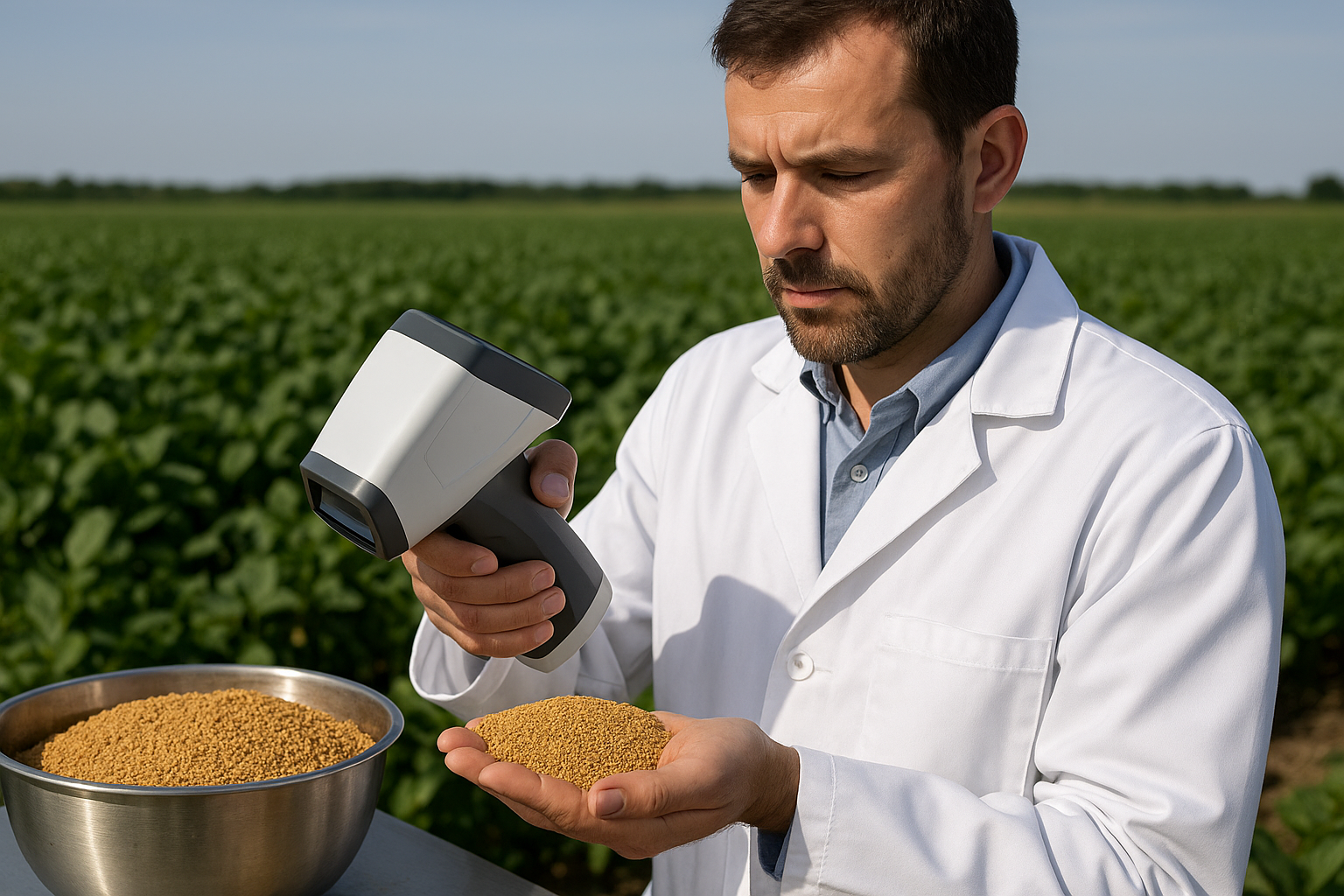
At the feed manufacturing and ingredient procurement level, the demonstrated nutritional volatility across crush plants necessitates an immediate structural transition toward rapid analytical technologies and origin-differentiated contract specifications. Feed compounders can no longer afford to treat soybean meal as a fungible, commoditized bulk ingredient across diverse processing origins. Corporate nutrition directors and quality assurance teams must integrate benchtop near-infrared (NIR) spectroscopy calibration curves capable of rapidly screening inbound bulk deliveries for reactive lysine, crude fiber, potassium hydroxide solubility, and residual trypsin inhibitors before dumping trucks or railcars into receiving pits. Furthermore, feed procurement desks must deploy this empirical dataset in commercial contract negotiations, establishing plant-specific shadow pricing models and demanding quality premiums or discount basis schedules tied to verified digestible amino acid yields rather than antiquated 48-percent crude protein trade rules that obscure true biological value.
What to Watch:
Over the next 30 to 60 days, livestock integrators, commercial feed mill managers, and grain procurement directors must audit incoming soybean meal receipts by implementing routine NIR testing protocols and cross-referencing supplier lots against K-State's benchmark variation ranges. Feed quality assurance departments should immediately evaluate whether their current laboratory screening methods differentiate total lysine from reactive, bioavailable lysine, ensuring that heat-damaged protein fractions are not miscalculated as usable dietary nitrogen. Simultaneously, nutrition managers should examine nursery pig and broiler starter performance records to detect whether unexplained bouts of diarrhea, enteritis, or depressed feed conversion correlate with specific ingredient shipments exhibiting elevated trypsin inhibitor units from under-processed mechanical or regional expeller facilities.
Looking into early 2027, commodity procurement teams and livestock enterprise executives must track whether domestic crushers respond to growing buyer sophistication by providing certified amino acid certificates of analysis (COA) alongside standard trading tickets. Market participants should monitor whether the ongoing autumn crush deluge—which continues to saturate interior Midwest feed basins with ample spot soybean meal—widens price spreads between premium, high-solubility solvent meal and variable expeller co-products. In parallel, agribusiness professionals should observe whether leading commercial testing laboratories and NIR instrument manufacturers update their spectral calibration databases with K-State's 271-sample dataset, enabling commercial mills to execute real-time least-cost reformulation adjustments as each inbound ingredient shuttle delivers its cargo.
The Bottom Line
Kansas State University's comprehensive analysis of 271 soybean meal samples from 29 crush facilities fundamentally dismantles the long-standing industry assumption that commercial soybean meal is a uniform, plug-and-play feed ingredient. With significant plant-to-plant variability in digestible amino acids, heat damage, and residual trypsin inhibitors directly altering feed conversion efficiency and ration economics by up to $25 per ton, commercial livestock operations cannot afford to formulate rations or execute multi-million-dollar ingredient purchases based solely on legacy crude protein guarantees. To defend enterprise margins in an operating climate defined by tight livestock profitability and volatile commodity spreads, commercial feed manufacturers, poultry integrators, and swine nutritionists must immediately adopt rapid NIR amino acid profiling, enforce origin-specific purchasing parameters, and calibrate least-cost dietary matrices against verified bioavailable nutrient density.