
The Story:
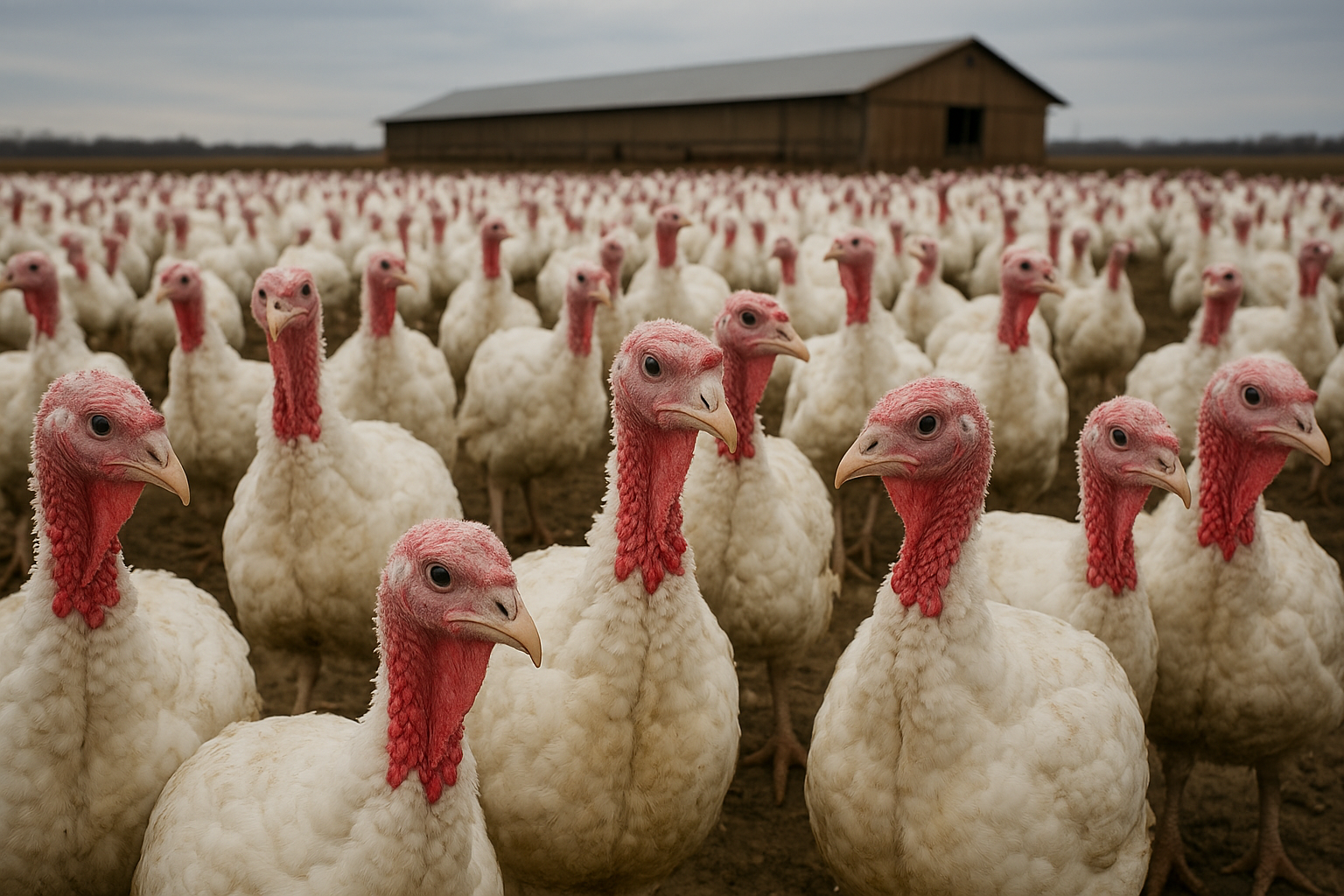
On late Wednesday and Thursday, October 28 and 29, 2026, the Iowa Department of Agriculture and Land Stewardship (IDALS) and the U.S. Department of Agriculture’s Animal and Plant Health Inspection Service (APHIS) officially confirmed the detection of highly pathogenic avian influenza (HPAI) in a commercial meat turkey facility located in Sac County, Iowa. The affected commercial facility housed an inventory of approximately 44,400 commercial turkeys. State Veterinarian Dr. Rachel Cesar and Iowa Secretary of Agriculture Mike Naig quickly coordinated with federal animal health authorities to quarantine the premises and initiate humane depopulation protocols to prevent the pathogen from escaping into neighboring animal feeding operations. Biological samples processed at the Iowa State University Veterinary Diagnostic Laboratory and confirmed by the USDA National Veterinary Services Laboratories (NVSL) in Ames, Iowa, validated the clade 2.3.4.4b H5N1 viral lineage. The confirmation marks Iowa's eighth documented HPAI case of 2026. Crucially for regional agricultural production, this detection represents Iowa's first commercial poultry flock infection in nearly a full calendar year—since December 2025—shattering a ten-month hiatus of commercial flock health and officially signaling the heightened vulnerability of Midwestern poultry operations as autumn migratory flyways reach peak waterfowl movement across the Mississippi and Central flyways.
In response to the confirmed outbreak and the acute disease risks confronting the high-density livestock corridor of northwest Iowa, Iowa Governor Kim Reynolds issued a formal Disaster Emergency Proclamation for Sac County, effective through November 27, 2026. The executive proclamation mobilizes state emergency resources, directs the Iowa Department of Homeland Security and Emergency Management to assist agricultural authorities, and activates vital logistical support for depopulation, on-site disposal, and chemical disinfection. Crucially for agricultural logistics, the governor's proclamation temporarily waives state regulatory restrictions concerning commercial motor carrier hours of service, gross vehicle weights, and oversize transport permits specifically dedicated to disaster response, enabling emergency veterinary response teams, carcass disposal equipment, and biosecurity containment units to transit state highways without statutory delay. State and federal animal health authorities immediately established a mandatory 10-kilometer (6.2-mile) surveillance and control buffer zone surrounding the infected index facility, encompassing adjacent commercial swine units, neighboring turkey farms, and regional grain-handling installations to contain potential lateral disease spread.
The Sac County outbreak emerges at an exceptionally sensitive juncture for the domestic poultry and meat complex, which has navigated tight operational margins and spent recent quarters rebuilding flock numbers. Just last week, the USDA released its monthly Poultry Slaughter report showing September commercial turkey production surged 7 percent month-over-month to 594 million pounds, driven by heavier bird finishing weights averaging over 31 pounds to fulfill contractual holiday meat distribution schedules. Concurrently, the USDA Cold Storage report confirmed that commercial turkey stockpiles in domestic refrigerated warehouses stood at 359.7 million pounds heading into October—9 percent below year-ago levels—creating an unusually tight physical supply buffer. With commercial turkey production heavily concentrated in the Upper Midwest—where Iowa, Minnesota, and South Dakota represent critical feeding nodes—the reintroduction of wild waterfowl-transmitted HPAI threatens to disrupt regional slaughter schedules. Furthermore, under standard international bilateral sanitary agreements, the confirmed infection is triggering automatic trade suspensions and localized import bans from major foreign poultry buyers including China, Japan, Mexico, and South Korea, raising fears that export-oriented dark meat and offal could be forcibly redirected back into domestic cold storage warehouses.
Why It Matters:
For commercial animal feed manufacturers, ingredient procurement managers, and poultry nutrition directors across Iowa and the Upper Midwest, the confirmation of HPAI in a commercial turkey facility triggers immediate operational, economic, and supply-chain repercussions. Commercial turkey production relies on some of the most nutrient-dense, high-cost feeding programs in modern animal husbandry. Turkey finisher rations demand substantial inclusions of crude protein—typically formulated with high-protein 48% soybean meal, distillers dried grains with solubles (DDGS), supplemental animal fats, and synthetic amino acids including L-lysine, DL-methionine, and L-threonine. The sudden depopulation of 44,400 commercial turkeys permanently extinguishes thousands of tons of planned feed grind for local mills during the peak finishing phase when birds consume up to one pound of feed per day. Far beyond the immediate volume loss at the index site, the establishment of the 10-kilometer biosecurity control zone imposes intense friction on feed delivery logistics. Feed mills operating within or delivering into Sac County and contiguous counties must enforce exhaustive truck decontamination protocols, including undercarriage washdowns, chemical tire disinfection sprays, and strict driver bio-exclusion measures, significantly inflating delivery turnaround times and fleet operating overhead.
The outbreak also elevates cross-species biosecurity risks across the broader livestock and dairy production sectors that anchor Midwest grain consumption. Sac County and surrounding northwest Iowa represent one of the most densely populated livestock geographies in the world, where mega-scale commercial swine finishing barns, dairy operations, and poultry complexes coexist within close geographic proximity. With USDA APHIS actively tracking H5N1 transmissions across commercial dairy herds and swine health researchers remaining on heightened alert for potential viral reassortment, animal feed compounders serve as the primary physical bridge connecting disparate farming operations. Bulk ingredient delivery trucks, whole-corn trailers, and soybean meal tankers moving between mills and production units present primary vectors for mechanical disease transmission if biosecurity barriers fail. Consequently, regional livestock integrators are immediately enforcing closed-door biosecurity mandates, requiring commercial feed suppliers to demonstrate verifiable sanitation logs, ingredient heat-treatment validation, and strict bio-exclusion handling at rail unload pits and grain elevators. Any secondary contamination that forces feed mills into precautionary operational shutdowns would jeopardize livestock feeding schedules across hundreds of independent barns throughout the Western Corn Belt.
What to Watch:
Over the next two to four weeks, poultry integrators, grain merchandisers, and feed mill managers must closely monitor daily disease surveillance bulletins and epidemiologic reports issued by IDALS and USDA APHIS. Field veterinarians are currently executing intensive PCR testing across all commercial and backyard avian premises situated within the 10-kilometer control zone in Sac County to verify whether lateral transmission has occurred. Feed procurement directors must track whether secondary cases emerge in neighboring Buena Vista, Cherokee, or Calhoun counties, which would compel authorities to expand the containment perimeter and potentially trap additional commercial layer or turkey facilities under quarantine. Industry stakeholders should also observe the exact timeline required for the index farm to complete virus elimination, environmental sampling, and official fallow periods before restocking permits can be considered, which historically spans between 60 and 90 days. Concurrently, feed buyers should scrutinize weekly USDA Broiler Hatchery and turkey poult placement statistics to gauge whether commercial integrators alter placement volumes or accelerate marketings in adjacent regions to mitigate disease exposure.
Simultaneously, feed formulation desks and commodity merchandisers must track trade policy announcements and regional ingredient basis movements following the Iowa detection. Trading desks must monitor whether key export destinations—specifically Mexico, Japan, Taiwan, and the European Union—enact targeted county-level poultry import suspensions or escalate toward statewide bans against all Iowa avian products. If foreign borders close to Iowa poultry meat, regional processors will be forced to freeze and warehouse surplus inventories, depressing wholesale turkey prices and squeezing integrator profit margins, which traditionally triggers aggressive cost-cutting measures across feed formulation specs. Feed compounders should track regional Midwest basis for 48% soybean meal and corn; localized disruptions in feed mill off-take can soften local cash basis, creating tactical purchasing opportunities for mills situated outside the restricted zone. Additionally, procurement executives should review forward coverage for supplemental synthetic amino acids, especially DL-methionine and L-threonine, ensuring formulation software can dynamically adapt inclusion thresholds if changes in flock demographics or feed intake patterns ripple through the Upper Midwest market.
The Bottom Line
The October confirmation of H5N1 highly pathogenic avian influenza in a commercial flock of 44,400 turkeys in Sac County, Iowa—prompting a gubernatorial disaster proclamation and shattering a ten-month period of commercial flock freedom in the state—presents a critical wake-up call for the Upper Midwest feed and livestock industry. For commercial feed compounders, poultry integrators, and grain merchandisers, the immediate loss of feed grind is compounded by rigorous 10-kilometer biosecurity delivery restrictions, elevated fleet sanitation costs, and the looming risk of foreign export bans that could depress wholesale poultry cutouts. Feed manufacturers and ingredient buyers must immediately verify fleet bio-exclusion protocols, fortify mill gate defenses, and evaluate ration flexibility across soybean meal, corn, and synthetic amino acids to protect balance-sheet stability and defend regional animal health against escalating autumn migratory disease pressures.