
The Story:
On Thursday, October 1, 2026, Hormel Foods Corporation (NYSE: HRL) announced that it has entered into a definitive agreement to acquire Brakebush Brothers, LLC, a prominent family-owned value-added chicken company, for approximately $1.055 billion in cash. The acquisition represents Hormel's most decisive and aggressive strategic expansion into commercial poultry protein to date, providing the Austin, Minnesota-based food giant with immediate national scale in the fast-growing foodservice chicken category. Founded in 1925 and headquartered in Westfield, Wisconsin, Brakebush has generated approximately $1.2 billion in net sales over the trailing twelve months, operating five advanced further-processing facilities and two research and development culinary centers across Wisconsin, Minnesota, North Carolina, and Texas. The transaction, which is subject to customary regulatory clearances and antitrust reviews under the Hart-Scott-Rodino Act, is expected to close during the first quarter of Hormel Foods' fiscal year 2027. Under the leadership of Hormel interim Chief Executive Officer Jeff Ettinger and President and CEO-elect John Ghingo, the acquisition marks a transformative pivot that cements Hormel as a premier multi-protein supplier across broadline foodservice distributors, restaurant chains, and institutional dining networks.
Crucially for agricultural commodity markets, Brakebush operates under a non-vertically integrated business model, focusing strictly on high-throughput cooking, portioning, breading, battering, seasoning, and individually quick-frozen (IQF) processing rather than managing live bird grow-out, contract farms, or primary slaughterhouses. Unlike fully integrated poultry giants such as Tyson Foods or Pilgrim's Pride, which absorb the full biological, veterinary, and feed conversion volatility of live bird complexes, Brakebush procures hundreds of millions of pounds of raw deboned chicken breast, tenders, and dark meat annually from primary processors. By acquiring Brakebush's massive processing footprint, Hormel secures high-margin, value-added downstream poultry revenue while strategically shielding its balance sheet from the operational risks inherent to live broiler farming, such as avian influenza outbreaks, heat mortality, and flock density limitations. Carey Brakebush, Chairman of the Board for Brakebush Brothers, noted that joining Hormel will enable the century-old Wisconsin brand to accelerate facility investments and expand customer distribution across schools, healthcare systems, and national restaurant chains while preserving its commitment to product quality and operational execution.
The timing of the $1.055 billion transaction intersects with pivotal macroeconomic and feed cost transitions currently reshaping the broader animal protein complex. Just five months after Hormel divested its whole-bird commodity turkey slaughter operations and associated feed milling assets in Swanville, Minnesota to focus on higher-margin prepared foods, the acquisition underscores a broader industry migration away from unhedged commodity slaughter toward defensible value-added processing. The deal arrives as the U.S. poultry sector experiences an influx of competitive relief on primary feed grain inputs following the USDA’s September 30 Grain Stocks report, which pegged domestic old-crop corn inventories at an unexpectedly burdensome 2.095 billion bushels, a 35% surge over 2025 levels. While lower cash corn prices are actively depressing live broiler production costs, soybean meal opened the 2026/27 marketing year firm at $359 per ton, and commercial egg producers like Cal-Maine Foods reported steep quarterly net losses driven by persistent feed expense inflation. By establishing an immense non-integrated demand sink for wholesale deboned broiler meat, Hormel’s acquisition introduces a powerful new buyer into the primary chicken supply chain just as primary integrators recalibrate slaughter weights and feed conversion strategies.
Why It Matters:
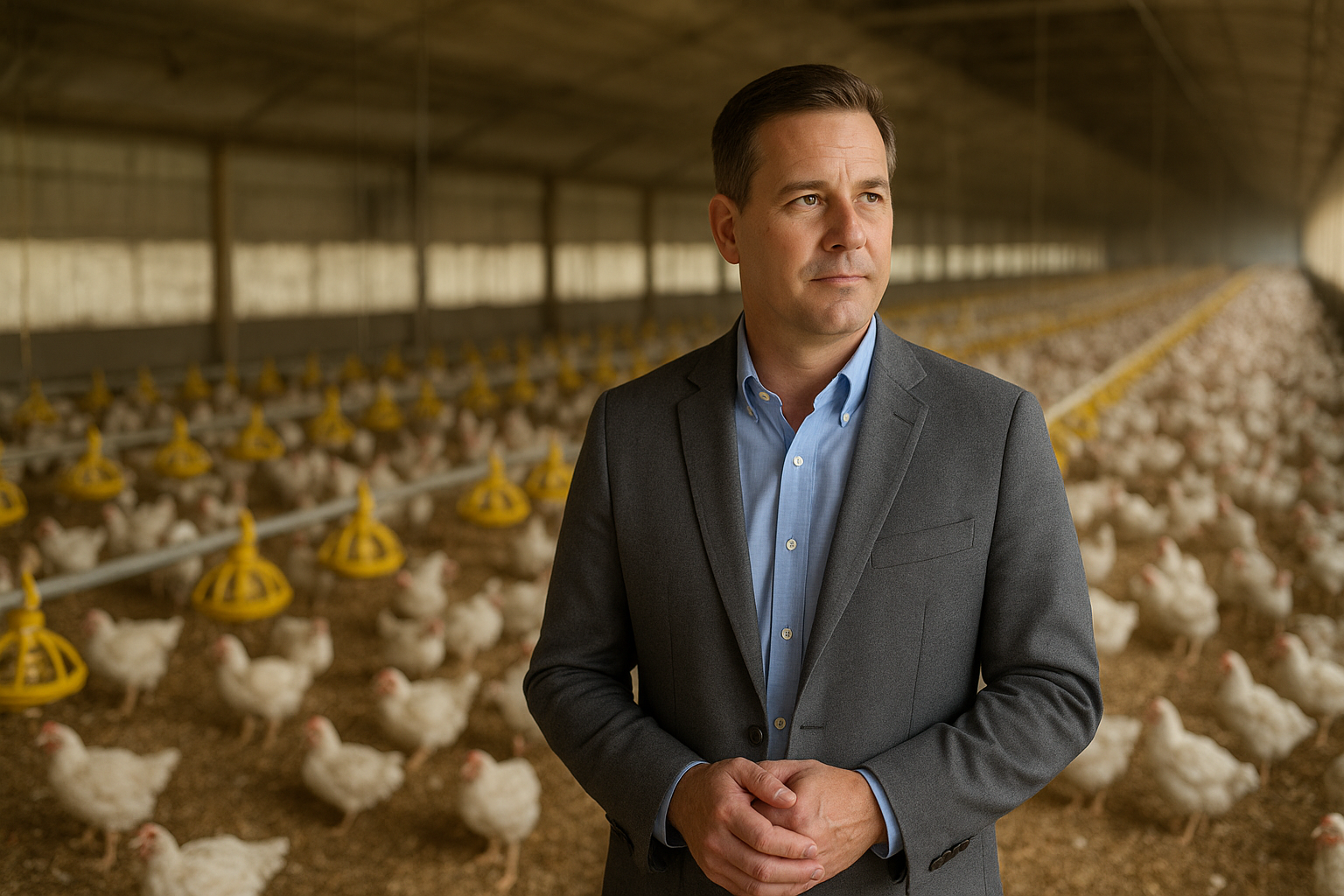
For commercial broiler integrators, poultry nutritionists, and feed mill managers, Hormel’s entry into large-scale value-added chicken processing directly alters wholesale meat demand dynamics and flock grow-out economics across the Midwest and Southeast. Because Brakebush requires precise, uniform specifications for breaded fillets, formed patties, and par-fried tenders, primary slaughter integrators supplying Brakebush's plants in Westfield, Ripon, Wells, Mocksville, and Irving must run dedicated 'big bird' deboning complexes. Broilers grown for commercial deboning typically reach target live weights between 7.5 and 9.5 pounds over a 50- to 60-day grow-out cycle, demanding specialized feed formulation programs that differ markedly from small-bird rotisserie or tray-pack retail production. Debone flocks require extended feeding periods on nutrient-dense finisher and withdrawal diets formulated with elevated dietary metabolizable energy and high synthetic amino acid densities—particularly digestible lysine, DL-methionine, L-threonine, and L-valine—to maximize pectoralis major muscle breast yield and suppress woody breast and white striping myopathies. As Hormel expands Brakebush’s volume through its national sales infrastructure, primary integrators will face sustained, high-volume contractual demand for heavy deboned meat, underpinning long-term feed manufacturing tonnage and grain consumption across Southeast broiler sheds.
Beyond live flock management, the transaction consolidates procurement leverage at a critical moment for poultry formula contracting and feed cost pass-through mechanisms. In commercial foodservice supply chains, large-scale portioners and further processors typically negotiate long-term supply contracts with primary integrators utilizing cost-plus formulas indexed to Georgia Dock, USDA Urner Barry deboned breast quotes, or composite grain input indices reflecting Chicago Board of Trade corn and soybean meal futures. With $1.2 billion in purchasing scale now backed by Hormel Foods' multi-billion-dollar enterprise balance sheet, the combined entity commands unprecedented bargaining power over primary slaughterhouses. This consolidation limits the ability of primary integrators to unilaterally pass through sudden grain or ingredient price spikes, forcing integrator procurement desks to execute more disciplined forward hedges on corn basis, meal crush spreads, and synthetic amino acid supply contracts. Furthermore, as consumer protein preferences continue shifting toward chicken due to record-high retail beef prices and tight beef cattle herd inventories, Hormel's institutional scale creates a more resilient downstream buffer that helps stabilize total U.S. poultry meat clearance, thereby providing a crucial volume backstop for the 55 million tons of commercial feed consumed annually by the American broiler industry.
What to Watch:
Over the coming six months through the expected deal close in early 2027, poultry traders, feed grain merchandisers, and procurement managers should closely monitor the regulatory review process, executive transition, and commercial contracting negotiations between Hormel and major primary broiler integrators. Antitrust scrutiny under federal competition authorities will assess whether Hormel's expanded presence across deli, bacon, turkey, and further-processed chicken creates undue market concentration in commercial foodservice distribution. Simultaneously, agribusiness analysts should track how major primary integrators—including Tyson Foods, Pilgrim’s Pride, and Wayne-Sanderson Farms—respond to Hormel’s enlarged procurement footprint. Market participants should watch for new long-term forward supply agreements, shifts in regional bird placement densities, and potential capacity expansions at Brakebush's Mocksville, North Carolina and Irving, Texas processing hubs, which could alter regional basis values for yellow dent corn and high-protein soybean meal across the Mid-Atlantic and southern Plains feed corridors.
In parallel, feed formulators and mill operations managers must track fourth-quarter broiler chick placements, hatchability rates, and slaughter weights reported in the USDA Broiler Hatchery releases as primary integrators align bird production with value-added demand. Nutritionists should pay close attention to changing amino acid pricing spreads, as any post-harvest rally in synthetic lysine or methionine imported from overseas producers could squeeze the profitability of heavy-bird feeding programs. Concurrently, livestock risk desks must observe CME poultry and grain derivatives alongside USDA wholesale chicken cutout movements to gauge whether declining feed grain costs from the massive autumn corn harvest will be fully absorbed by further processors or passed downstream in competitive bids for fast-casual and institutional chicken contracts. If wholesale deboned breast values maintain their current premium over whole-bird values, expect primary integrators to continue shifting feed mill throughput toward higher-tonnage heavy-broiler diets through the first half of 2027.
The Bottom Line
Hormel Foods' $1.055 billion acquisition of Brakebush Brothers represents a landmark consolidation in the U.S. protein landscape, establishing the food manufacturer as an immediate heavyweight in the $1.2 billion foodservice value-added chicken sector. By expanding into non-integrated further processing while avoiding the biological and veterinary liabilities of live bird production, Hormel positions itself to capture expanding consumer poultry demand insulated by defensible foodservice margins. For the animal feed industry and commercial poultry integrators, the transaction cements high-volume institutional demand for heavy deboned broilers, reinforcing intensive, amino acid-rich feeding programs while concentrating procurement power among downstream buyers. As autumn grain markets digest burdensome domestic corn supplies against firm soybean meal costs, Hormel’s strategic acquisition provides a powerful stabilizer for poultry feed demand, signaling that the future of protein profitability belongs to disciplined, value-added processors equipped to navigate volatile feed ingredient cycles.