
The Story:
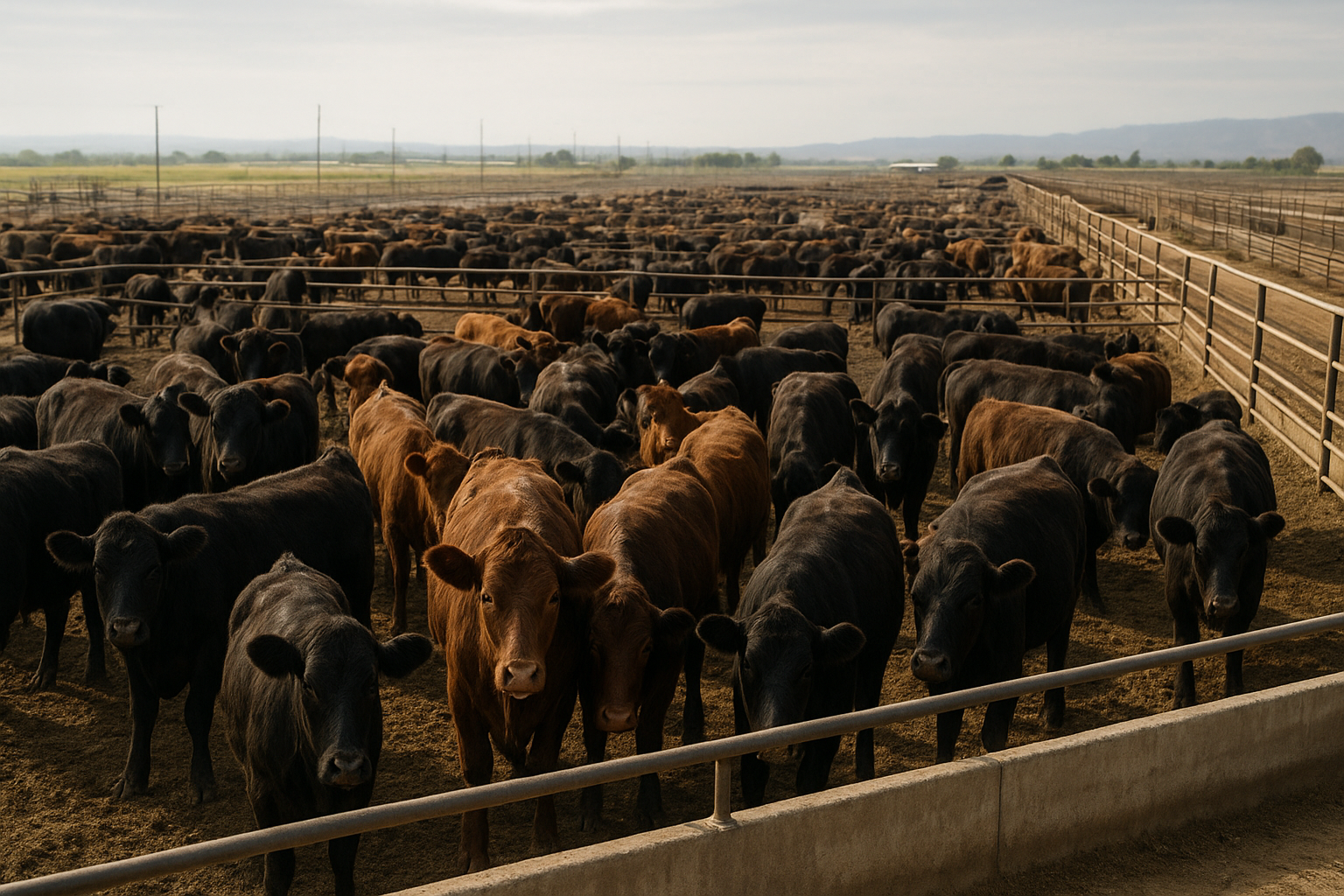
The U.S. beef cattle sector is experiencing a historic contraction in feeding activity that directly reshapes feed ingredient demand across North America. According to the latest Cattle on Feed report released by the U.S. Department of Agriculture's National Agricultural Statistics Service (USDA NASS), cattle placements into commercial feedlots during August 2026 totaled just 1.617 million head. This represents a steep 9% decline compared to August 2025 and marks the lowest August placement volume recorded since the USDA established the current data series in 1996. The sharp drop caught commodity analysts and livestock traders by surprise, as pre-report industry expectations had projected a much more modest contraction in the range of 3% to 4%. The data confirms that multi-year beef cow herd liquidation and structural feeder cattle shortages are severely tightening the pipeline of young animals entering feed yards.
The USDA report also revealed that fed cattle marketings out of feedlots during August totaled 1.52 million head, declining 3% year-over-year to match the lowest August marketing total in thirty years of federal data. Meanwhile, total cattle on feed across facilities with a capacity of 1,000 head or more stood at 11.16 million head as of September 1, 2026, slightly above the 11.05 million head reported twelve months prior. This seeming paradox—where total feedlot inventories remain fractionally higher despite a historic collapse in new monthly placements—is the direct consequence of extended feeding periods. Commercial feed yards are retaining cattle on feed significantly longer than historical norms, as operators attempt to finish animals to unprecedented heavy carcass weights to offset the staggering financial cost of purchasing scarce feeder calves.
The underlying catalyst behind the placement slump is an acute shortage of feeder calves combined with exceptionally strong pasture conditions that encouraged ranchers to delay marketing. With national beef cow numbers at their lowest levels since 1951, cow-calf operators and backgrounders across the Great Plains and Southern Plains have enjoyed favorable late-summer grazing conditions, allowing them to keep calves on grass rather than moving them into drylot confinement. Furthermore, with auction barn prices for 700-to-800-pound feeder cattle trading at record-setting premiums, feedlot operators are facing steep breakeven hurdles that make aggressive placement economically perilous. Feed yards that do buy calves are forced to rely heavily on contract finishing, risk management instruments, and high-efficiency rations to protect their operating margins against negative feeding economics.
Why It Matters:
For commercial feed manufacturers, grain merchandisers, and nutritionists, a 9% decline in August feedlot placements triggers significant downstream shifts in bulk ingredient volume and ration composition. Cattle feedlots are among the largest domestic consumers of feed grains and co-products, utilizing approximately 20% to 25% of total domestic corn supplies and serving as the foundational market for distillers dried grains with solubles (DDGS). When monthly placements drop to thirty-year lows, the initial demand for receiving rations, starter concentrates, and high-roughage grower blends decreases immediately across major cattle feeding states such as Texas, Kansas, Nebraska, and Iowa. Feed mills catering specifically to feed yards face lower delivery throughput for starter pellets, mineral premixes, and specialty ionophores during what is traditionally one of the busiest restocking months of the agricultural calendar.
However, the composition of feed demand is shifting rather than simply disappearing, because feedlots are compensating for smaller headcounts by extending days on feed. Cattle that once spent 140 to 160 days on feed are now frequently remaining in pens for 190 to 220 days, pushing finished steer carcass weights above 930 pounds. Late-stage finishing requires energy-dense rations characterized by high inclusion rates of steam-flaked corn, feed-grade supplemental fats, and moisture-balanced distillers grains. As animals approach terminal weights, their feed conversion ratio (FCR) declines significantly, requiring more pounds of grain dry matter to generate a single pound of gain. This dynamic creates sustained local basis strength for high-energy carbohydrates and bypass proteins, altering the procurement strategies of Midwest feed mills as the autumn harvest gets underway.
What to Watch:
Looking forward, ingredient buyers and feedlot managers must closely monitor whether this placement deficit persists into the traditional autumn run of calves in October and November. If ranchers continue to hold heifer calves back for breeding herd rebuilding—or if pasture forage supplies remain adequate following recent seasonal rains—feedlots will face intense bidding competition for an even smaller pool of winter cattle. Procurement managers should watch weekly auction receipts and feeder cattle futures spreads on the Chicago Mercantile Exchange (CME), as continued high feeder costs will force feedlots to enforce strict least-cost formulation tolerances, demanding guaranteed amino acid and energy profiles in their bulk delivered ingredients.
Market participants must also track the evolving spread between local corn cash prices and delivered DDGS values across the Western Corn Belt and Southern Plains. As ethanol processing margins fluctuate and Midwestern corn harvest accelerates ahead of normal pace—with USDA reporting corn harvest already 13% complete—feed yards will look to optimize the inclusion rate of wet distillers grains (WDGS) and dry DDGS against local cash corn bids. If low water levels on the Mississippi River system continue to restrict export barge movements and depress interior grain basis, feed yards may find local corn exceptionally price-competitive relative to manufactured protein supplements. Additionally, nutritionists should watch for changes in packer grid pricing and yield grade discounts, which dictate how long feedlots can economically hold cattle on heavy grain rations without incurring carcass over-fat penalties.
The Bottom Line
A thirty-year low in August cattle placements signals a profound structural shift in the cattle feeding sector, directly impacting bulk feed ingredient demand. While fewer head entering feedlots reduces aggregate volume demand for starter grower rations, extended days on feed and record carcass weights are sustaining aggressive consumption of energy-dense finishing rations, steam-flaked corn, and distillers co-products. Feed manufacturers and procurement professionals must navigate this changing landscape by aligning ration formulations with heavy finishing programs and leveraging localized harvest basis discounts to preserve livestock feeding margins amid historic calf market tightness.