
The Story:
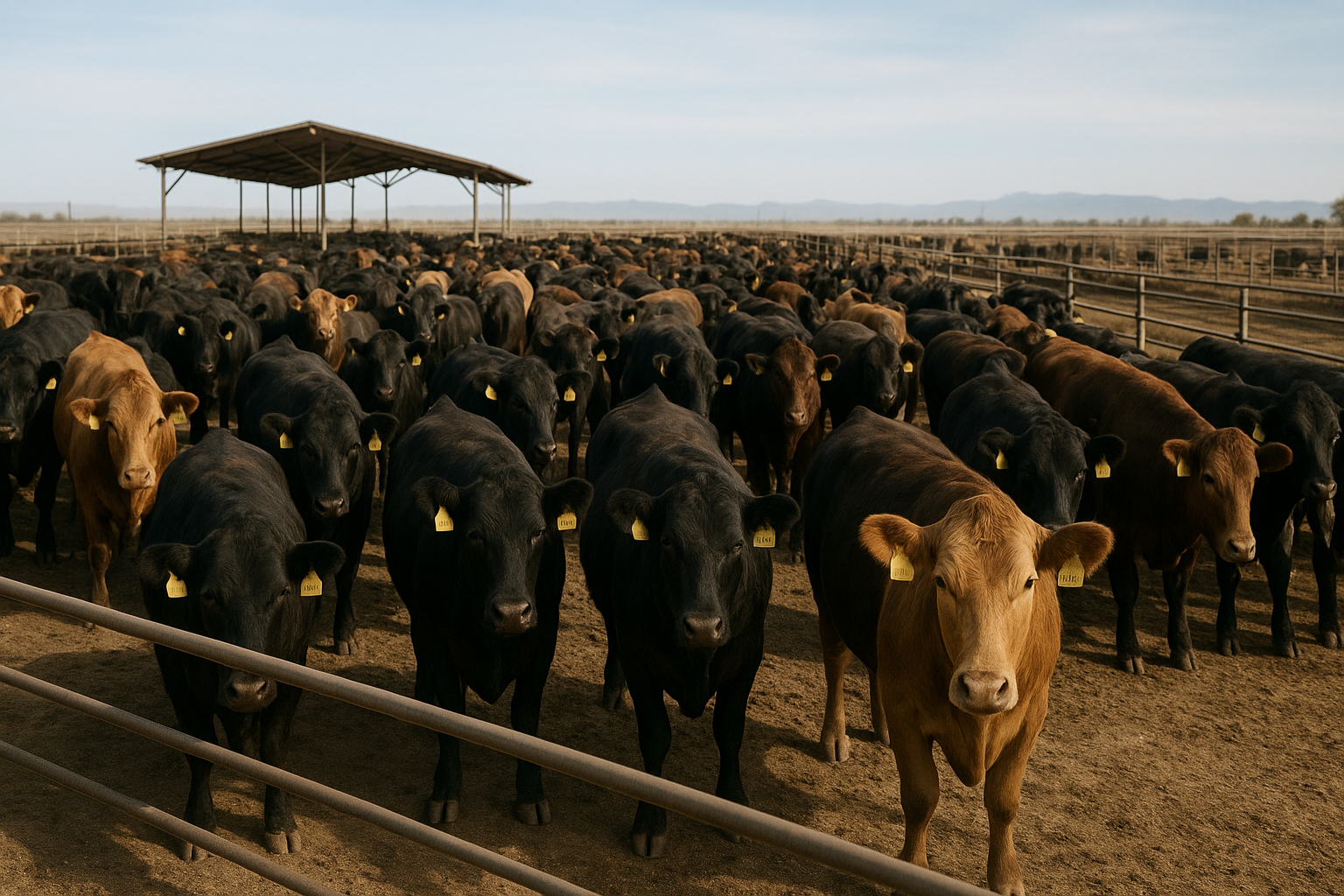
On Friday afternoon, October 23, 2026, the U.S. Department of Agriculture's National Agricultural Statistics Service (NASS) issued its highly anticipated monthly Cattle on Feed report, revealing a historic contraction in commercial feedlot placements that stunned commodity traders and agricultural analysts. According to the federal agency, cattle and calves on feed for the slaughter market in U.S. feedlots with a capacity of 1,000 head or more totaled 11.372 million head on October 1, 2026. The nationwide feedlot inventory slipped fractionally below October 1, 2025 levels, abruptly snapping a consecutive four-month streak of year-over-year inventory expansions that had persisted since May. The defining shock of the report, however, centered on September placement figures, which tumbled to 1.78 million head—a steep 12 percent year-over-year plunge compared to the 2.02 million head placed in September 2025. This dramatic drop came in far below pre-report industry expectations, which had projected placements to decline by an average of 7.4 to 8.2 percent, marking the lowest September placement volume recorded since the USDA established the modern 1,000-head data series in 1996.
The report also highlighted persistent headwinds across commercial cattle finishing flows, with fed cattle marketings during September falling to 1.52 million head, representing a 7 percent drop below September 2025 volumes and matching record-low marketing paces for the month. Other disappearance totaled 49,000 head during September, down 4 percent from year-ago levels. A detailed examination of the October 1 inventory class breakdown showed that steers and steer calves accounted for 7.07 million head, edging up fractionally by 0.2 percent year-over-year to represent 62.2 percent of total feedyard numbers. Conversely, heifers and heifer calves totaled 4.30 million head, declining 1 percent from 2025 and comprising 37.8 percent of feedlot inventory. Across key feeding states, Texas feedlots held the largest individual inventory at 2.68 million head, followed closely by Nebraska at 2.45 million head, Kansas at 2.25 million head, Colorado at 960,000 head, and Iowa at 620,000 head. The placement contraction was particularly pronounced across the Southern Plains and Western Corn Belt, where feedyard receiving pens sat notably below seasonal capacity.
The unprecedented slump in September placements reflects the compounding reality of an intensely depleted national beef cow herd colliding with elevated feeder calf prices and regional pasture conditions. Years of aggressive drought-induced cow culling and elevated heifer slaughter across the Central and Southern Plains have shrunk the available pool of feeder calves to generational lows. While commercial cow-calf producers in certain regions have begun exploring heifer retention to rebuild foundation herds, the acute shortage of yearling cattle has forced feedyard operators to compete fiercely for scarce auction receipts, driving 700-to-800-pound feeder cattle bids above $250 per hundredweight. Furthermore, improved autumn grazing conditions across portions of the Southern Plains encouraged ranchers to hold calves on wheat pasture and native forage rather than delivering them into commercial drylots in September. As a result, commercial feedlots entering the fourth quarter face an increasingly tight feeder cattle pipeline that threatens to constrain feedyard turnover well into the first half of 2027.
Why It Matters:
For animal feed manufacturers, commercial grain elevators, and feed ingredient merchandisers, the USDA's report carries immediate, far-reaching operational implications. Commercial feedlots represent the primary demand engine for bulk feedstuffs across the Great Plains and Western Corn Belt, consuming millions of metric tons of steam-flaked corn, dry rolled corn, corn silage, distillers dried grains with solubles (DDGS), corn gluten feed, and liquid protein-mineral supplements. With September placements falling by 240,000 head year-over-year and total cattle on feed turning negative, commercial feed mills are confronting reduced daily headcount in receiving and growing pens. This immediate deficit in incoming animal numbers lowers daily feed bunk consumption, curbing feed mill grinding volumes and dampening the regional off-take of feed grains. This dynamic creates a stark commercial contrast with the massive autumn crop supplies highlighted earlier today by CoBank, as grain elevators burdened by record carry costs find their primary ruminant feed customers managing reduced pen headcounts.
Simultaneously, the acute scarcity of feeder cattle promises to reshape feedyard ration formulation economics and nutritional strategies over the coming months. Because feedlots are paying historically high prices to acquire replacement calves, cattle feeders face intense margin pressure, forcing feedyard managers to squeeze maximum biological efficiency from every pound of dry matter fed. To amortize the heavier purchase cost of incoming feeders and compensate for lower pen occupancy, commercial feedlots are extending days on feed and targeting heavier finished slaughter weights. This operational shift fundamentally alters feed ration dynamics: nutritionists are increasing energy density in late-stage finishing diets, maximizing inclusion rates of discounted harvest cash corn and highly competitive DDGS trading near $190 to $195 per ton. Feed formulators are also optimizing rumen bypass proteins, synthetic amino acids, buffers, and ionophores to sustain average daily gains above 3.8 pounds without escalating digestive disorders, making precise feed formulation the decisive factor in preserving feedlot margins.
What to Watch:
Over the coming 30 to 60 days, livestock procurement managers, commodity risk desks, and feed compounders must closely monitor weekly cattle auction receipts and regional feeder price spreads through USDA Agricultural Marketing Service (AMS) market reports. Feeder cattle auctions across Oklahoma City, Dodge City, and Joplin will provide the earliest commercial signal of whether the September placement drop was partially a timing delay that will spill into a late-October placement surge, or if it confirms an enduring structural deficit in deliverable feeder cattle supplies. In addition, feed purchasing directors must track Class I rail performance and interior freight basis for corn co-products moving from ethanol plants into the Texas Panhandle and Western Kansas. If feeder cattle supplies remain constrained, feedyards will maintain lower inventory densities, which could weaken local rail-delivered corn basis and create tactical purchasing windows for livestock feed buyers looking to book co-product supplies for the first quarter of 2027.
Concurrently, feed mill executives and commercial nutritionists should vigilantly track average dressed carcass weights and days on feed in the weekly USDA Livestock Slaughter reports. If slaughter weights continue to climb toward record autumn highs above 930 pounds per steer, commercial feed consumption per head will remain robust, partially offsetting the lower overall feedyard population. Furthermore, market participants must watch the spread between CME Live Cattle and Feeder Cattle futures contracts, which dictates feeding breakevens and determines whether custom cattle feeders can justify forward feed commitments. Feed manufacturers should capitalize on current harvest basis weakness to secure physical corn and distillers grain coverage through year-end, while working collaboratively with feedyard clients to provide tailored finishing rations that maximize rate of gain and carcass yield as tight cattle supplies dictate industry economics.
The Bottom Line
The USDA's October Cattle on Feed report delivers an unmistakable signal to the livestock and feed industries: a 12 percent plunge in September placements to 1.78 million head represents the tightest autumn cattle inflow in three decades, snapping four months of inventory growth and cementing a prolonged period of feeder cattle scarcity. For commercial feed manufacturers, ingredient traders, and livestock nutritionists, fewer cattle entering feedlot pens means reduced baseline bulk feed demand, yet the economic necessity for cattle feeders to push remaining cattle to heavier finished weights creates sustained demand for high-energy finishing diets, steam-flaked corn, and discounted DDGS. Agribusiness professionals must navigate this environment with disciplined commodity procurement, securing attractive harvest feed grain basis while leveraging high-efficiency ration formulation to support feedlot profitability as structural herd liquidation defines the North American beef complex.