
The Story:
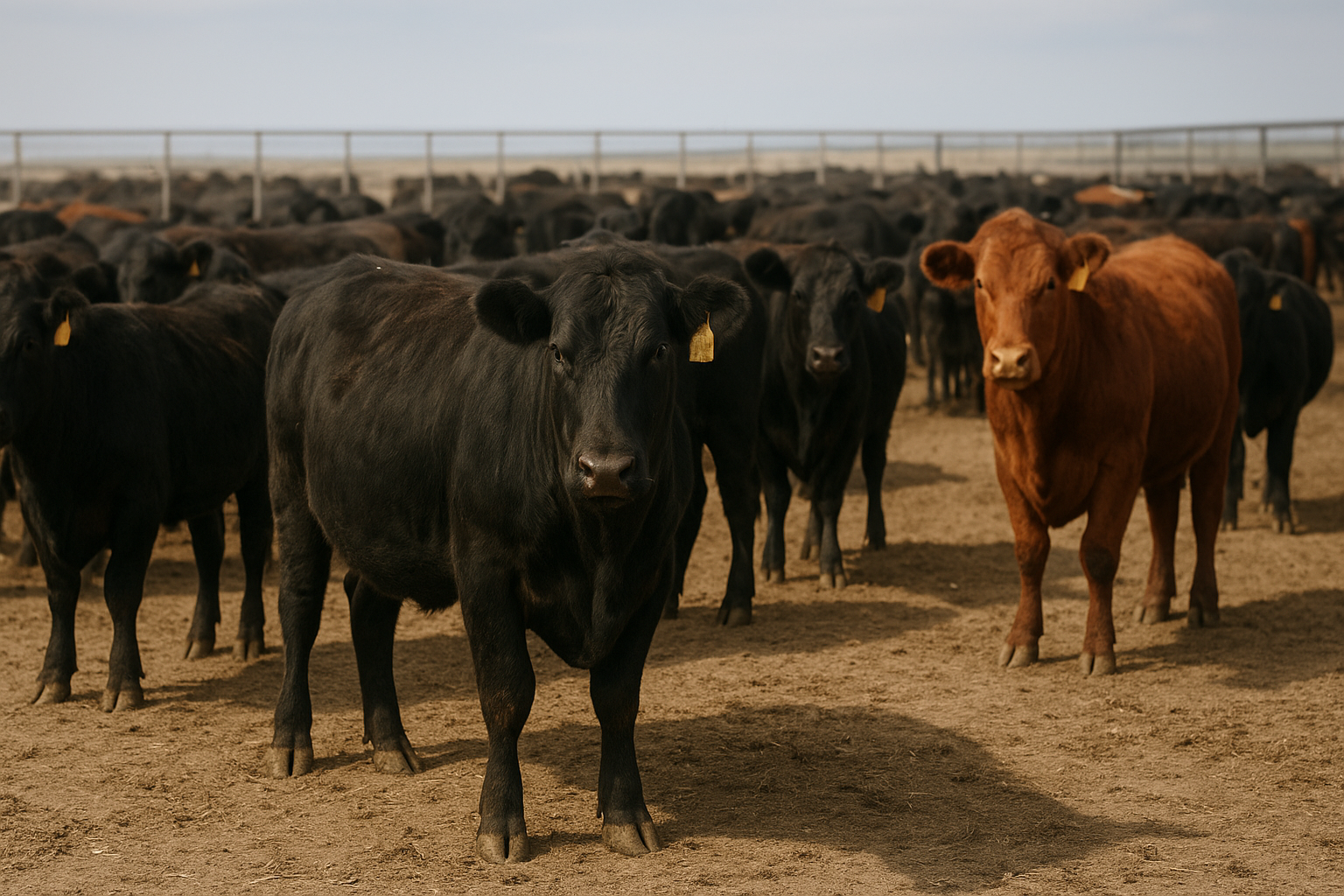
On Tuesday afternoon, November 3, 2026, the Chicago Mercantile Exchange (CME) cattle complex suffered aggressive, broad-based liquidation, with benchmark feeder cattle contracts plunging sharply into the market close. The active January 2027 feeder cattle contract plummeted $4.300 per hundredweight (cwt) to settle at $328.375, decisively breaching critical technical support and accelerating a multi-day slide that has erased more than $22 per cwt from the record highs established in late October. Front-month November 2026 feeder cattle dropped $3.900 to settle at $334.525, while deferred March 2027 contracts slid $4.325 to finish at $323.975 per cwt. Concurrently, CME live cattle futures faced heavy commercial and fund liquidation across all active delivery months: benchmark December 2026 live cattle dropped $1.550 to settle at $218.150 per cwt, February 2027 slid $2.100 to $221.425, and April 2027 retreated $2.450 to $223.700. The aggressive afternoon selloff pushed the CME Feeder Cattle Index downward to $348.78, reflecting a rapid, compounding retreat across the cash feeder complex as managed money accounts unloaded long positions and commercial feedlots pulled back bids following weeks of unsustainable replacement price surges.
The primary catalyst driving Tuesday’s futures breakdown is an abruptly softening physical cash market across primary cattle feeding and backgrounding regions. Early-week negotiated cash cattle trade across the Plains and Midwest remained exceptionally sluggish, with the U.S. Department of Agriculture’s Agricultural Marketing Service (USDA AMS) reporting very light early trades at $215.00 per cwt live in the Southern Plains and $340.00 per cwt dressed in Northern feeding corridors—representing a sharp discount of $3.00 to $5.00 per cwt compared to peak mid-October transactions. Simultaneously, regional calf and yearling auctions reported significant price erosion as commercial order buyers refused to chase elevated asking prices. At the bellwether Oklahoma City feeder cattle auction and regional sales barns throughout Kansas, Nebraska, and Missouri, feeder steers and heifers traded $4.00 to $12.00 per cwt lower week-over-week, with lighter-weight stocker calves absorbing even steeper discounts of $10.00 to $20.00 per cwt. Although the USDA AMS afternoon boxed beef report showed modest firmness—Choice carcasses edging up $0.19 to $365.23 per cwt and Select climbing $3.43 to $358.37 per cwt on moderate demand—meatpackers have maintained conservative harvest schedules, with weekly federally inspected cattle slaughter pacing near 540,000 head, effectively curbing their spot cash appetite and leaving feedlot operators with diminishing leverage.
This steep contraction in replacement cattle values intersects with a rapidly evolving grain supply dynamic across High Plains feed corridors. Monday afternoon’s USDA Crop Progress report confirmed that national corn harvest accelerated to 74 percent complete, accompanied by Tuesday’s CBOT grain market retreat where December corn futures slid 5¾ cents to settle at $4.42½ per bushel and December soybean meal touched a fresh contract low of $317.35 per ton. While the massive influx of newly harvested corn and oilseeds is expanding interior feed supplies and easing baseline ration ingredient costs, commercial cattle feedlots in Texas, Kansas, and Nebraska have found themselves squeezed between stubbornly high historical feeder placement costs and declining fed cattle values. Cattle placed in feedlots during September and October at prices exceeding $345 to $350 per cwt face breakevens well north of $225 per cwt. With December live cattle dropping toward $218, feed yards are confronting severe equity erosion on unhedged pens, forcing yard managers to halt aggressive bidding on new replacement cattle and demand substantial price concessions from backgrounders and cow-calf producers before filling empty pens for the winter feeding period.
Why It Matters:
For commercial cattle feedlot operators, consulting beef nutritionists, and regional feed manufacturers across the High Plains and Western Corn Belt, Tuesday’s $4.30 drop in feeder cattle futures to $328.37 represents a pivotal inflection point for cost-of-gain (COG) economics and pen closeout profitability. For months, extreme feeder calf scarcity created by historically low national beef cow inventories forced feedlot procurement desks to pay exorbitant prices for incoming cattle, driving animal purchase costs to more than 70 percent of total finished fed steer value. At feeder cattle prices above $350 per cwt and cost-of-gain averaging $1.30 to $1.40 per pound, projected feedlot closeouts for winter and early-spring marketings were deeply underwater, showing potential losses ranging from $150 to $250 per head against current live cattle futures. Tuesday’s retreat provides desperately needed relief on replacement feeder animal acquisition costs, lowering the capital required to purchase a 750-pound yearling steer by approximately $32 to $50 per head in a single week. This price adjustment allows feedlot managers to restructure incoming pen breakevens toward sustainable levels, providing the necessary margin buffer to withstand live cattle futures volatility while establishing more realistic risk management floors with agricultural lenders.
Simultaneously, the convergence of tumbling feeder cattle prices, harvest-pressured cash corn at $4.42½ per bushel, and discounted soybean meal at $317 per ton provides beef feedlot nutritionists an immediate window to aggressively optimize finishing ration cost structures. In High Plains feedlots, steam-flaked corn typically constitutes 65 to 75 percent of complete finishing diets on a dry-matter basis, with commercial operations balancing energy density (NEg) against non-protein nitrogen and supplemental protein sources. Over recent weeks, firm spot Distillers Dried Grains with Solubles (DDGS) prices—holding between $185 and $195 per ton due to tighter biorefinery supplies following seasonal maintenance—had driven the DDGS-to-corn price ratio uncomfortably high. With corn basis softening under heavy autumn combining and soybean meal collapsing to multi-month lows, feedlot nutritionists have an economically compelling opportunity to reformulate receiving and finishing rations. By strategically blending steam-flaked corn, feed-grade urea, and discounted soybean meal to meet ruminally degradable protein (RDP) requirements while trimming expensive distillers grains, feed mills can reduce dietary cost-of-gain by 6 to 9 cents per pound of gain. Lowering feed conversion costs to $1.15 to $1.20 per pound of gain is critical to restoring feedlot operating solvency as cattle feeders prepare to navigate colder temperatures and seasonal mud that inevitably elevate feed maintenance requirements through the winter months.
What to Watch:
Over the next two to three weeks through mid-November, feedlot operators, livestock risk managers, and grain merchandisers must closely monitor developing negotiated cash cattle trade across Texas, Kansas, Nebraska, and Iowa, alongside meatpacker slaughter configurations. Agribusiness professionals should track whether packers succeed in establishing a lower cash plateau near $215 live and $340 dressed, or whether commercial feedyards with solid leverage can hold asking prices steady as wholesale boxed beef cutouts show modest post-Halloween stabilization. Feed procurement desks should evaluate weekly slaughter numbers, watching whether commercial packers maintain reduced chain speeds or expand weekly kills toward 550,000 head to capitalize on favorable retail meat margins. Furthermore, market participants should watch the CME Feeder Cattle Index settlement trajectory over subsequent trading sessions; if the cash index breaks cleanly below the $345 support benchmark, it could trigger secondary margin calls and further speculative fund liquidation across CME feeder contracts, extending discounts into the $320 range for spring delivery months.
Concurrently, feed procurement directors and grain handlers must track interior rail logistics, new-crop corn basis progression, and the upcoming USDA World Agricultural Supply and Demand Estimates (WASDE) report scheduled for release on November 10, 2026. With national corn harvest at 74 percent complete and incoming Midwest precipitation forecast to pause fieldwork, feed yards must monitor whether commercial elevator corn basis firms as grain producers lock remaining bushels into on-farm steel bins. Feed mills in the Southern Plains should monitor Union Pacific and BNSF secondary rail shuttle freight premiums to ensure prompt delivery of Midwestern grain without incurring demurrage or logistical surcharges. Finally, livestock and feed executives must watch whether federal WASDE analysts adjust 2026/2027 U.S. beef production and feed residual usage numbers in the upcoming report. Any downward adjustment to projected commercial beef tonnage or upward revision to feed grain availability could further cement favorable feed-to-cattle price ratios, setting the foundation for High Plains cattle feeding margins through the first half of 2027.
The Bottom Line
Tuesday afternoon’s $4.30 plunge in January CME feeder cattle futures to $328.375 per cwt—coupled with across-the-board declines in live cattle contracts and retreating regional auction prices—marks a crucial, overdue pricing realignment for North American beef feeding operations and commercial animal feed manufacturers. After months of extreme feeder cattle premiums pushing feedlot breakevens to unsustainable levels, this sharp cash and futures selloff, coinciding with abundant new-crop corn harvest at $4.42½ per bushel and crashing soybean meal at $317 per ton, fundamentally shifts the economic landscape in favor of lower cost-of-gain. Commercial cattle feedlots, feed manufacturers, and consulting nutritionists should capitalize on this market reset by recalculating pen replacement breakevens, hedging livestock downside risk, and reformulating finishing diets with optimized corn and protein blends to protect feeding margins heading into the winter of 2026/2027.