
The Story:
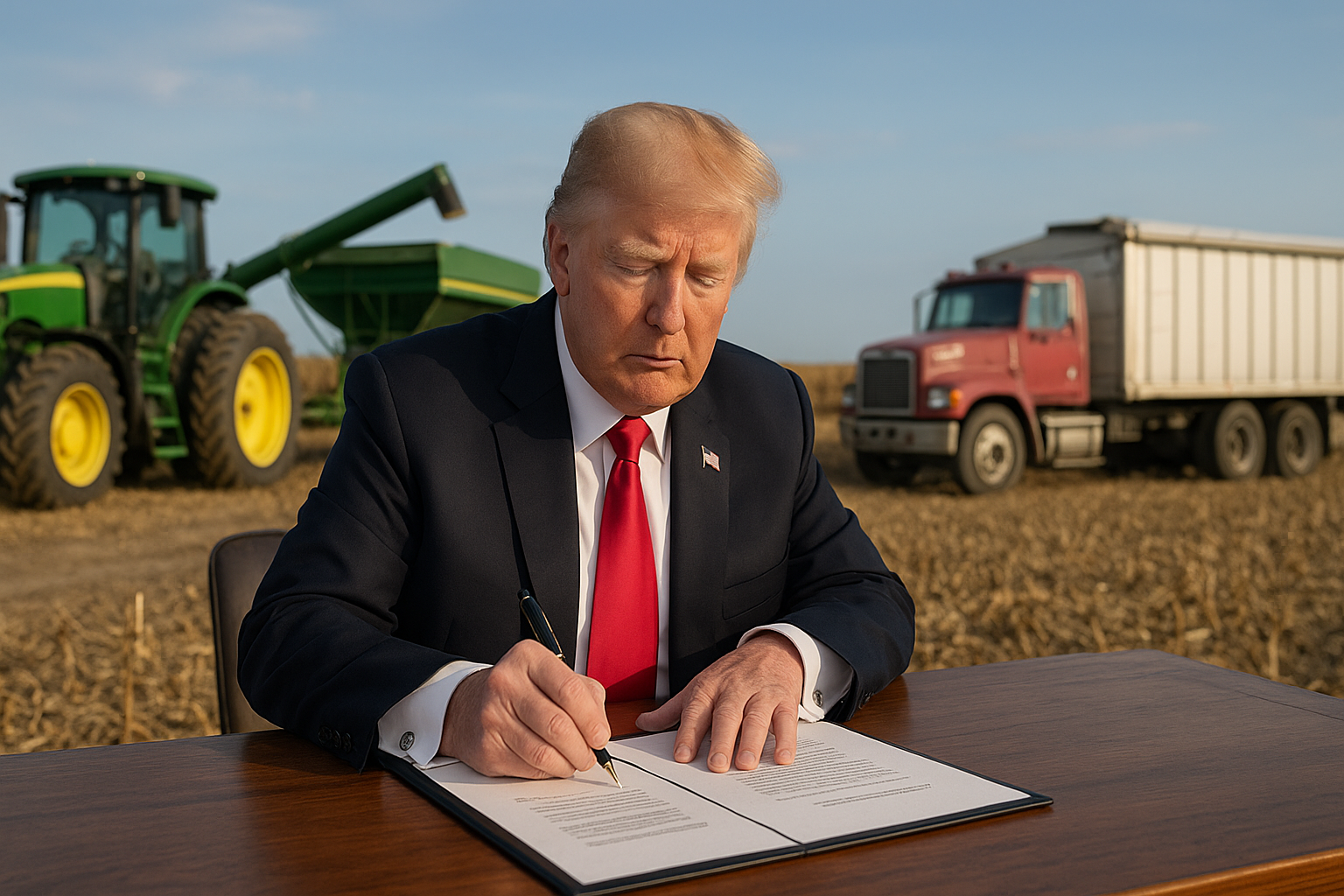
In a sweeping federal intervention designed to blunt crippling harvest transportation costs, President Donald Trump signed a landmark executive order on October 5, 2026, authorizing agricultural haulers, commercial grain truckers, and livestock transporters to burn untaxed, red-dyed off-road diesel fuel on public highways through December 31, 2026. The emergency directive directly resolves an acute interstate regulatory crisis triggered earlier this month when individual agricultural states—including Indiana, Texas, Nebraska, and Missouri—issued emergency state-level dyed diesel waivers that failed to shield interstate commercial motor carriers from severe federal enforcement. Under the new presidential order, the Department of the Treasury is directed to formally defer collection of the 24.4-cent-per-gallon federal highway diesel excise tax on dyed fuel used for highway transportation, while instructing the Internal Revenue Service and federal highway safety inspectors to immediately halt the assessment of civil fines, back taxes, and statutory penalties under Section 6715 of the Internal Revenue Code, which otherwise mandates penalties of the greater of $1,000 or $10 per gallon for unauthorized highway use.
The executive order delivers an estimated $640 million in combined federal and state freight cost relief to the agricultural sector during the peak autumn grain and oilseed harvest. With national on-highway diesel fuel prices stubbornly hovering near $6.38 per gallon and on-farm off-road fuel exceeding $6.00 per gallon, the White House projects that the tax suspension will save commercial operators between $60 and $100 per 250-gallon truck fill-up across fleets that consume tens of millions of gallons of diesel weekly during harvest. This reduction provides between 24 and 35 cents per gallon in overall freight relief, directly bolstering farm and commercial fleet cash liquidity during the most capital-intensive weeks of the agricultural production year. Beyond tax deferral, the directive mandates an interagency mobilization across the federal government: the Secretary of Agriculture is ordered to coordinate directly with regional agricultural cooperatives, fuel jobbers, and commercial bulk distributors to ensure adequate physical supplies of red-dyed diesel across high-demand harvest corridors, while the Secretary of Transportation is tasked with engaging state governments to harmonize weight limits, routing exemptions, and state-level fuel tax waivers to establish seamless cross-border freight operations.
National agricultural organizations hailed the executive order as a decisive breakthrough for the feed, grain, and livestock supply chains following weeks of aggressive lobbying. American Farm Bureau Federation (AFBF) President Zippy Duvall, who had formally petitioned the White House for comprehensive emergency relief alongside coalitions of swine, cattle, poultry, and grain associations including the National Pork Producers Council (NPPC) and National Grain and Feed Association (NGFA), praised the administration for eliminating the legal trap that left interstate haulers vulnerable to crushing federal penalties during routine Department of Transportation highway inspections. Duvall emphasized that with fuel expenses for field operations, grain carting, and finished feed delivery doubling compared to year-ago levels, establishing complete federal-state regulatory parity allows commercial feed mills, bulk ingredient distributors, and livestock haulers to legally deploy off-road fuel across all public roadways, including federal interstate highways, without fear of enforcement liability or impoundment.
Why It Matters:
For commercial feed manufacturers, integrated livestock producers, and grain merchandisers, the federal suspension of highway dyed-diesel restrictions provides immediate, quantifiable margin relief across an intensely truck-dependent supply chain. Moving bulk yellow corn, soybean meal, distillers dried grains with solubles (DDGS), wheat middlings, and complete rations from processing plants and country elevators to commercial swine barns, broiler houses, and feedlots relies overwhelmingly on commercial heavy trucking. Industry freight models indicate that fuel surcharges currently account for 12 to 15 percent of total delivered feed expense, with each 50-cent increase in diesel fuel prices inflating delivered bulk feed costs by $1.50 to $2.50 per short ton depending on haul distance. By eliminating the 24.4-cent federal tax and granting interstate access to cheaper off-road fuel stocks, the executive order immediately lowers delivered truck freight expenses by approximately $1.20 to $2.00 per ton, creating an immediate buffer against volatile local basis swings, elevated secondary rail tariffs, and stabilizing processor and producer operating margins at a critical seasonal juncture when wholesale protein cutout values are struggling against compressed retail demand.
Equally important, the federal directive eliminates the jurisdictional fragmentation that severely distorted regional procurement economics and formulation dynamics for feed mills operating near state borders. Prior to the executive order, commercial feed manufacturing plants sourcing out-of-state soybean meal or delivering finished rations across state lines remained legally trapped into purchasing taxed on-highway fuel, even as localized grain producers enjoyed state-level waivers. This regulatory friction artificially widened destination basis levels and penalized facilities situated outside major Class I rail corridors. With national regulatory harmonization established across all interstate highways, procurement directors and nutritionists can optimize ingredient routing without compliance fear. Furthermore, the reduction in delivered freight surcharges mitigates the immediate urgency for aggressive least-cost diet reformulations, providing nutritionists breathing room as they navigate volatile spreads between intact soybean meal, corn gluten meal, and synthetic amino acids across grower-finisher diets.
What to Watch:
Over the coming weeks through late October 2026, feed mill logistics directors and grain merchandising desks must monitor state departments of transportation and state revenue agencies for official administrative guidance implementing the federal directive. While the executive order establishes federal tax deferral and IRS penalty forbearance, commercial dispatchers must verify how individual states harmonize their respective state fuel tax collections, dyed-fuel enforcement protocols, and emergency gross vehicle weight limits (such as temporary 90,000- to 95,000-pound agricultural exemptions in states like Texas and Missouri). Logistics teams should establish updated fueling and dispatch protocols, ensuring contracted commercial carriers carry copies of the federal waiver and state reciprocity notices to avoid administrative delays at highway weigh stations and commercial port inspection facilities.
Simultaneously, grain buyers and livestock feed procurement desks must track local diesel fuel availability and terminal rack differentials through the conclusion of harvest. Because the executive order directs the USDA to coordinate with agricultural cooperatives and wholesale fuel distributors, buyers should watch whether surging harvest demand for red-dyed diesel strains regional bulk tank infrastructure or creates temporary spot shortages in heavy grain-producing pockets of the western Corn Belt. Merchandisers should also monitor regional trucking fuel surcharges on weekly freight invoices, ensuring that third-party freight carriers pass the 24.4-cent tax savings and off-road price discounts through to delivered ingredient contracts. Finally, industry trade groups will track whether congressional agriculture committees attempt to codify permanent legislative tax relief or year-end extensions as part of ongoing lame-duck Farm Bill negotiations.
The Bottom Line
President Donald Trump’s landmark executive order authorizing the highway use of red-dyed diesel through December 31, 2026, delivers an essential $640 million regulatory and financial lifeline to the U.S. animal feed, grain, and livestock sectors during the height of the 2026 harvest. By suspending the 24.4-cent federal excise tax and halting punitive IRS Section 6715 penalties across all public highways and interstate corridors, the directive resolves the dangerous federal-state regulatory conflict that threatened commercial feed mills and interstate agricultural haulers with catastrophic fines. For feed manufacturers, grain merchandisers, and integrated livestock producers navigating historic freight inflation, the federal waiver immediately lowers delivered ingredient costs, restores cross-border logistics parity, reinforces operational stability from field combine to livestock feed bunk, and protects operating margins throughout the critical fourth-quarter feeding season and into the upcoming marketing year.