
The Story:
On Monday, September 28, and Tuesday, September 29, 2026, the European Feed Manufacturers’ Federation (FEFAC) formally delivered an urgent feed supply chain warning to the European Union’s Agriculture and Fisheries (AGRIFISH) Council, alerting European agricultural ministers that converging regulatory, climatic, and geopolitical shocks threaten severe animal feed disruptions across the continent. In its 4th economic and supply chain assessment, FEFAC projected an immediate potential shortfall of at least 5 million metric tons of soybean meal (SBM) for the 2026/27 marketing campaign—representing a staggering 20% deficit across the European Union's total feed protein footprint. The federation warned that the looming December 30, 2026 application date for the EU Deforestation Regulation (EUDR) is paralyzing international trade flows and creating catastrophic sourcing complexities for essential feed ingredients, directly colliding with the lingering aftermath of severe Mediterranean and Balkan summer droughts and continuing logistical disruptions across the Black Sea grain corridor.
The economic fallout detailed in the FEFAC council briefing is staggering for European livestock integrators and feed compounders, with direct extra compliance premiums for certified EUDR-compliant soybean meal projected to reach up to €1.05 billion ($1.17 billion USD). An additional €449 million ($500 million USD) in secondary cost spikes is projected across alternative domestic protein co-products, notably rapeseed meal and sunflower meal, as feed formulators scramble to substitute away from uncertified oilseed imports, generating a combined feed-cost inflation shock exceeding €1.4 billion. FEFAC's risk assessment by origin revealed severe market bifurcation: while major South American origins such as Brazil face substantial compliance hurdles and certification bottlenecks, and high-risk origins in West Africa and Asia face expected availability drops of 50%, North American origins—specifically the United States and Canada—were categorized as prime low-risk suppliers with 90% to 100% expected compliance availability. This regulatory divide is actively triggering an aggressive procurement pivot by European import desks seeking secure, traceable, deforestation-free soy protein ahead of the fourth quarter.
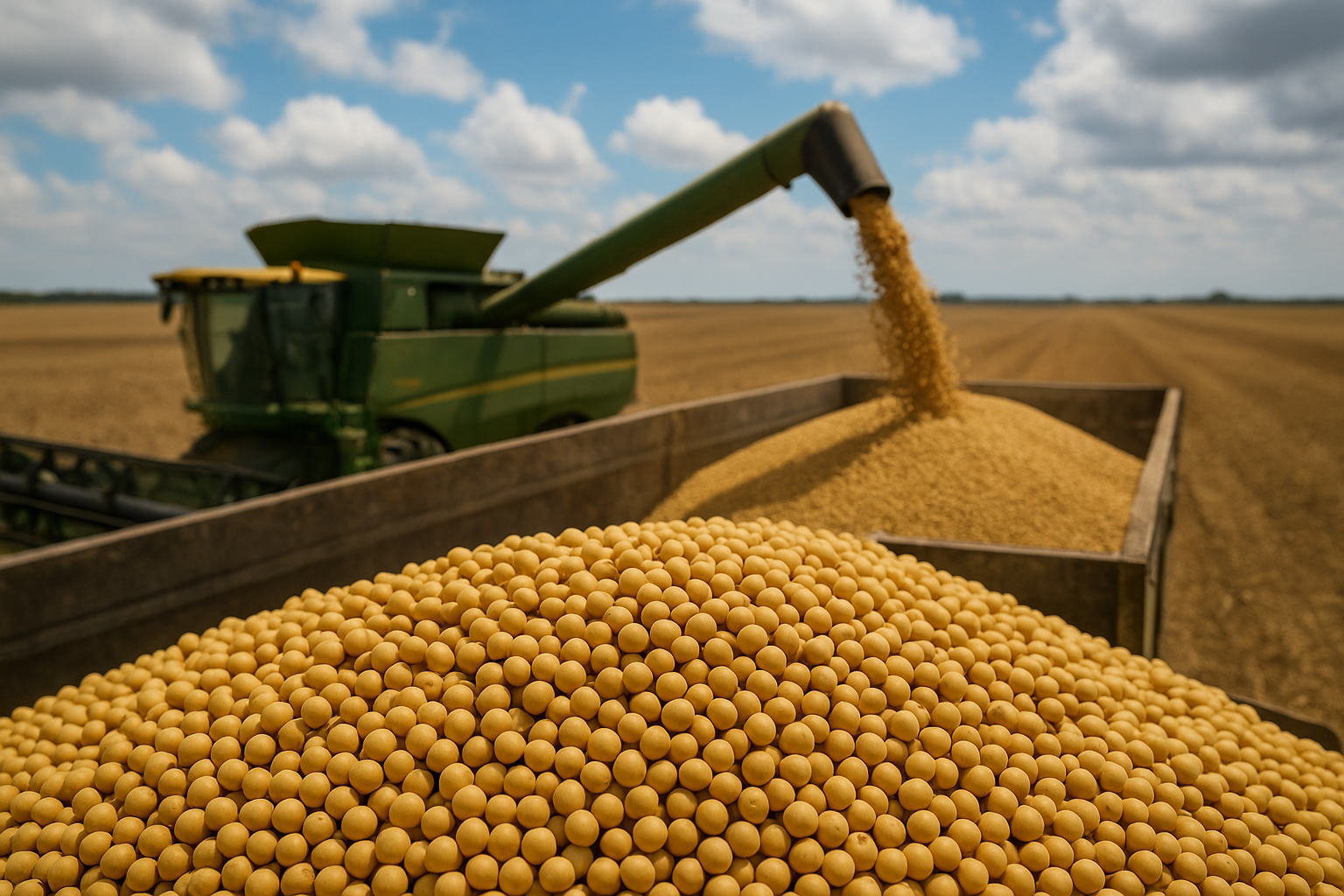
This European regulatory squeeze arrives at a critical juncture for the U.S. soy processing and grain handling complex, occurring alongside peak Midwest combines and recent bilateral U.S.-China tariff shifts. With China's recent tariff rollback granting Most-Favored-Nation (MFN) relief to U.S. corn, sorghum, and feed meals while maintaining a 10% retaliatory tariff on unprocessed whole soybeans, U.S. crushers are already incentivized to process record domestic soybean volumes. The prospect of Europe desperately pulling millions of tons of traceable, high-protein U.S. soybean meal across Atlantic shipping channels creates an unprecedented export demand cushion for U.S. crushers. Instead of interior soybean meal basis collapsing under the weight of peak harvest grind, intense export competition between European livestock buyers and domestic swine, poultry, and dairy feed mills is fundamentally altering fourth-quarter protein balance sheets, firming Gulf and East Coast port basis and creating acute price volatility across the North American feed manufacturing sector.
Why It Matters:
For domestic commercial feed manufacturers, swine integrators, broiler producers, and dairy nutritionists across the United States, Europe's impending 5-million-ton soybean meal deficit shatters expectations of cheap, abundant autumn protein supplies. Historically, the onset of peak Midwest harvest inundates interior processors with newly harvested soybeans, crushing interior 48% solvent soybean meal basis and allowing U.S. livestock feeders to establish low-cost fourth-quarter and winter feed coverage. However, as multinational agribusiness giants mobilize ocean export capacity to supply premium-priced, EUDR-compliant soybean meal into Rotterdam, Hamburg, and Mediterranean ports, export terminal bids are pulling meal out of interior processing hubs. This aggressive ocean export pull threatens to maintain a firm floor under domestic spot meal values, counteracting domestic seasonal harvest pressure and forcing U.S. integrators to defend feeding margins against unexpectedly stubborn baseline ration costs.
Concurrently, European livestock producers face an existential cost escalation that will inevitably alter global meat trade flows and protein competitiveness. FEFAC calculates that EUDR compliance premiums and alternative protein rationing will inflate finished livestock feeding expenses by roughly €40 per metric ton for pork production and €15 per metric ton for broiler meat across European barns. This massive cost handicap severely damages European pork and poultry export competitiveness in key Pacific Rim and Middle Eastern markets, accelerating the EU livestock sector's structural contraction and opening expanded export opportunities for U.S. pork, beef, and poultry integrators. At the same time, the sudden scramble for non-soy protein sources in Europe is pulling global supplies of canola meal, sunflower meal, and synthetic amino acids into European rations, establishing tight international supply balances that spill directly back into domestic U.S. feed ingredient procurement.
What to Watch:
Over the coming weeks, feed procurement directors, commodity risk managers, and nutritionists must closely monitor policy responses from the European Commission and the ongoing AGRIFISH Council negotiations in Brussels. While the Commission has consistently maintained that it will not reopen the core legal text of the EUDR, mounting pressure from EU Member States—coupled with formal appeals from major trading partners across North America and South America—could force administrative delays in penalties, provisional enforcement grace periods, or simplified due-diligence reporting guidelines before the December 30 statutory deadline. In the cash commodity markets, procurement teams must scrutinize weekly USDA Export Sales summaries and U.S. Census Bureau trade data for surges in European soybean meal commitments, particularly out of Mississippi River, Gulf Coast, and East Coast export terminals, which serve as the primary barometer of trans-Atlantic export diversion.
Simultaneously, commercial animal feed formulators and nutrition teams must proactively audit least-cost formulation matrices and evaluate strategic substitution thresholds between intact vegetable proteins and synthetic amino acids. If heightened European export demand keeps domestic soybean meal basis artificially elevated, nutritionists should evaluate expanding dietary inclusion rates of corn distillers dried grains with solubles (DDGS)—which continues to trade at an attractive discount relative to cash corn—and wheat middlings where regional milling supplies permit. Furthermore, feed mills must re-evaluate synthetic amino acid inclusion levels, optimizing crystalline L-lysine, DL-methionine, L-threonine, and L-tryptophan to trim dietary crude protein requirements by 1.0 to 1.5 percentage points while maintaining digestible amino acid ratios. Logistics coordinators must also coordinate early rail and hopper car commitments to protect interior feed mills against trans-shipment congestion as export terminals prioritize coastal meal deliveries.
The Bottom Line
FEFAC’s urgent warning to the EU AGRIFISH Council projecting a 5-million-metric-ton soybean meal deficit and €1.5 billion in cost inflation under the impending EUDR deadline delivers a powerful demand shock to global feed ingredient markets. With North America identified as the primary low-risk origin capable of meeting strict deforestation-free certification, European feed buyers are aggressively targeting U.S. soybean meal supplies right as Midwest harvest reaches full speed. Rather than experiencing the steep seasonal basis collapse typical of peak autumn processor runs, U.S. animal feed manufacturers and livestock integrators face sustained export competition and firm protein values. Feed mill executives, commodity procurement directors, and animal nutritionists must respond by securing forward soybean meal coverage, re-optimizing synthetic amino acid matrices to minimize dietary crude protein costs, and managing logistics closely to defend feeding margins through the fourth quarter.