
The Story:
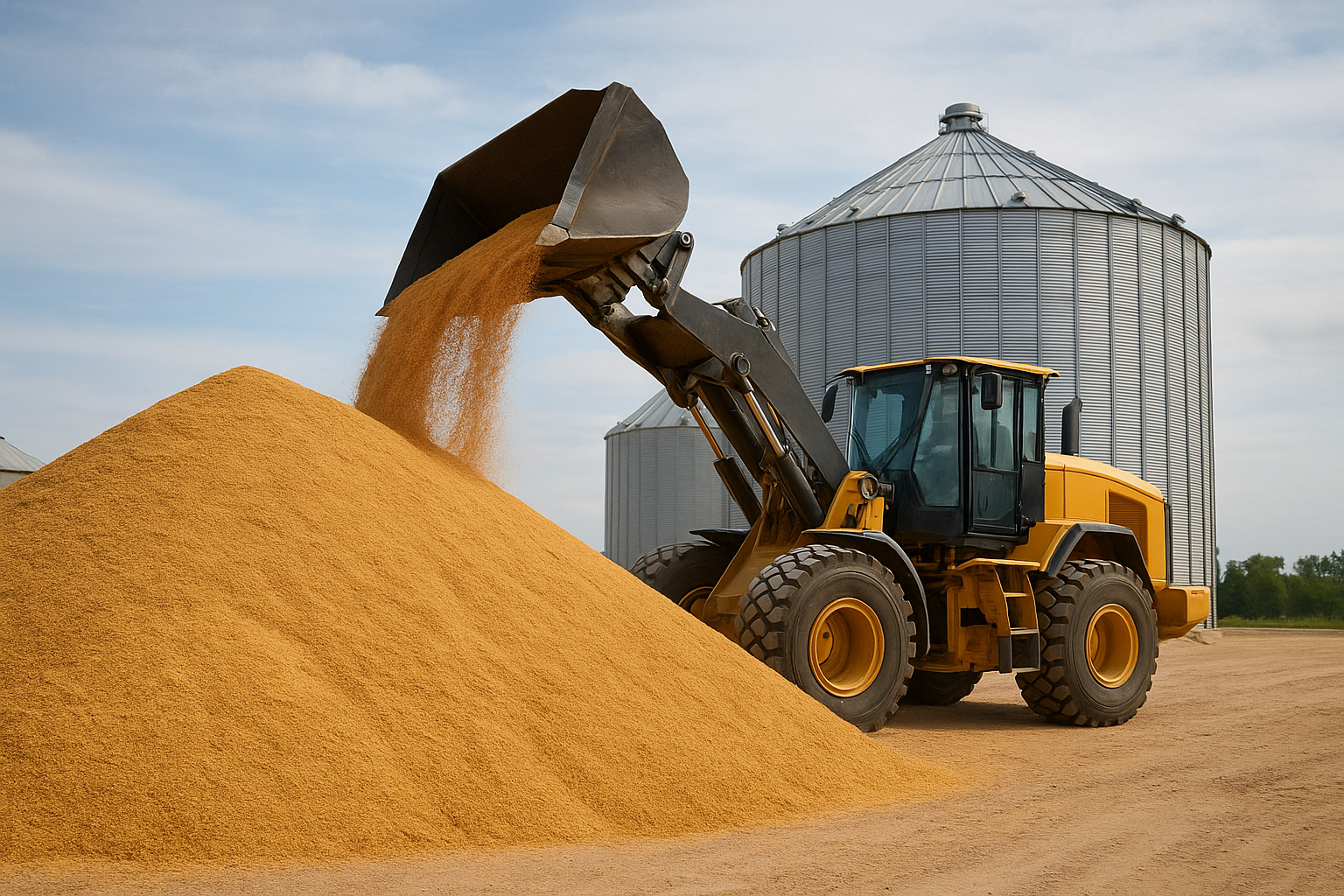
The U.S. agricultural export sector is witnessing a robust performance in the movement of dried distillers grains with solubles, commonly known as DDGS, as international buyers increasingly rely on this critical coproduct of dry-mill ethanol production. According to recent data from the Renewable Fuels Association and the USDA Foreign Agricultural Service, U.S. DDGS exports totaled approximately 1.10 million metric tons in July 2026. This impressive monthly volume was effectively unchanged from the strong shipments recorded in June, indicating sustained global appetite. Furthermore, through July, U.S. DDGS exports totaled approximately 7.27 million metric tons for the calendar year. These year-to-date exports were approximately 13% higher than during the same period in 2025. This accelerating outbound movement demonstrates that even amid shifting global grain flows, U.S. DDGS remains a highly competitive and sought-after feed ingredient for livestock and poultry producers around the world.
A detailed examination of the July 2026 export data reveals shifting purchasing patterns among key international partners. Mexico successfully remained the largest single destination for U.S. DDGS, although its July purchases declined approximately 17% from the previous month to 191,715 metric tons. Similarly, Indonesian purchases declined approximately 13% to 145,696 metric tons. Conversely, several other major markets aggressively increased their procurement. South Korean purchases increased approximately 24% to 137,325 metric tons, reflecting strong regional feed demand. Vietnam maintained a solid purchasing pace, securing approximately 124,934 metric tons. Closer to home, Canadian purchases increased approximately 8% to 62,622 metric tons, while Colombian purchases increased approximately 22% to reach 62,026 metric tons. Beyond these primary destinations, approximately 28 additional countries purchased the remaining portion of July exports, underscoring the remarkably broad geographic diversification of current U.S. DDGS export demand.
Understanding the future trajectory of this market requires a firm grasp of the complex DDGS supply angle. Because DDGS is a direct coproduct of the ethanol sector, its domestic supply is heavily influenced by a multifaceted web of variables. Production levels are intrinsically linked to overarching corn availability, underlying ethanol margins, daily plant operating rates, broader fuel demand, and shifting national energy policy. Furthermore, the physical availability of dried distillers grains depends heavily on the cost of natural gas required for the drying process, as well as routine plant maintenance schedules and unexpected mechanical disruptions. On the logistics side, domestic feed demand competes directly against international demand, with the ultimate destination often dictated by rail, truck, and export freight costs. However, high export demand does not necessarily mean the United States will experience a widespread DDGS shortage; the actual effect on individual buyers will depend entirely on regional ethanol production densities, local livestock demand, localized transportation constraints, export logistics, and existing forward contract coverage.
Why It Matters:
For domestic feed manufacturers, these robust export figures carry significant market implications that directly influence daily procurement strategies. Stronger exports structurally reduce the volume of DDGS available for domestic consumption, which can rapidly alter domestic DDGS availability and widen the regional DDGS basis. This competitive tension between domestic and international customers frequently results in firmer spot and forward pricing, even in an environment where overall U.S. corn supplies appear comfortable. As export-terminal and rail demand intensifies, ethanol plants may implement stricter supplier allocations, prioritizing highly efficient unit-train export shipments over localized truck distribution. Consequently, livestock producers and feed mills located immediately adjacent to major ethanol plants may remain relatively insulated from severe shortages, while buyers located much farther from production hubs could face substantially higher delivered replacement costs and logistical headaches.
Crucially, this dynamic explains why DDGS pricing can sometimes move differently from the underlying corn market. Novice buyers often assume that cheap, abundant corn automatically guarantees cheap, abundant DDGS. However, strong export demand or sudden, unexpected changes in ethanol production rates can heavily support DDGS values, effectively decoupling the coproduct's price from the primary commodity. When massive volumes of DDGS are pulled toward export terminals in the Gulf or the Pacific Northwest, the remaining domestic supply tightens, forcing local feed mills to pay a premium to secure their necessary physical inventory. Therefore, savvy procurement managers must closely monitor export activity and ethanol operating margins when making critical feed-mill inventory decisions, recognizing that global demand can override domestic corn abundance.
What to Watch:
As DDGS prices fluctuate in response to export demand, nutritionists must continuously evaluate the formulation angle to ensure optimal diet economics. DDGS plays a multifaceted nutritional role in animal feed, contributing highly concentrated energy, crude protein, digestible amino acids, highly bioavailable phosphorus, digestible fiber, and valuable residual corn oil. Because of this complex nutrient profile, DDGS competes economically across several different ingredient categories simultaneously. It serves as a partial replacement for whole corn and soybean meal, while its residual oil competes against supplemental fats and oils, and its bioavailable phosphorus reduces the need for expensive inorganic phosphorus supplementation. Consequently, feed manufacturers must evaluate DDGS according to its complete, holistic nutritional contribution to the diet—not simply its flat price per ton or its basic crude-protein level. Formulators must run continuous parametric analyses to determine precisely when DDGS remains financially viable against a basket of competing ingredients.
This evaluation becomes even more intricate when considering the amino-acid angle, particularly in poultry and swine diets. For monogastric animals, DDGS quality and specific amino-acid digestibility matter far more than total crude protein. Nutritionists focus heavily on digestible lysine, which can vary significantly depending on the production processes utilized at different ethanol plants. The effects of excessive drying or severe heat damage can drastically reduce lysine availability, making strict supplier consistency and rigorous laboratory testing absolutely essential for successful formulation. As higher DDGS prices emerge due to strong export demand, least-cost formulation software may automatically shift diets back toward traditional corn and soybean meal combinations. Furthermore, if intact proteins become too expensive, these lower-protein formulations may increasingly rely on crystalline amino acids—such as supplemental lysine, methionine, threonine, tryptophan, valine, or isoleucine—to precisely meet the animal's nutrient requirements without overfeeding crude protein. However, rising DDGS exports will not automatically increase amino-acid inclusion; the final outcome depends entirely on the specific animal species, strict diet constraints, customized ingredient nutrient matrices, local pricing, and the individual feed mill’s unique least-cost formulation.
The Bottom Line
Strong DDGS exports undoubtedly support the financial health of the U.S. ethanol and grain-processing industries, but this surging international demand simultaneously influences the price and availability experienced by domestic feed buyers. Even when domestic corn is plentiful, aggressive export shipments can tighten regional DDGS supplies and elevate replacement costs. Feed manufacturers and procurement teams should meticulously monitor DDGS export activity alongside real-time ethanol production metrics, regional basis levels, freight logistics, and stringent ingredient quality standards when evaluating its true formulation value and long-term competitiveness.