
The Story:
On Monday midday, October 26, 2026, the U.S. Department of Agriculture's (USDA) Federal Grain Inspection Service (FGIS) and Agricultural Marketing Service (AMS) released their weekly Grain Export Inspections telemetry for the period ending October 22, revealing an extraordinary structural divergence across American maritime bulk shipping corridors. Benchmark weekly corn export inspections tumbled precipitously to just 24.6 million bushels (approximately 625,000 metric tons)—marking the lowest single-week volume for this calendar juncture in more than three years and running far behind the seasonal pace required to meet official USDA annual export projections. In vivid contrast, American soybean export inspections surged to an immense 91.0 million bushels (approximately 2.47 million metric tons), driven by an aggressive flurry of bulk vessel loadings out of Center Gulf and Pacific Northwest (PNW) export terminals destined for primary processing hubs across mainland China, Mexico, and the European Union. Meanwhile, weekly wheat export inspections recorded a modest 6.8 million bushels (185,000 metric tons), while grain sorghum inspections halted completely at zero bushels, underscoring how international export logistics have become almost entirely monopolized by rapid oilseed clearing while feed grains face an acute physical and commercial shipping bottleneck.
The sudden collapse in corn export clearing stems from a compounding logistical squeeze along the primary arteries of the inland waterway navigation network, most notably the Lower Mississippi River system. Weeks of persistent autumn dryness across the Ohio, Missouri, and Upper Mississippi river basins have dropped river water gauges at Cairo, Illinois, and Memphis, Tennessee, into deeply negative gauge territory, forcing the U.S. Coast Guard, commercial barge lines, and the Waterways Council to enforce strict draft restrictions and tow-size limitations. Southbound barge drafts have been curbed from standard 12-foot operating depths down to 11 feet 6 inches and, in critical localized shoaling channels, to 9 feet, effectively reducing the net grain tonnage carried per barge by 20 to 25 percent. Simultaneously, maximum allowable flotilla tow sizes have been slashed from traditional 30-to-36-barge configurations down to 20 or 24 barges, creating immense river traffic congestion, extending barge turnaround cycle times between St. Louis and Gulf export terminals, and driving spot barge freight tariffs to elevated seasonal premiums. With deep-water export elevators at the Center Gulf prioritizing high-margin soybean vessel commitments over feed grains, commercial grain handlers have been forced to ration terminal capacity, effectively choking off the primary export relief valve for newly combined Midwestern corn.
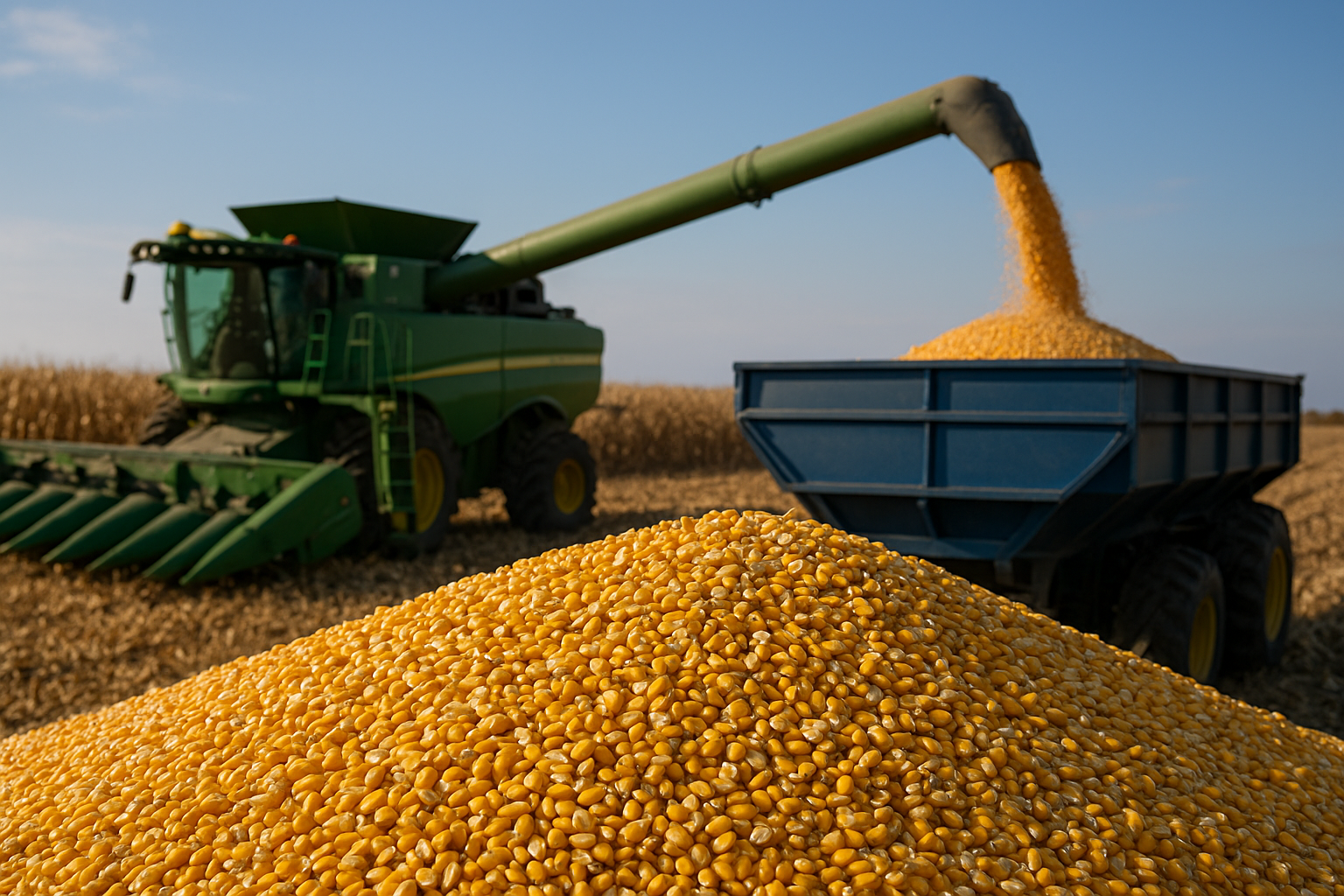
Crucially, this maritime export choke point arrives at the precise seasonal apex of the 2026 North American row-crop harvest, amplifying physical congestion across interior commercial delivery channels. With dry mid-autumn field conditions accelerating combining crews across foundational production states—pushing national corn harvest progress past the 50 percent completion milestone and advancing soybeans beyond 72 percent—country elevators, river loading facilities, and rail shuttle terminals are contending with a relentless tsunami of physical grain receipts. The USDA's benchmark October Crop Production estimate, which pegged national corn yields at an unprecedented 181.2 bushels per acre and forecasted a massive 16.0-billion-bushel harvest, has pushed commercial grain storage capacity beyond its limits. With river terminals unable to turn their working bins due to slowed barge dispatch and Gulf corn inspections stalling at 24.6 million bushels, interior grain merchandisers have widened cash basis bids aggressively to dissuade incoming spot farmer truck deliveries, posting spot discounts ranging from 42 to 65 cents under December CBOT futures across the central Corn Belt and triggering widespread temporary ground pile and outdoor bunker storage.
Why It Matters:
For commercial animal feed compounders, integrated poultry operations, commercial swine production systems, and High Plains cattle feedyards, the collapse in corn export clearance to a multi-year low of 24.6 million bushels decisively shifts bargaining leverage directly into the hands of domestic livestock feed buyers. Because export corridors are physically constrained by low river drafts and commercial elevator bins are choked with uncommitted new-crop receipts, massive volumes of dry yellow dent corn are effectively trapped in the domestic interior. Commercial elevator operators, burdened by soaring commercial carry costs, short-term borrowing interest rates near 7.5 to 8.0 percent, and steep elevator insurance fees on outdoor ground piles, are desperate to cycle working inventory. This dynamic has driven interior flat cash corn prices to their most affordable levels of the entire 2026 marketing year, with cash bids in Iowa, southern Minnesota, Illinois, and Nebraska plunging into the $4.10 to $4.25 per bushel range. Commercial feed procurement directors who have held back from extending forward coverage now possess an optimal window to establish spot and forward delivered-mill basis contracts for November through February, securing foundational dietary energy supplies at multi-year cost discounts.
At the same time, animal nutritionists and feed mill formulation managers must dynamically exploit the widening structural spread between domestic feed grains and protein meals. While the rapid 91.0-million-bushel export clearing pace of whole soybeans continues to support interior processor crush margins and keep Decatur spot soybean meal hovering near $346 to $350 per short ton, abundant domestic corn supplies are driving finished feed formulation costs down by $16 to $24 per finished ton across broiler, swine, and dairy rations compared to late-summer baselines. To maximize margin capture, feed mills should balance depressed cash corn starch with cost-effective dry-mill distillers dried grains with solubles (DDGS)—which have softened toward $182 to $190 per ton across the Midwest as ethanol production maintains elevated operating grinds—and precision synthetic amino acid fortification. By maximizing the inclusion of feed-grade L-lysine hydrochloride, DL-methionine, and L-threonine, nutritionists can prudently reduce dietary crude protein inclusion targets by 1.5 to 2.0 percentage points without compromising standardized ileal digestible (SID) amino acid ratios, safeguarding broiler growth rates, optimizing swine average daily gains, and fortifying livestock operating margins against macroeconomic volatility.
What to Watch:
Over the next two to three weeks, feed industry procurement executives, commercial grain originators, and agribusiness risk managers must closely monitor weather forecasts across the Ohio and Mississippi river basins alongside the National Oceanic and Atmospheric Administration's (NOAA) extended hydrological outlook. Industry participants should track whether projected late-autumn frontal systems deliver sufficient precipitation to stabilize river stages at Cairo and Memphis, or whether persistent low-water levels force the U.S. Coast Guard to impose further draft restrictions down to 9 feet across critical navigation bottlenecks. Any further tightening of river barge draft limits will divert substantial volumes of interior grain and co-products onto regional Class I rail networks, potentially igniting secondary railcar freight tariff spikes on BNSF and Union Pacific shuttles and tightening hopper car availability for domestic feed mills operating throughout the Southeast and Southern Plains.
Concurrently, livestock operations managers and commodity trading desks must scrutinize this afternoon's release of the USDA's weekly national Crop Progress report, followed by Thursday's weekly USDA Foreign Agricultural Service (FAS) Export Sales summary. Agribusiness professionals should evaluate whether domestic commercial farmers respond to widening interior basis discounts by abruptly shutting their bin doors and locking physical grain into on-farm storage, which would quickly tighten spot commercial pipeline liquidity and establish a firm seasonal floor under interior cash basis. In addition, feed buyers should analyze whether international buyers step in to capitalize on discounted U.S. FOB Gulf corn offers or whether overseas importers continue to favor cheaper South American originations from Brazil and Argentina, which would prolong sluggish export inspections and leave domestic feed mills in an enduringly favorable procurement environment through year-end.
The Bottom Line
The USDA's Monday midday export inspections report—headlined by weekly corn shipments collapsing to a three-year low of 24.6 million bushels while soybean inspections roared to 91.0 million bushels—highlights a severe logistical bottleneck that is trapping bumper row-crop harvest supplies within the domestic interior. For commercial animal feed compounders, livestock integrators, and commercial nutritionists navigating a record 16.0-billion-bushel corn crop, this maritime bottleneck transforms transportation friction into an extraordinary cost-reduction opportunity. By aggressively capturing wide interior cash basis discounts, locking in delivered energy coverage through the winter months, and strategically rebalancing feed formulations with economical DDGS and synthetic amino acids, feed manufacturers and livestock producers can lock in substantial dietary cost savings, insulate balance sheets against logistics disruptions, and establish robust operational profitability heading into 2027.