
The Story:
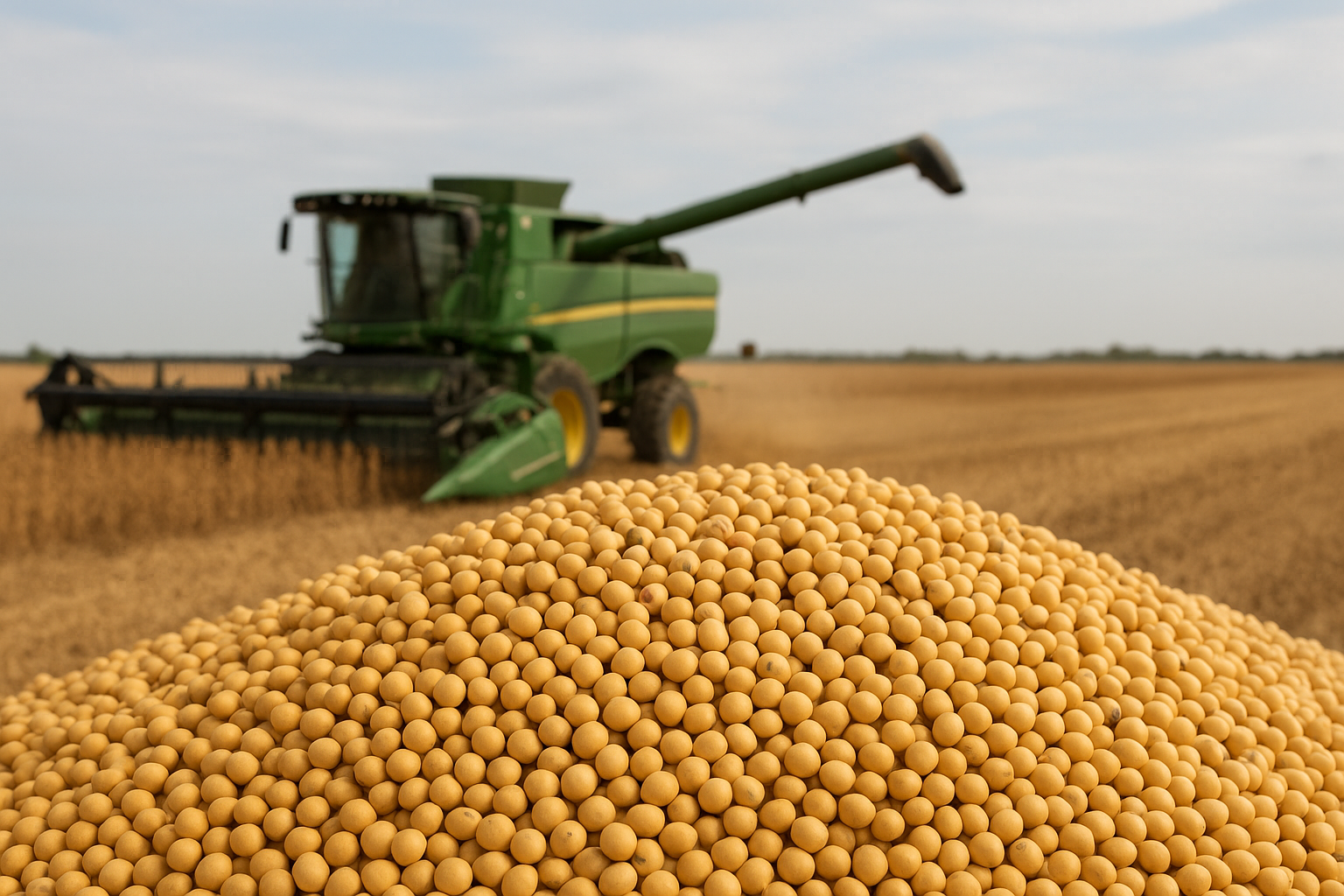
On Wednesday, October 14, 2026, the U.S. Department of Agriculture’s Foreign Agricultural Service (USDA FAS) officially released an export sales announcement under its mandatory daily reporting system (Announcement FAS-ESR-089-26), confirming that private commercial agricultural exporters negotiated major flash sales of 470,000 metric tons of U.S. soybeans for delivery to China during the 2026/2027 marketing year. The massive single-day transaction—equivalent to approximately 17.27 million bushels—represents China’s largest direct volume purchase of U.S. new-crop soybeans this autumn, signaling an immediate resurgence in bilateral agricultural commodity trade during a pivotal harvesting window across North America. The official federal notification specifies delivery schedules concentrated across the peak autumn shipping window from late October through December 2026. Prior to this morning’s federal disclosure, commercial grain markets had been pricing in sluggish international demand following weeks of cautious diplomatic maneuvering, leaving commercial grain handlers, river elevator networks, and export loading facilities actively searching for concrete signs of Chinese import appetite as the Midwest soybean harvest accelerates toward peak seasonal throughput across the Corn Belt.
The timing of China’s substantial purchase arrives immediately on the heels of the USDA’s October Crop Production and World Agricultural Supply and Demand Estimates (WASDE) reports, which established a complex supply-and-demand landscape across North American oilseed markets. While the federal agency raised its 2026 U.S. national soybean production forecast to a record-breaking 4.562 billion bushels on an increased national average yield of 53.1 bushels per acre, domestic ending stocks were estimated at a relatively snug 315 million bushels. Industry grain analysts, commercial crushers, and international merchandisers note that Chinese state-owned buying entities and commercial crushing conglomerates, including COFCO and Sinograin, stepped into the U.S. cash market to capitalize on harvest-low cash prices and competitive free-on-board (FOB) vessel offers at the U.S. Gulf and Pacific Northwest (PNW). With Brazilian export supplies seasonally depleting ahead of their upcoming South American harvest, Chinese crushers acted decisively to secure prompt October and November vessel loadings to satisfy intensive domestic livestock feed manufacturing requirements and maintain continuous coastal port inventories.
The immediate commercial reverberations of the 470,000-metric-ton commitment rippled across domestic physical grain origination, terminal logistics, and river corridors within hours of the announcement. Export basis levels at the Center Gulf firmed sharply, with spot October and November vessel premiums expanding by 4 to 6 cents per bushel over the Chicago Board of Trade (CBOT) November futures contract. Interior grain terminals along the Upper Mississippi, Illinois, and Ohio rivers reported intense barge linehaul demand, as commercial grain merchandisers scrambled to load and dispatch export-destined grain to meet rigid ocean vessel charter laycans at New Orleans and Baton Rouge. This rapid acceleration in river-bound grain movement is actively pulling physical raw soybeans away from local interior pathways, tightening spot delivery pipelines, elevating interior cash basis, and forcing commercial grain elevators and regional transit hubs to widen bid spreads to keep harvest pace flowing smoothly without creating localized logistical bottlenecks.
Why It Matters:
For domestic animal feed manufacturers, commercial livestock producers, and integrated poultry operations, the sudden diversion of 17.27 million bushels into ocean export channels carries direct, profound implications for domestic crush economics and finished soybean meal pricing structures. High-protein soybean meal remains the indispensable nutritional foundation for commercial swine, broiler, layer, and turkey rations throughout the United States, providing the critical digestible amino acid profile required to sustain modern genetic growth rates and optimal feed efficiency. When international ocean export demand accelerates sharply, domestic soybean processing plants in the Eastern Corn Belt, Western Corn Belt, and Mississippi Delta face immediate raw material origination pressure. In order to maintain daily crush run-rates, protect operating margins, and fulfill forward meal and oil commitments, regional processors are forced to raise cash processor basis bids to compete against aggressive river terminals, directly preventing harvest-time meal prices from easing and establishing a durable floor under wholesale feeding ingredient costs.
In practical livestock production and feed mill financial terms, firmer soybean meal values place renewed margin pressure on livestock feeding operations that are already navigating challenging macroeconomic conditions. Commercial swine operations across the Midwest are contending with depressed wholesale pork cutout values and contract-low lean hog futures, making feed cost containment essential to maintaining positive herd cash flows and preventing deepening operational losses heading into the winter months. Concurrently, broiler and turkey integrators face sustained competition in retail meat cases, leaving little room to absorb unhedged feed ingredient inflation. With soybean meal cash basis strengthening in key processing centers such as Decatur, Illinois, feed formulation directors and animal nutritionists must immediately re-evaluate least-cost dietary matrices. Higher wholesale soybean meal costs increase the economic return of precision amino acid supplementation, prompting feed compounders to lift inclusion rates of crystalline L-lysine, DL-methionine, and L-threonine while tactically blending corn distillers dried grains with solubles (DDGS) to control total ration crude protein expense without sacrificing flock and herd feed conversion.
What to Watch:
Over the next two to four weeks, feed procurement desks, commodity merchandisers, and livestock production managers must closely track the weekly export reporting cadence published by the USDA Foreign Agricultural Service. Industry market participants should audit subsequent daily flash sales notices and Thursday weekly export sales summaries to determine whether today’s 470,000-metric-ton transaction represents the opening salvo of a sustained multi-million-ton Chinese buying program or merely an isolated commercial purchase window. In parallel, procurement teams must monitor planting progress and weather developments across the primary agricultural states of Brazil, including Mato Grosso and Paraná. Continued delays in South American monsoon rainfall could disrupt early soybean seeding schedules and delay Brazil’s early 2027 harvest timeline, which would substantially extend China’s reliance on U.S. export terminals through January and February and sustain prolonged competition against domestic feed mills.
Simultaneously, logistics directors and feed mill operational managers must scrutinize river stage levels and freight conditions throughout the Mississippi River drainage basin. While timely autumn precipitation has temporarily alleviated low-water draft restrictions below St. Louis, a prolonged surge in barge linehaul commitments to support export vessel loadings could trigger equipment shortages and elevate northbound empty barge freight rates above recent benchmarks of 600 to 650 percent of tariff. Higher barge transportation costs frequently spill over into regional rail and trucking tariffs, directly inflating delivered ingredient basis for livestock feeding complexes across the Southeast and mid-Atlantic broiler belts. Feed manufacturers should review their physical inventory coverage and evaluate forward-basis contracts for soybean meal through the first quarter of 2027, ensuring reliable ingredient supplies are secured before export terminal congestion tightens prompt domestic freight availability.
The Bottom Line
The USDA Foreign Agricultural Service’s October 14, 2026 confirmation of a 470,000-metric-ton soybean sale to China injects powerful international demand into the North American oilseed complex, establishing a robust floor under cash markets and demonstrating that global buyers are actively absorbing the 2026 harvest despite record supply projections. For animal feed manufacturers, commercial pork producers, and poultry integrators, this aggressive export demand intensifies competition for raw soybeans, protects processor crush margins, and threatens to lift delivered soybean meal costs into the fourth quarter. Feed procurement managers and livestock nutritionists who proactively secure meal basis coverage, closely monitor Mississippi River freight logistics, and leverage precision crystalline amino acid formulation will successfully defend feeding margins and maintain cost predictability across an evolving commodity landscape.