
The Story:
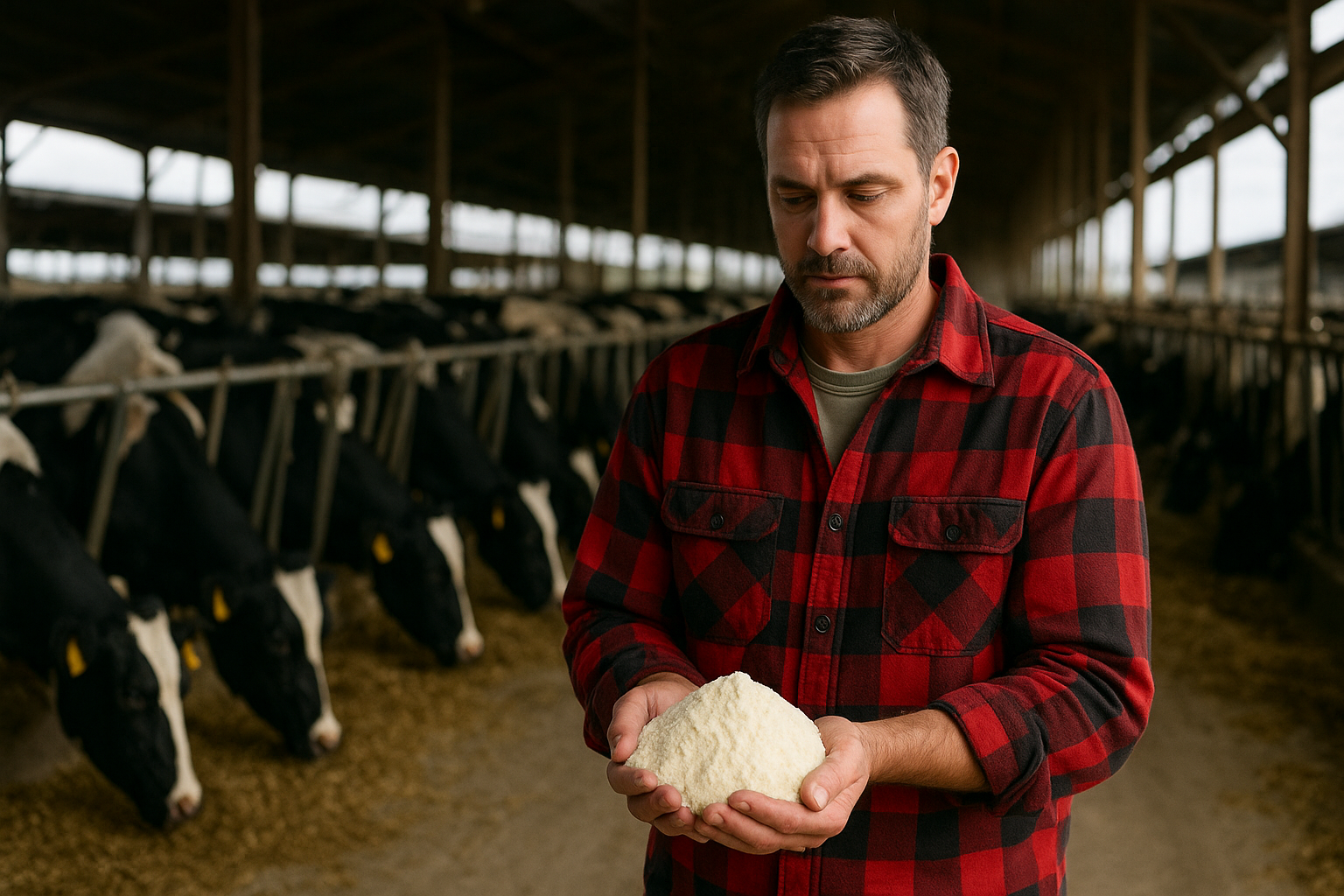
Beginning on September 29, 2026, the United States will implement an unprecedented import ban on several specific categories of Canadian whey products as part of a rapidly escalating bilateral trade dispute. Taking effect at exactly 12:01 a.m. EST, this restrictive action represents an outright prohibition on the importation of targeted Canadian dairy ingredients, rather than a standard tariff increase. For feed manufacturers and agricultural importers, this means that these covered products cannot enter the U.S. market at any price. However, U.S. trade and customs authorities have clarified that Canadian goods currently in transit—specifically those imported into the United States before the September 29 deadline but not yet officially entered for consumption—will not be completely banned. Instead, those transitional shipments will be subjected to a punitive 50% Section 338 tariff. This sudden regulatory enforcement forces ingredient buyers to immediately halt future Canadian whey deliveries and desperately assess the financial impact on their existing supply chains.
To properly navigate this trade disruption, procurement managers must rigorously examine the exact product classifications covered by the prohibition, as not every Canadian dairy or whey product is banned. The official federal restrictions specifically target eight categories of Canadian whey, explicitly including whey protein concentrates, modified whey, fluid whey, and dried whey. Because the prohibition is strictly categorized by specific customs codes, the effects will differ significantly by product specification and the exact derivative being imported. This severe U.S. restriction is a direct response to matching retaliatory tariffs imposed by Canada earlier in September, which placed up to 50% duties on various U.S. dairy ingredients exported north. As a result of these retaliatory measures, the highly integrated North American agricultural trade corridor is experiencing severe regulatory friction, leaving domestic feed manufacturers caught in the crossfire of a much larger international dispute.
The immediate reaction across the agricultural sector has been one of deep concern. Trade groups, including the International Dairy Foods Association, have strongly urged both nations to return to the negotiating table, warning that these escalating restrictions will severely fracture the deeply integrated dairy and feed-ingredient supply chains. For commercial feed manufacturers and livestock integrators who have traditionally relied on Canadian suppliers for high-quality whey ingredients, the upcoming deadline presents a logistical nightmare. Buyers who have historically contracted specific Canadian whey specifications for their nutritional consistency and regional availability are now aggressively scrambling to secure alternative domestic sources. If a resolution is not reached prior to the late-September deadline, the sudden disappearance of Canadian volume will force a rapid reorganization of ingredient flows across the northern tier of the United States.
Why It Matters:
The impending disappearance of Canadian whey from the U.S. market is highly problematic because whey-derived ingredients perform critical, specialized functions in young-animal nutrition. In premium nursery-pig diets, calf milk replacers, specialty livestock feeds, and high-end pet-food formulations, whey is rarely viewed as a simple, interchangeable commodity. Instead, milk-derived ingredients provide a highly digestible lactose supply, a source of readily available energy, and a high-quality amino-acid profile that young animals can efficiently utilize before their digestive systems fully mature. Furthermore, whey products heavily influence the palatability and physical pellet quality of starter feeds. Ensuring high early feed intake and facilitating a smooth physiological transition immediately after weaning are paramount for lifelong animal performance, making the sudden restriction of specialized whey ingredients a significant nutritional and operational hurdle.
Consequently, the market effects of this import prohibition will ripple quickly through the domestic feed sector. The sudden loss of Canadian supplies will inevitably drive up domestic demand for U.S.-produced whey and lactose, likely inflating replacement costs and creating stark regional availability differences. Feed manufacturers located near the Canadian border, who previously optimized their freight logistics by pulling ingredients southward, will suddenly face much longer domestic supply lines and higher transportation expenses. Furthermore, this disruption threatens to trigger strict supplier allocations as U.S. dairy processors struggle to accommodate the sudden influx of domestic orders. This aggressive market shift will place immense reformulation pressure on manufacturers of nursery diets and milk replacers, simultaneously threatening the financial viability of long-term forward contracts and forcing procurement teams to rapidly secure whatever domestic inventory coverage remains available.
What to Watch:
As ingredient buyers search for domestic alternatives, nutritionists must carefully evaluate the formulation angle, recognizing that replacing specialized whey is not simply a matter of selecting the cheapest available domestic ingredient. Alternative domestic supplies—which may include domestic dry whey, whey permeate, crystalline lactose, skim milk powder, or other milk-derived products—often feature different nutrient profiles, varying lactose concentrations, and different physical handling characteristics. If domestic dairy ingredients become prohibitively expensive or unavailable, formulators may be forced to explore non-dairy alternatives, such as spray-dried plasma, highly digestible plant proteins, or alternative specialized carbohydrate sources. However, nutritionists cannot deploy a universal substitution or mandate an exact inclusion rate across all formulas. Replacements must be rigorously evaluated according to the specific animal age, the broader diet design, strict ingredient specifications, expected animal performance, and the ultimate delivered cost to the manufacturing facility.
In the coming weeks, the industry must closely watch how the domestic dairy supply chain absorbs this sudden surge in demand and whether U.S. processors can quickly ramp up production of specific whey fractions to fill the Canadian void. The ability of the domestic market to seamlessly replace these specialized ingredients will dictate the severity of the price volatility experienced this winter. Additionally, stakeholders should monitor the broader geopolitical landscape. If diplomatic negotiations miraculously resume and trade tensions cool, these strict import prohibitions could theoretically be modified, delayed, or lifted entirely. However, given the current breakdown in bilateral trade talks, feed manufacturers cannot rely on political hope. Nutritionists and ingredient buyers must operate under the assumption that these restrictions will persist, requiring them to proactively build resilient, domestic-focused supply chains that can withstand prolonged international trade disruptions.
The Bottom Line
The upcoming trade restrictions may affect a relatively specialized ingredient market, but whey products carry significant, irreplaceable nutritional value in critical young-animal diets. Even a targeted and limited trade disruption can create meaningful purchasing bottlenecks and severe formulation consequences for feed manufacturers that heavily rely on particular Canadian specifications. To successfully navigate this turbulent period, feed buyers and nutritionists must rapidly adapt their procurement strategies, rigorously evaluate domestic alternatives, and continuously recalculate the nutritional and economic viability of their nursery and milk-replacer formulations.