
The Story:
In an encouraging rebound for North American meat production, commercial broiler hatcheries across the United States stepped up incubation activity heading into late September, signaling expanding poultry supplies and rising baseline feed demand through the final quarter of the year. According to the weekly Broiler Hatchery report issued by the U.S. Department of Agriculture's National Agricultural Statistics Service (USDA NASS) on Wednesday afternoon, September 23, 2026, hatcheries in the weekly program set 247.786 million broiler-type eggs into incubators during the week ending September 19, 2026. This represents a sharp weekly gain of 2.564 million eggs—or 1.05%—compared with the 245.222 million eggs set during the preceding week, and marks a solid 2.0% increase over the 242.927 million eggs placed into incubation during the corresponding calendar week in 2025. The swift resurgence in weekly sets was driven in large part by moderating ambient temperatures across the primary poultry-producing belts of the Southeast and Mid-Atlantic, which relieved chronic late-summer thermal stress on primary broiler breeder flocks and spurred improved hen laying efficiency. Average hatchability for broiler-type eggs hatched during the week held steady at 79.4%, maintaining reproductive stability across commercial parent stock as the industry transitions into autumn.
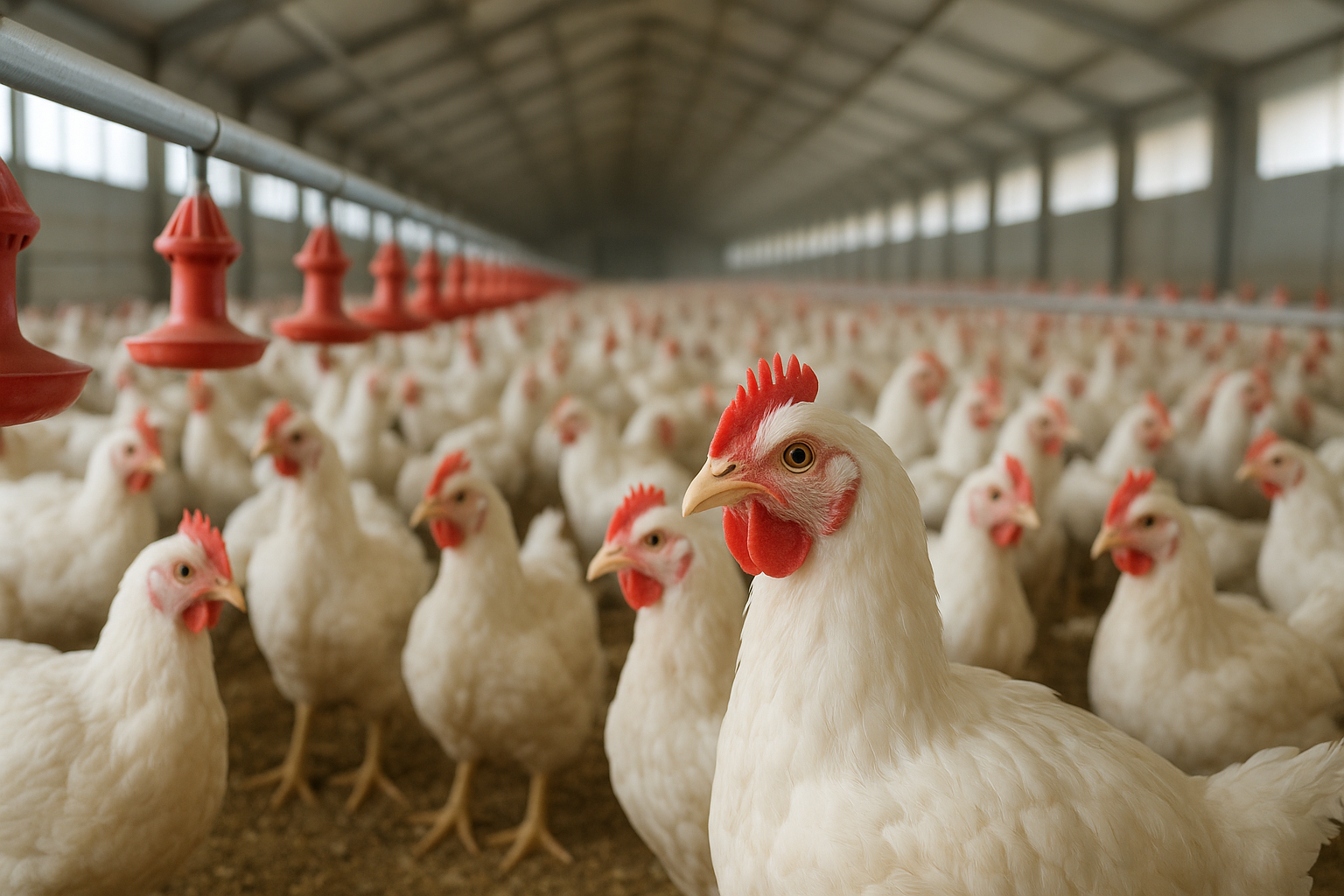
Concurrently, weekly chick placements for commercial meat growout registered 194.595 million head for the week ending September 19, reflecting a modest contraction of 327,000 chicks compared to the revised 194.922 million chicks placed during the previous week. This minor week-to-week dip in placements directly reflects the reduced volume of eggs set three weeks earlier when severe late-summer heat temporarily depressed flock output. However, the overarching multi-month production trend remains distinctly expansionary: cumulative chick placements from January 10, 2026, through September 19, 2026, reached 7.255 billion head, tracking 2.0% ahead of the 7.113 billion chicks placed during the identical period in 2025. Major producing states continued to anchor domestic placement volume, led by Georgia with 27.8 million chicks placed, Alabama with 24.2 million, North Carolina with 20.4 million, Arkansas with 20.1 million, and Mississippi with 16.9 million. These elevated placement rates confirm that vertically integrated complexes are maintaining high barn utilization rates, positioning thousands of commercial growout houses to operate at near-peak stocking capacity over the coming feeding cycle.
The decision by major integrated poultry processors—including Tyson Foods, Pilgrim's Pride, Wayne-Sanderson Farms, and Mountaire Farms—to maintain elevated egg sets reflects favorable commercial incentives across wholesale poultry and export markets. While broiler integrators routinely adjust hatchery sets to match anticipated processing plant schedules approximately six to eight weeks forward, the steady 2% year-over-year expansion underscores sustained domestic consumer demand for value-oriented poultry proteins amid persistent retail price inflation for beef. Wholesale boneless-skinless chicken breast prices have held firm throughout late summer, while strong export commitments for leg quarters and paws have kept cold-storage inventories manageable. With positive processing margins supporting live-bird procurement schedules, integrators are aggressively refilling commercial broiler houses, ensuring that automated feeding pans will remain fully stocked across the South and Eastern Shore throughout October and November.
Why It Matters:
For commercial feed manufacturers, grain merchandisers, and livestock nutritionists, this substantial volume of broiler incubation and chick placement represents a guaranteed, locked-in surge in manufactured compound feed demand that will crest over the next four to eight weeks. Broiler chickens represent the single largest animal consumer of commercial feed in the United States, requiring an average feed conversion ratio (FCR) of approximately 1.85 pounds of feed per pound of live bird gain across a standard 42-to-56-day growout cycle. A weekly incubation volume of 247.79 million eggs will yield roughly 196 million market-ready broilers by early November. Over their phased nutritional lifecycle—spanning pre-starter crumbles, starter pellets, grower rations, and withdrawal finisher feeds—these birds will collectively consume over 1.85 million short tons of manufactured feed. Because broiler formulations consist of roughly 60% ground yellow corn and 25% to 30% high-protein soybean meal, this single weekly cohort will pull approximately 39.5 million bushels of corn and nearly 500,000 short tons of 48% crude protein soybean meal out of commercial distribution channels during their feeding window.
Furthermore, this sustained poultry expansion is arriving during a period of pronounced regional basis divergence and volatile micro-ingredient costs, forcing nutritionists to execute rigorous least-cost formulation strategies. Delivered ingredient costs across Southeastern poultry complexes are facing logistical headwinds; severe low-water navigation restrictions along the Lower Mississippi River have disrupted barge transport, diverting grain movements onto domestic rail lines where freight fuel surcharges remain elevated near $0.48 per mile. Concurrently, newly finalized federal antidumping and countervailing duties on imported feed-grade synthetic amino acids have elevated replacement costs for crystalline L-lysine and L-threonine, while DL-methionine—the first limiting amino acid in poultry diets, essential for feathering, protein deposition, and immune competence—remains an non-negotiable formulation requirement. To defend live-production margins against elevated delivered protein basis, poultry nutritionists are actively re-running linear formulation matrices, strategically balancing concentrated synthetic amino acids against intact vegetable meals and incorporating cost-effective co-products such as distillers dried grains with solubles (DDGS) and poultry by-product meal.
What to Watch:
Looking forward into the fourth quarter of 2026, feed procurement directors and poultry complex managers must closely track weekly hatchability percentages and setter volume trends in upcoming USDA Broiler Hatchery reports through October. As cooler autumn weather settles across the Southeast, broiler breeder flocks typically experience optimal laying conditions, which could lift average hatchability rates above the current 79.4% mark toward historical autumn levels of 80.5% to 81.0%. Any simultaneous uptick in hatchability alongside sustained 248-million-egg setter rates will expand live chick placements past 197 million head weekly, accelerating finished feed consumption and testing the physical throughput capacity of commercial feed mills. Mill managers must closely audit ingredient delivery logistics, mill pelleting capacities, and automated bulk truck scheduling to prevent distribution bottlenecks during high-volume ration transitions.
Commercial feed buyers and livestock operations must also closely scrutinize harvest basis developments and incoming grain quality across major receiving terminals. With the 2026 U.S. corn harvest pacing two percentage points ahead of normal at 13% completion and soybeans reaching 12%, Southeastern and Mid-Atlantic feed mills must capitalize on regional harvest pressure to secure forward cash grain commitments before rail congestion peaks in late autumn. Merchandisers should evaluate origin-basis contracts and establish guaranteed delivery windows to protect feed mills against transit delays. On the quality assurance front, nutritionists must implement rigorous testing protocols for moisture, bushel test weight, and potential mycotoxins—particularly aflatoxin and fumonisin—in newly harvested corn. Feeding compromised grain to young broiler chicks can severely damage gut integrity, depress feed conversion efficiency, and increase flock mortality during the vital early growout phase.
The Bottom Line
The USDA's September 23 Broiler Hatchery report confirms that the North American poultry complex is accelerating fourth-quarter production, with broiler egg sets jumping by 2.56 million to 247.79 million and cumulative chick placements maintaining a firm 2.0% advantage over 2025. This expanding production pipeline locks in massive physical feed demand across the autumn marketing window, requiring more than 1.85 million tons of manufactured feed, 39.5 million bushels of corn, and 500,000 tons of soybean meal per weekly placement cohort. In an operating environment shaped by persistent rail freight premiums and firm supplemental amino-acid costs, commercial feed manufacturers and poultry integrators must defend operating viability by securing forward harvest basis, maintaining stringent new-crop quality surveillance, and leveraging precision least-cost formulation to maximize growth performance and feed conversion efficiency.