
The Story:
On Wednesday afternoon, October 14, 2026, the U.S. Department of Agriculture’s National Agricultural Statistics Service (USDA NASS) officially issued its weekly Broiler Hatchery report for the week ending October 10, 2026, revealing that commercial hatcheries across the 19-state weekly reporting program set 245 million eggs in incubators. This substantial volume marks an increase of 3 percent compared to the corresponding week a year earlier, highlighting aggressive fourth-quarter production scheduling among major commercial integrators. Average hatchability for the week across the United States was recorded at 79.5 percent, calculated by dividing the total number of chicks hatched by the quantity of eggs set three weeks prior. The 3 percent expansion in weekly egg sets confirms that commercial broiler companies are actively maintaining robust incubator throughput heading into late autumn, sustaining full live-bird growout pipelines across modern commercial facilities rather than initiating the seasonal reductions traditionally observed during the post-summer production transition.
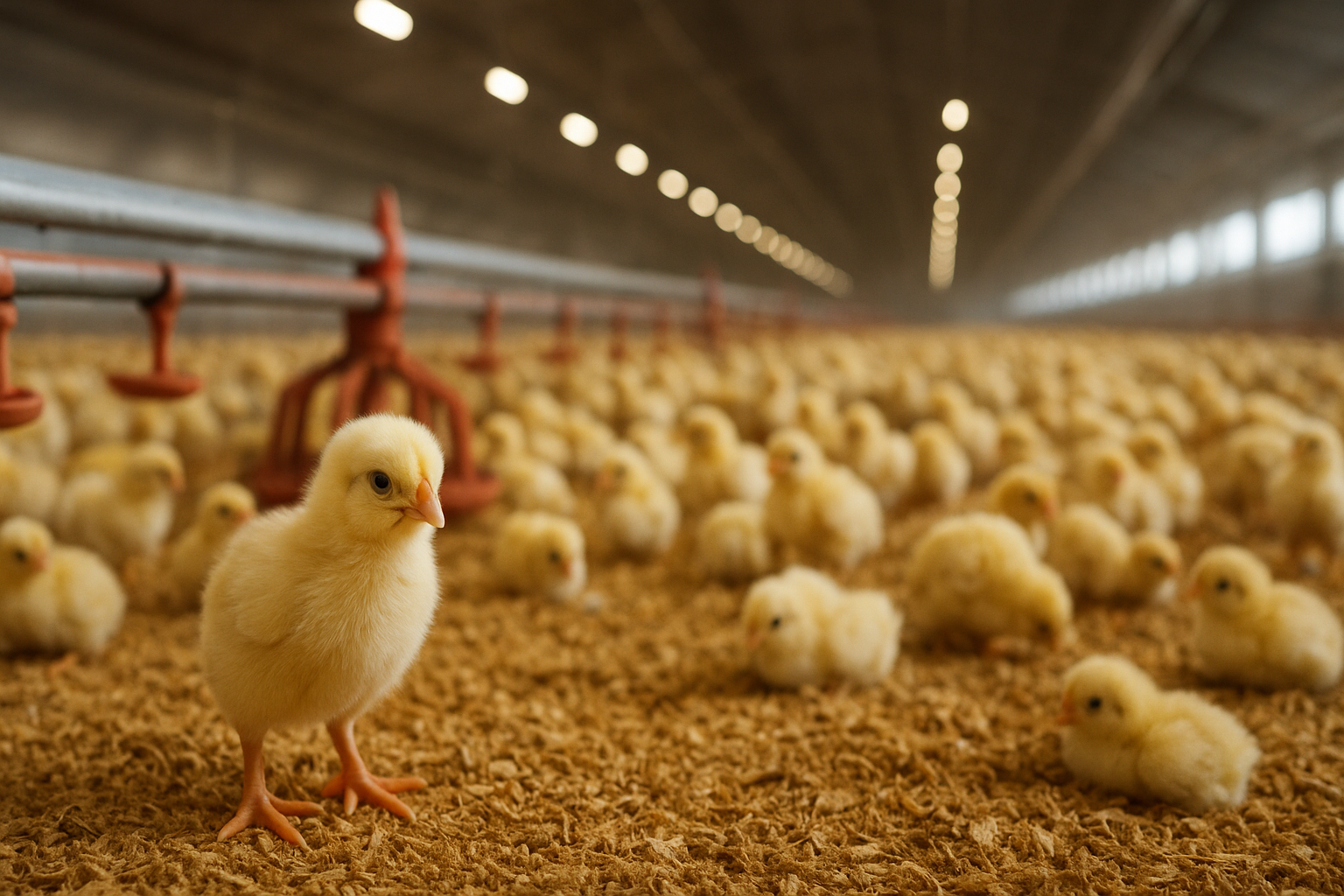
Concurrently, commercial broiler integrators placed 190 million chicks for meat production across the primary broiler-producing states during the week ending October 10, 2026, representing a 1 percent increase over the same week in 2025. This steady placement cadence reflects steady operational expansions in key southeastern and south-central broiler hubs, including Georgia, Alabama, Arkansas, North Carolina, and Mississippi. On a cumulative basis, total commercial chick placements from January 10, 2026, through October 10, 2026, reached 7.83 billion chicks, running 2 percent ahead of the comparable period last year. This consistent cumulative trajectory underscores the strong foundational economics of integrated broiler processors, who continue to capitalize on resilient domestic wholesale chicken demand, competitive retail protein positioning against elevated beef cutouts, and dependable feed conversion efficiencies delivered by modern high-yield genetic strains.
The combination of 245 million eggs set and 190 million weekly chick placements establishes an inescapable biological commitment that will directly drive commercial feed intake through late November and December 2026. Because standard commercial broiler growout cycles require approximately six to eight weeks from chick placement to target slaughter weights, the chicks placed during early October will enter their peak consumption phase precisely during the heart of the fourth quarter. Regional hatchery complexes report that setter capacity utilization remains exceptionally high, supported by an expanded parent breeder flock inventory and stabilized seasonal temperatures across laying barns that have significantly reduced embryonic mortality. This deliberate expansion in live bird populations establishes an immediate, highly predictable baseline of intensive feed manufacturing demand across the primary poultry producing corridors of North America.
Why It Matters:
For animal feed manufacturers, commercial nutritionists, and grain procurement desks, this sustained expansion in broiler chick numbers carries direct, consequential implications for finished feed volume, ingredient throughput, and regional ingredient basis. Commercial broiler production represents the single largest consumer segment of manufactured animal feed in the United States, utilizing more than 55 million tons of complete feed annually and functioning as the primary domestic market driver for coarse grains, processed oilseed meals, and synthetic amino acids. With weekly placements holding at 190 million birds and cumulative numbers tracking 2 percent above last year, commercial poultry feed mills must secure continuous, high-volume pipeline shipments of ground corn, high-protein soybean meal, distillers dried grains with solubles (DDGS), and critical micro-ingredients to prevent costly batch delays or ration stockouts across integrated live production operations.
In operational milling and feed cost accounting terms, this expanding poultry appetite arrives at a pivotal moment when domestic crushers and export elevators are fiercely competing for physical harvest supplies. Following midday USDA confirmations of massive 470,000-metric-ton private soybean export sales to China, interior processors are facing stiff competition for raw oilseeds, which is keeping Decatur soybean meal basis exceptionally firm despite peak harvest progress. Higher broiler numbers intensify this physical supply competition, forcing integrated feed mills across the Southeast to defend delivered grain bids against river terminals. Consequently, animal feed compounders and nutrition directors must rigorously audit least-cost formulation matrices, maximizing inclusion of synthetic amino acids—specifically crystalline L-lysine, DL-methionine, and L-threonine—alongside specialized phytase enzymes to protect flock feed conversion ratios and manage total dietary crude protein expense without sacrificing bird growth velocity.
What to Watch:
Over the next two to four weeks, feed procurement directors, ingredient merchandisers, and poultry production managers must closely track the subsequent weekly releases of the USDA NASS Broiler Hatchery reports to evaluate whether weekly egg sets sustain the 245-million-egg threshold or begin showing seasonal moderation ahead of holiday processing shifts. In parallel, nutritionists and hatchery specialists should monitor weekly hatchability trends. While the current 79.5 percent hatchability rate reflects typical seasonal conditions, any sudden deterioration below 79 percent would force integrators to incubate additional eggs to fulfill weekly meat placement targets, further elevating breeder flock ration consumption. Merchandisers must also closely watch railroad performance and freight tariffs along Class I networks, confirming that unit-train grain and meal shipments into poultry-dense delivery points in Georgia, Alabama, and the Carolinas maintain reliable transit times without generating secondary railcar premiums.
Simultaneously, feed mill quality assurance personnel, biosecurity managers, and live production teams must enforce heightened biosecurity protocols as wild waterfowl autumn migration activity expands across North American flyways. The ongoing threat of Highly Pathogenic Avian Influenza (HPAI) requires rigorous decontamination standards for feed delivery trucks, bulk pneumatic trailers, and ingredient delivery drivers entering commercial farm complexes. Concurrently, feed purchasing desks should evaluate their fourth-quarter forward coverage on high-protein soybean meal, synthetic methionine, and corn distillers grains. Establishing strategic forward contracts through the first quarter of 2027 will insulate poultry operations from potential winter weather transit bottlenecks, ensuring continuous ingredient availability while locking in predictable feeding costs across commercial production complexes.
The Bottom Line
The USDA NASS Broiler Hatchery report of October 14, 2026, confirming a 3 percent year-over-year jump in egg sets to 245 million and a 1 percent increase in chick placements to 190 million, reinforces an expansive production trajectory across the U.S. poultry sector heading into the fourth quarter. For animal feed manufacturers, commercial grain handlers, and integrated poultry producers, this sustained biological momentum guarantees heavy feed mill throughput, intensifies competition for regional corn and soybean meal supplies, and underpins robust demand for precision synthetic amino acids. Feed procurement managers and livestock nutritionists who proactively secure physical ingredient pipelines, maintain strict mill biosecurity, and leverage advanced least-cost formulation will successfully protect feed conversion efficiency and defend operating margins against shifting commodity market pressures.