
The Story:
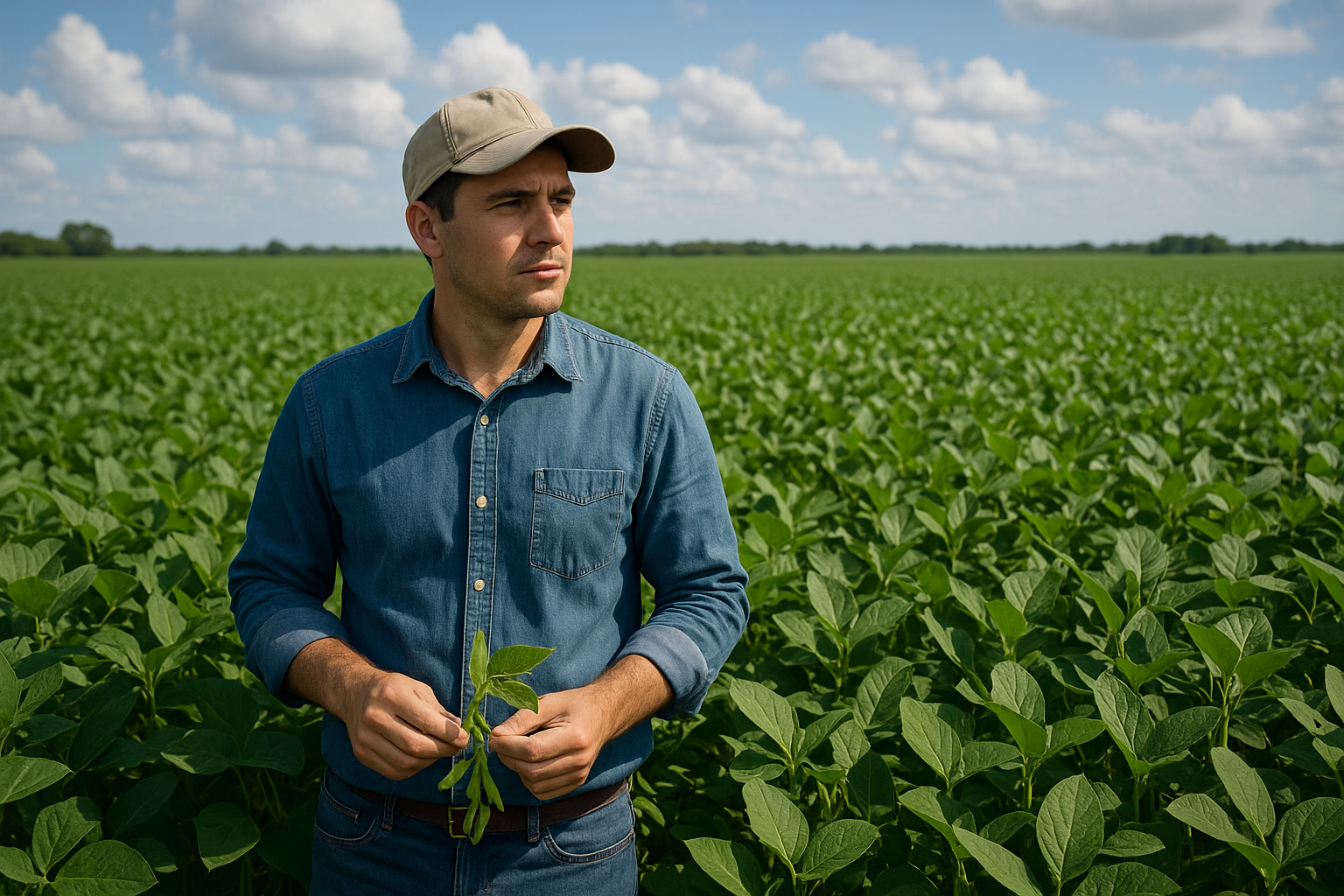
Brazil's National Supply Company (Conab) and premier agricultural analytics consultancy AgRural published nationwide planting data for the 2026/27 crop campaign, confirming an extraordinary acceleration in Brazilian soybean seeding that has definitively shattered early-season drought anxieties across South America. Widespread, soaking spring precipitation swept through the foundational Cerrado agricultural belt during mid-October, allowing commercial farm operators to deploy high-capacity 24-to-36-row precision no-till planters across expansive fields at a record-setting operational velocity. Across all of Brazil, total soybean planting reached 30.1 percent of projected national acreage, effectively doubling overall progress from 15.6 percent in a single weekly reporting period. This aggressive seeding cadence comfortably outpaces both the five-year historical average of 26.4 percent and the 21.4 percent registered at the identical calendar mark during the 2025/26 production cycle. Conab’s official 2026/27 initial survey projects Brazilian farmers will harvest an all-time record 181.6 million metric tons (MMT) of soybeans—a 0.7 percent expansion over the previous record harvest—cultivated across an unprecedented 49.3 million hectares (121.8 million acres). Private consultancy AgRural aligned closely with the federal data, establishing a private national production projection of 182.7 MMT predicated on robust trendline yield telemetry.
The primary operational locomotive driving this national seeding blitz is Mato Grosso, Brazil's undisputed agricultural epicenter and the world's single largest regional soybean production engine. After enduring irregular, spotty early-spring moisture that delayed initial seedbed preparation through September, commercial producers across Mato Grosso capitalized on heavy, uniform rainfall events to advance state soybean planting from 25.2 percent to 60.8 percent in just seven days. Commercial planting crews successfully seeded approximately 35.6 percent of the state's entire 12.5-million-hectare soybean area within a single weekly window, marking one of the swiftest and most concentrated field machinery deployments in modern agribusiness history. Secondary agricultural states across Brazil documented similarly sharp week-over-week advances, with Paraná pushing past 50 percent, Goiás advancing through 34 percent, and Mato Grosso do Sul accelerating beyond 32 percent. The rapid, timely replenishment of subsoil moisture reserves across the center-west has completely eliminated early risks of widespread seed replanting, firmly anchoring crop establishment within the optimal agronomic window and setting the stage for an early, high-volume harvest kickoff across northern production zones beginning in late December and early January.
For international commodity trading desks, multinational grain exporters, and agricultural processing complexes, this sudden operational sprint fundamentally recalibrates the global oilseed and protein feed supply balance sheet. In Chicago Board of Trade (CBOT) futures markets, active benchmark November soybean contracts have traded near $12.56 per bushel while benchmark December soybean meal futures have held stubbornly elevated near $348 per short ton, bolstered by institutional managed-money investment funds defending heavy net-long holdings of 200,878 contracts. Speculative funds had tenaciously protected this meal length on assumptions that delayed South American planting might restrict early-2027 export deliveries and prolong North American processing dominance. However, Brazil's rapid field execution directly collapses that weather risk premium, guaranteeing that an unprecedented volume of newly harvested South American soybeans will begin flooding export berths at Paranaguá, Santos, and northern Arc ports right on schedule. Furthermore, rapid soybean seeding preserves the ideal physiological window for Brazil's massive second-crop (safrinha) corn planting in January and February 2027, assuring global buyers that Brazilian grain originators will aggressively compete against North American corn exports throughout 2027.
Why It Matters:
For commercial animal feed manufacturers, vertically integrated broiler complexes, turkey operations, commercial egg producers, swine integrators, and High Plains cattle feedyards, Brazil's accelerating planting campaign provides vital forward market clarity and directly reshapes forward protein procurement strategy. Over the preceding two months, domestic animal feed compounders have battled a punishing, highly distorted least-cost ration environment: while bumper U.S. corn production and heavy speculative fund liquidation drove CBOT corn futures downward toward $4.56 to $4.60 per bushel, soybean meal prices remained stubbornly firm, pushing the benchmark soybean meal-to-corn price ratio beyond an onerous 2.3 to 1. This widening pricing wedge severely increased feeding costs for livestock categories requiring high dietary crude protein densities, such as young broiler chicks, nursery pigs, and lactating dairy cows. Brazil's rapid field progress and projected 181.6 MMT crop provide definitive assurance that global vegetable protein supplies will experience massive structural expansion by the first quarter of 2027. Commercial feed procurement directors should resist locking in extended, high-priced domestic soybean meal basis contracts for spring 2027 at current $348 to $355 per ton levels, instead adopting disciplined, short-term coverage while anticipating aggressive price softening as Brazilian export vessels begin discharging around the globe.
Simultaneously, commercial feed mill nutritionists and livestock production directors must leverage this South American supply reality by aggressively recalibrating least-cost formulation matrices over the coming 60 to 90 days. Because intact vegetable protein will remain temporarily expensive until South American harvest volumes hit international commercial channels in volume, nutrition desks must maximize synthetic amino acid substitution and economical co-product integration. By elevating dietary inclusion of feed-grade L-lysine hydrochloride (currently pricing between $1.85 and $1.95 per kilogram in major markets), crystalline DL-methionine, and granular L-threonine, commercial feed compounders can safely reduce dietary crude protein inclusion targets by 1.5 to 2.5 percentage points without sacrificing standardized ileal digestible (SID) amino acid balances, broiler feed conversion efficiency (FCR), or swine average daily gain (ADG). Coupling targeted synthetic amino acid fortifiers with cost-effective dry-mill distillers dried grains with solubles (DDGS)—trading between $183 and $208 per ton across the Midwest—and regional wheat middlings ($170 to $180 per ton in Kansas City) enables commercial mills to substantially compress ration costs while patiently waiting for South America's massive harvest to break domestic meal values.
What to Watch:
Over the next four to eight weeks, feed procurement directors, grain merchandisers, and commercial livestock risk managers must closely observe weekly Conab and AgRural crop progress updates to verify whether secondary planting waves maintain their aggressive cadence across Brazil's emerging MATOPIBA corridor (Maranhão, Tocantins, Piauí, and Bahia) and the southern grain state of Rio Grande do Sul. Market participants should track South American weather satellite telemetry and atmospheric ensembles for any signs of recurring high-pressure ridges or localized dry spells that could interrupt critical flowering and early pod-setting phases in Mato Grosso throughout late November and December. Concurrently, commodity buyers must scrutinize weekly Commitments of Traders (COT) reports from the Commodity Futures Trading Commission (CFTC), monitoring whether managed-money funds begin systematically liquidating their massive 200,000-contract net-long position in CBOT soybean meal in response to Brazilian planting progress, which would trigger an abrupt and sharp downward correction across active board meal futures.
In addition, feed industry executives and agribusiness merchandisers must monitor the evolution of regional export basis spreads, international ocean freight tariffs, and South American biofuel blending policies. Tracking FOB Paranaguá and FOB Santos soybean meal premiums relative to U.S. Gulf and Pacific Northwest delivery points will indicate exactly when international export buyers begin redirecting forward purchase commitments away from North American processors toward South American origins. Nutrition directors should also track Brazilian domestic energy mandates, determining whether Brazil's National Energy Policy Council (CNPE) moves forward with proposed increases in domestic biodiesel blending targets from B14 toward B15 in early 2027, which would incentivize heavier domestic crushing runs and liberate additional co-product meal supplies into export channels. Finally, commercial feed buyers should monitor early combine yield telemetry emerging from northern Mato Grosso in late December, as initial scale weights and commercial oil and protein concentrations will confirm whether this mammoth 181.6 MMT crop achieves the record biological productivity anticipated by world markets.
The Bottom Line
Conab’s confirmation that Brazilian soybean planting surged to 30.1 percent nationwide—powered by an astonishing weekly leap from 25.2 percent to 60.8 percent in Mato Grosso—delivers a decisive macroeconomic blow to speculative weather premiums, establishing vital operational direction for the animal feed and livestock industries. With Brazil positioned to produce an unprecedented 181.6 to 182.7 million metric tons of soybeans, global vegetable protein markets face immense supply expansion and substantial downward price pressure entering the first quarter of 2027. For commercial animal feed manufacturers, swine integrators, poultry complexes, and cattle feedlots, the optimal management strategy is unmistakable: maintain defensive, short-term coverage on domestic soybean meal, optimize least-cost feed rations using synthetic amino acids and co-products to control immediate protein expenses, and prepare to capture attractive forward procurement terms as South America’s record oilseed harvest inundates the global feed supply chain.