
The Story:
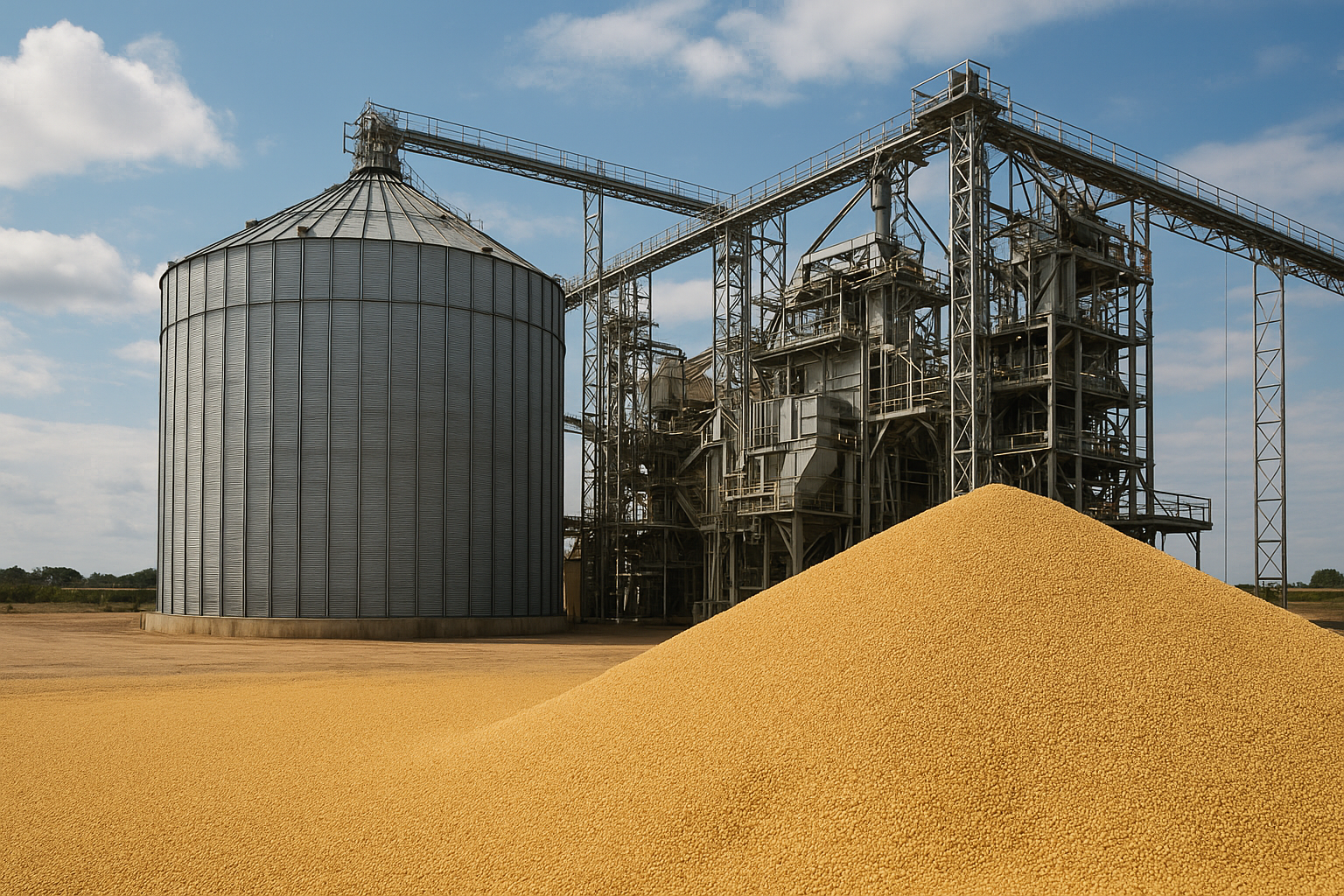
On Tuesday, October 6, 2026, the Brazilian Association of Vegetable Oil Industries (ABIOVE) released its comprehensive annual industrial report, revealing that Brazil's total annualized soybean crushing capacity surged by 13% over the past twelve months to reach an unprecedented 86.4 million metric tons. Citing accelerated capital deployment from international agribusiness conglomerates and regional processors—including Archer-Daniels-Midland (ADM), Bunge, and Cargill—the trade association reported that the number of active, operational soybean processing facilities across the country expanded from 131 to 148 plants. Concurrently, idle industrial assets plummeted by half from 12 down to just six facilities, while plants actively under construction declined from six to three as newly completed processing lines entered commercial commissioning. Driven by relentless domestic demand for soybean oil from Brazil's expanding biofuels sector alongside soaring domestic and international demand for high-protein soybean meal, ABIOVE officially projected that Brazil's total industrial soybean processing volume will climb to an all-time record of 63.5 million metric tons for the 2026 calendar year.
The unprecedented scale of Brazil's industrial expansion is underpinned by massive ongoing capital commitments that ensure sustained structural growth well into 2027. According to ABIOVE's statistical release, commercial oilseed processors have committed a cumulative 7.7 billion Brazilian reais (approximately $1.5 billion USD) toward brownfield expansions and greenfield processing assets. These capital projects, slated to break ground or enter commercial commissioning within the next 12 months, are scheduled to deliver an additional 7.4 million metric tons of annual processing capacity directly into Brazil's interior agricultural heartland. The overwhelming majority of this newly installed throughput is strategically located across premier grain-producing hubs in Mato Grosso, Goiás, Paraná, and the Matopiba region, positioning processing infrastructure directly adjacent to hyper-productive farm gates to minimize interior freight bottlenecks. By transforming whole oilseeds into high-value protein meals and vegetable oils at the interior origin rather than solely exporting raw unprocessed soybeans, Brazilian crushers are capturing wider domestic processing margins while systematically elevating the country's stature as the preeminent supplier of processed protein meal to world livestock markets.
This monumental expansion in South American processing capacity marks a defining structural transition in global oilseed and animal protein trade. Brazil has traditionally dominated raw whole-soybean export flows into East Asian import terminals, while the United States and Argentina historically anchored international merchant demand for value-added soybean meal and refined vegetable oil. However, Brazil's structural shift toward domestic value addition is rapidly reorienting global commercial flows. With domestic crush runs operating at record pace, Brazilian export terminals are channeling record monthly tonnages of soybean meal into high-volume livestock feeding corridors across the European Union, Southeast Asia, and the Middle East. The influx of competitively priced South American meal has begun to dislodge traditional market shares held by competitors, intensifying pricing competition along maritime trade routes and leaving global feed formulators with unprecedented access to abundant, high-protein South American oilseed coproducts heading into the final quarter of 2026.
Why It Matters:
For commercial feed manufacturers, integrated livestock producers, and grain purchasing directors across North America and global import destinations, Brazil's 13% capacity jump and record 63.5-million-ton crush volume fundamentally alter the global protein meal supply curve. Soybean meal serves as the foundational protein and amino acid cornerstone of commercial swine, poultry, aquaculture, and dairy rations, representing between 15% and 30% of total diet inclusion rates and heavily dictating overall feed manufacturing budgets. An additional 7.4 million tons of crushing capacity coming online in Brazil introduces substantial structural tonnage to world markets, effectively establishing an aggressive price ceiling on global high-protein meal values. For U.S. feed buyers operating in domestic interior markets, intensified export competition from Brazilian meal dampens international demand for U.S. meal exports, forcing domestic processors to discount cash meal basis or offer attractive forward basis contracts to keep crush plants clearing inventory. This dynamic offers commercial nutritionists and feed mill procurement managers valuable opportunities to lock in competitive ration ingredient costs and reduce diet unit costs across fourth-quarter 2026 and early 2027 feeding programs.
Simultaneously, the explosive expansion of Brazil's domestic crushing sector exerts profound competitive pressure on the broader commercial agribusiness landscape, specifically squeezing processor crush margins and accelerating livestock production growth in the Southern Hemisphere. For U.S. agribusiness processors who have recently invested billions in domestic crush capacity expansion to serve the renewable diesel boom, surging Brazilian meal exports compress the export margin component of the gross processing spread. Furthermore, because Brazilian crushers generate vast volumes of cost-competitive soybean meal directly within their interior livestock production basins, regional Brazilian swine, broiler, and commercial beef feeding operations enjoy exceptionally low local feed costs. Access to cheap, abundant protein rations strengthens the biological and financial competitiveness of Brazilian meat packers—such as JBS, BRF, and Marfrig—allowing them to undercut global wholesale prices for export broilers, pork cuts, and beef in premier competitive arenas like Japan, South Korea, Saudi Arabia, and the European Union, thereby amplifying margin pressure on North American livestock integrators.
What to Watch:
Heading deeper into the fourth quarter of 2026 and forward into the 2027 marketing year, commodity merchandisers, feed procurement directors, and risk managers must closely monitor the ongoing divergence between Brazilian and U.S. export meal prices (FOB Paranaguá vs. FOB U.S. Gulf and Pacific Northwest). Industry participants should track whether the aggressive expansion of Brazilian export volumes forces U.S. crushers to adjust their domestic grind schedules or widen interior meal basis discounts, especially as the U.S. harvest progresses and interior river logistics face seasonal challenges. Procurement managers should also scrutinize the pace of Brazilian commercial commissioning across the newly announced 7.7-billion-reais pipeline, watching whether potential environmental permitting hurdles, equipment lead times, or regional grid infrastructure constraints delay any of the planned 7.4 million metric tons of incremental capacity from entering operational service over the coming twelve months.
Concurrently, livestock producers, nutrition formulators, and feed grain analysts must evaluate the evolving macroeconomic policy environment shaping oilseed trade flows, particularly the European Union Deforestation Regulation (EUDR) and domestic biofuel blending mandates in the Americas. With the European Union recently proposing a 12-month compliance delay for EUDR enforcement into late 2026, Brazilian crushers possess an extended operational window to export certified and conventional soybean meal into high-margin European feed markets without immediate bureaucratic penalties. Feed industry professionals should track whether Brazil's National Energy Policy Council (CNPE) further increases domestic biodiesel blending mandates beyond the current B14 threshold toward B15, which would consume even larger shares of domestic soybean oil and inadvertently flood commercial feeding channels with an even heavier surplus of byproduct soybean meal. Feed buyers should maintain close communication with regional mill originators, taking advantage of protein market dips to extend coverage on both solvent-extracted soybean meal and synthetic amino acid complements.
The Bottom Line
ABIOVE's October 6, 2026 announcement of a 13% surge in Brazilian soybean crushing capacity to a record 86.4 million metric tons marks a transformative structural shift that cements South America's role as the dominant engine of global protein feed supply. With $1.5 billion in ongoing facility investments and an unprecedented 63.5-million-ton processing campaign underway, the massive expansion in active crushing plants directly expands global soybean meal availability, caps protein feed costs for livestock producers, and ratchets up intense competitive pressure on North American processing margins and export market shares. For commercial feed manufacturers, nutrition directors, and livestock integrators, successfully navigating this shifting commodity landscape requires capitalizing on competitive meal pricing to defend feeding margins, rigorously managing protein basis risk, and closely tracking the geopolitical, environmental, and biofuel policies shaping the future of global feed ingredients.