
The Story:
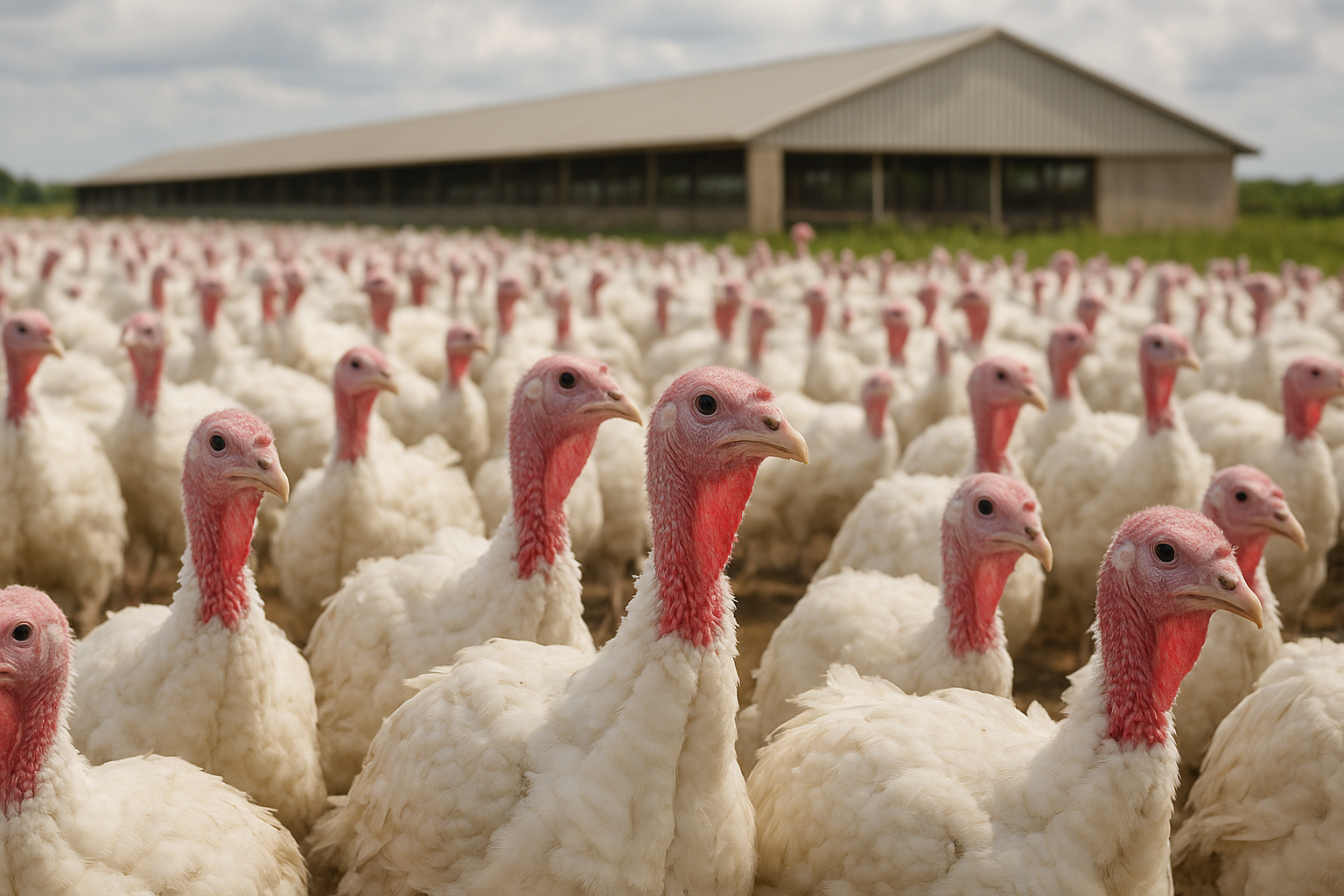
On Monday, October 19, 2026, Brazil's Ministry of Agriculture and Livestock (MAPA) officially notified the World Organisation for Animal Health (WOAH) after laboratory diagnostics confirmed the presence of Newcastle disease virus (NDV) in a commercial poultry flock located in Nova Itaberaba, in the western region of Santa Catarina state. The positive diagnosis was validated by the Federal Agricultural Defense Laboratory in São Paulo (LFDA-SP) following targeted biological sampling by the Official Veterinary Service of Santa Catarina. The affected commercial facility housed approximately 6,000 turkeys, which were immediately slated for mandatory sanitary depopulation, carcass destruction, and deep premises disinfection under Brazil's National Contingency Plan for Avian Influenza and Newcastle Disease. MAPA immediately established a rigorous epidemiological containment perimeter, placing 133 surrounding commercial and smallholder operations under heightened clinical surveillance while strictly suspending the transit of live birds, fertile eggs, and poultry genetic material within the containment radius. Brazilian authorities and the Brazilian Animal Protein Association (ABPA) stressed that the infected flock exhibited no overt clinical morbidity prior to routine surveillance sampling and affirmed that no contaminated birds or by-products entered the commercial food supply chain.
The commercial confirmation of Newcastle disease in Santa Catarina—Brazil's second-largest poultry producing state, which accounts for roughly 15 percent of total national slaughter—instantly activated aggressive international trade restrictions across major export corridors. Under the bilateral sanitary protocol executed between MAPA and the General Administration of Customs of China (GACC), any confirmed Newcastle disease case within a commercial avian production flock triggers an immediate, mandatory 'auto-embargo' on poultry meat shipments pending bilateral epidemiological review and risk determination. Because China represents Brazil's single largest foreign poultry market—absorbing over 55,000 metric tons of chicken and turkey cuts each month, representing roughly 10 percent of Brazil's 5.1-million-ton annual export volume—this procedural self-suspension creates an immediate operational crisis for South American exporters. Simultaneously, Mexico's National Health, Safety, and Quality Service (SENASICA) moved unilaterally overnight to impose temporary import suspensions on Brazilian poultry meat, table eggs, and hatching material, compounding commercial export bottlenecks for major agribusiness integrators operating within Santa Catarina, including BRF S.A., JBS S.A., and Seara Alimentos.
Financial and agricultural commodity markets responded swiftly to the sanitary notification on Tuesday morning, October 20, 2026, as equity valuations in Brazilian meatpackers declined while commercial grain merchandisers evaluated the physical market fallout of stranded meat and feed. Although Brazilian Acting Secretary for Agricultural Trade Rafael Requião and ABPA leadership have urgently petitioned Beijing to restrict import embargoes to a localized 10-kilometer radius around Nova Itaberaba or limit restrictions strictly to Santa Catarina state—mirroring the containment precedent established during the July 2024 Rio Grande do Sul outbreak—integrators face immediate warehouse congestion. For global animal feed manufacturers and commodity traders, this sudden export blockade fundamentally reconfigures protein balance sheets: with processing facilities unable to load customary export containers for Chinese and Mexican destinations, hundreds of thousands of metric tons of poultry meat will back up into Brazil's domestic retail market, depressing wholesale poultry prices, eroding integrator operating margins, and setting off a commercial chain reaction that shifts international import inquiries directly toward North American broiler production complexes.
Why It Matters:
For North American animal feed manufacturers, commercial broiler integrators, and grain origination desks, this sudden disruption across Brazilian export channels provides an immediate, potent market catalyst. As international commercial buyers across Asia and Latin America move to replace withheld Brazilian poultry contracts, global buying interest will pivot directly toward the United States—the world's second-largest poultry exporter. This international substitution comes at an opportune moment for domestic integrators, who are currently benefiting from depressed feed manufacturing costs following the U.S. harvest acceleration, which has driven cash corn to $4.35 per bushel and pulled wholesale soybean meal back toward $354 per ton. If U.S. broiler complexes ramp up slaughter throughput, extend average bird live-weights, and increase weekly hatchery placements to service surging export demand, domestic feed grain grind will expand substantially across key southeastern production states, establishing a firm domestic consumption floor beneath cash corn and soybean meal markets and absorbing harvest surpluses.
At the feed formulation desk, this trade dislocation will force a stark divergence in operational strategies between North American and South American feed compounders. In Brazil, meat integrators facing prolonged domestic meat gluts and compressed cash flows may be compelled to curtail chick placements, extend slaughter ages, and dilute dietary energy density, directly curbing domestic consumption of Brazilian corn and soybean meal and leaving larger volumes of raw feed grains available for aggressive ocean export competition out of Paranaguá and Santos. Conversely, U.S. poultry nutritionists seeking to maximize meat yields and bird growth velocity will maintain dense, high-performance least-cost diets. Formulators will lean heavily into supplemental crystalline amino acids—most notably DL-methionine, L-threonine, and L-lysine—to optimize standardized ileal digestible (SID) amino acid ratios while capitalizing on inexpensive dietary starch from abundant Midwest corn supplies. Feed procurement directors must recognize that international trade embargos of this scale recalibrate global feedstuff demand for months, requiring synchronized risk management across both finished meat sales and fourth-quarter feed ingredient coverage.
What to Watch:
Over the next 10 to 14 days, feed industry executives, poultry risk managers, and grain merchandisers must track Beijing's official regulatory ruling regarding the geographical scope of its Brazilian import restrictions. If the General Administration of Customs of China (GACC) officially accepts Brazil's active surveillance dossiers and limits trade sanctions exclusively to Santa Catarina state—or even further narrows restrictions to the immediate Nova Itaberaba containment zone—the export dislocation will remain confined to approximately 15 percent of Brazil's national poultry output, allowing other major export states such as Paraná and Rio Grande do Sul to absorb deflected volume. However, should Chinese authorities insist on a nationwide ban or expand trade restrictions across South America, more than 50,000 metric tons of monthly chicken meat will remain stranded, forcing Brazilian integrators to slash flock inventories, curtail feed mill shifts, and dump excess raw feed grains onto the international market. Merchandisers must also watch whether secondary importing markets throughout the Middle East, including Saudi Arabia and the UAE, adopt unilateral import bans.
Simultaneously, U.S. feed ingredient buyers and commercial mill operators must observe the downstream impact on North American cash markets and export sales velocity. Feed procurement managers should closely analyze weekly USDA Foreign Agricultural Service (FAS) export sales reports for broiler meat, whole grain corn, and soybean meal, looking for early empirical evidence of deflected international buying. In addition, feed mills should monitor domestic wholesale pricing for critical feed-grade micro-ingredients, particularly DL-methionine and L-lysine, as escalating U.S. poultry feed manufacturing could rapidly tighten regional distributor spot stocks. Finally, risk managers must assess whether Brazilian grain merchandisers respond to sluggish domestic feed disappearance by cutting export FOB vessel offers for raw soybeans and corn, which could create fierce head-to-head export competition against U.S. Gulf and Pacific Northwest terminals and limit CBOT futures upside into early 2027.
The Bottom Line
The confirmed detection of Newcastle disease virus at a commercial Santa Catarina turkey facility has triggered an immediate auto-embargo on Brazilian poultry shipments to China alongside unilateral Mexican import restrictions, threatening 15 percent of the world's preeminent poultry exporting nation's production and setting off immediate structural shifts across international feed and meat markets. For North American feed compounders, commercial broiler integrators, and grain merchandisers, this global supply shock creates an exceptional strategic opening as displaced international buyers turn to U.S. processors, accelerating domestic bird slaughter and stimulating rapid feed disappearance just as inexpensive $4.35/bushel Midwest corn and softening soybean meal hit elevator pits. To capitalize on this evolving market pivot, commercial livestock operations should execute a synchronized two-pronged strategy: poultry nutritionists should fine-tune high-efficiency, amino-acid-dense least-cost rations to maximize broiler weight gain against cheap grain baselines, while procurement teams should leverage current harvest basis weakness to lock in forward domestic corn and soybean meal coverage before rising poultry feed demand tightens regional ingredient supplies.