
The Story:
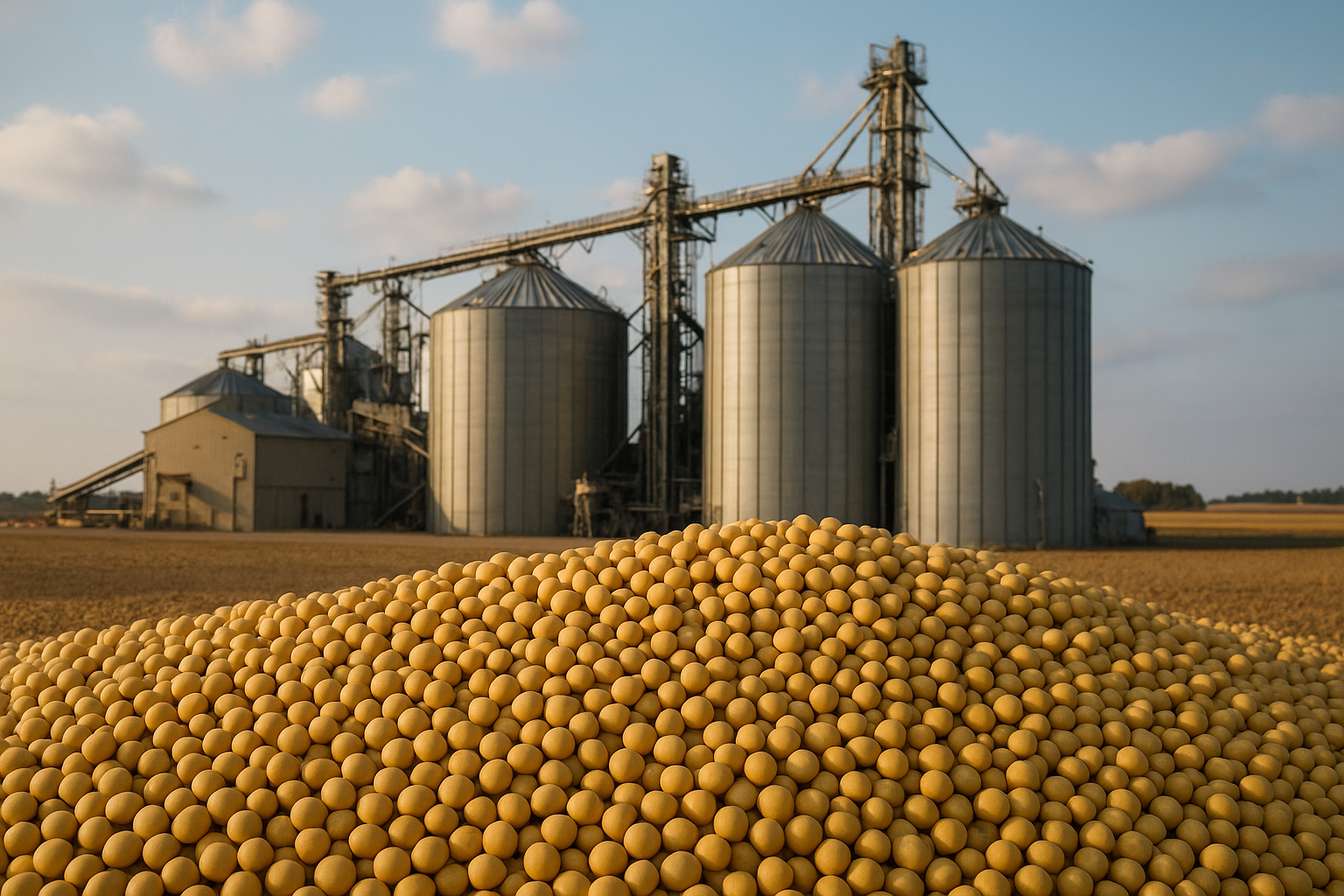
On Tuesday afternoon, November 3, 2026, global agribusiness and nutrition powerhouse Archer-Daniels-Midland Company (NYSE: ADM) delivered blowout financial results for the third quarter ended September 30, 2026, headlined by an extraordinary surge in its core oilseed crushing division. Operating profit in ADM's crushing business skyrocketed to $311 million for the quarter, marking a spectacular twenty-four-fold expansion compared to the $13 million recorded during the same period last year. Powered by this exceptional crushing performance, ADM's flagship Ag Services and Oilseeds (AS&O) segment saw overall operating profit more than double year-over-year to $778 million, propelling corporate-wide adjusted earnings per share (EPS) to $1.77—decisively outperforming Wall Street consensus forecasts of $1.60 per share and advancing from $0.92 per share in the third quarter of 2025. GAAP net earnings climbed to $821 million on consolidated revenues of $22.34 billion, up 9.6 percent year-over-year. The standout operational performance prompted ADM senior leadership to elevate its full-year 2026 adjusted EPS guidance to a range of $5.50 to $5.80, up from its prior guidance range of $5.15 to $5.60, establishing an exceptionally bullish commercial outlook for North American grain handling and oilseed processing through the close of the calendar year.
The primary operational driver behind ADM’s record crush profitability is the lucrative synergy between federal renewable fuel policy and continuous, high-utilization processing throughput across its North American crushing network. Processing margins expanded aggressively throughout late summer and early autumn as domestic renewable diesel and sustainable aviation fuel (SAF) facilities accelerated procurement of crude and refined soybean oil, supported by the finalization of elevated Renewable Volume Obligations (RVO) under the federal Renewable Fuel Standard. With vegetable oil commanding substantial pricing premiums and delivering high-margin returns, ADM operated its massive processing plants at near-nameplate capacity across primary Midwest corridors. Crucially for the animal feed sector, while aggressive oil-driven crushing in previous market cycles created localized meal gluts that compressed processor margins, ADM reported sustained, robust domestic demand for co-produced soybean meal alongside competitive export clearances into Latin America and Europe, effectively clearing inventory channels without burdensome mill storage backlogs.
This surge in processing profitability directly converges with the peak of the 2026 U.S. harvest, fundamentally altering supply dynamics across the commercial animal feed landscape. Fresh telemetry from the USDA’s National Agricultural Statistics Service confirms that national soybean harvest reached 88 percent complete this week, funneling an avalanche of newly combined oilseeds directly into river elevators and processor receiving pits. Armed with abundant low-cost new-crop raw material and lucrative vegetable oil margins, commercial crushers have had zero financial incentive to throttle processing speeds. Instead, processors have run crush lines flat-out, flooding domestic marketing channels with prompt high-protein soybean meal. This continuous output explains why CBOT benchmark December soybean meal futures slid to contract lows of $317.35 per short ton this week. Rather than holding meal in off-site storage, processors like ADM have actively discounted cash basis to maintain fluent bulk railcar and truck loadout schedules, directly transferring processing margin advantages into accessible protein values for commercial feed compounders.
Why It Matters:
For commercial animal feed manufacturers, poultry integrators, swine production systems, and dairy nutritionists across North America, ADM’s $311 million crushing profit validates a profound macroeconomic reality: the livestock sector's protein feed supply is effectively being subsidized by the biofuel complex. Because crushing plants generate their primary margin cushion from high-value soybean oil destined for renewable energy refineries, processors will maintain maximum crush volumes regardless of whether spot soybean meal prices fluctuate. For livestock feed procurement desks, this structural alignment provides ironclad assurance that physical high-protein soybean meal (47.5 to 48.0 percent crude protein) will remain abundant and highly accessible throughout the winter of 2026/2027. Operations that struggled with volatile protein price spikes during prior supply contractions can now rely on a structural supply cushion, enabling feed compounders to lock in foundational winter feed requirements with minimal risk of processor rationing or prompt supply disruptions.
At the feed formulation desk, the persistent flood of newly processed meal—combined with CBOT meal futures testing multi-month lows near $317 per ton—radically improves least-cost dietary economics across swine grow-finish, broiler, layer, and turkey rations. With soybean meal pricing softening and spot Distillers Dried Grains with Solubles (DDGS) holding firm between $180 and $195 per ton due to tighter post-maintenance biorefinery supplies, the DDGS-to-soymeal price ratio has narrowed to historically tight levels. Under linear programming matrices, these price spreads strongly favor maximizing soybean meal inclusion while scaling back fibrous co-products. Maximizing soybean meal enhances dietary net energy consistency, eliminates the mycotoxin exposure risks inherent to distillers grains, and delivers superior amino acid digestibility. To fully exploit this pricing reset without escalating dietary crude protein or nitrogen excretion, feed mills must dynamically calibrate crystalline amino acid supplementation. Combining discounted soybean meal with precision additions of L-lysine, DL-methionine, L-threonine, and L-tryptophan allows nutritionists to achieve optimal standardized ileal digestible (SID) amino acid balance while capturing direct per-ton feed manufacturing savings ranging from $5.00 to $9.00 across complete feeds.
What to Watch:
Over the coming two to three weeks through late November, agribusiness merchandisers, feed procurement directors, and livestock risk managers must closely monitor processor crush throughput rates, interior meal basis developments, and competitor financial reports. Industry analysts should evaluate whether competing processing powerhouses, including Bunge Global and Cargill, echo ADM's exceptional North American crush profitability in their upcoming earnings disclosures, which would cement expectations of uninterrupted crushing runs through the winter months. Procurement desks should carefully track delivered-mill basis across key protein consumption corridors, including the Delmarva poultry region, the North Carolina hog belt, and High Plains commercial feedlots. If crushers experience secondary rail car turnaround lags or warehouse capacity tightness as autumn harvest finishes, spot truck and rail basis could experience further localized weakness, offering feed mills a brief tactical window to secure physical winter delivery slots at steep discounts.
Concurrently, agricultural risk managers must track key macro regulatory catalysts and federal supply estimates, headlined by the USDA's upcoming World Agricultural Supply and Demand Estimates (WASDE) report scheduled for release on November 10, 2026. Trade participants will closely watch whether federal balance sheet analysts increase official 2026/2027 domestic soybean crush projections to reflect heavy processor operating rates and expanding renewable diesel feedstock absorption. In parallel, feed industry leaders must monitor post-election administrative actions surrounding federal Clean Fuel Production Credits (Section 45Z) and California Low Carbon Fuel Standard (LCFS) regulatory amendments. Because these policies dictate biorefinery demand for domestic vegetable oil feedstocks, any policy modification that shifts renewable fuel economics will instantly ripple back through oilseed crush margins, reshaping processor incentives and altering feed ingredient cost curves heading into early 2027.
The Bottom Line
ADM’s blowout third-quarter crushing operating profit of $311 million—a twenty-four-fold surge that propelled segment earnings to $778 million and beat Wall Street projections—provides definitive commercial evidence that biofuel-backed processing margins are sustaining record crush runs and generating an abundant supply of domestic feed protein. With processors heavily rewarded by renewable fuel vegetable oil demand and supported by an 88 percent complete harvest, commercial feed manufacturers, integrated poultry complexes, and swine producers enjoy an ideal procurement environment characterized by multi-month lows in soybean meal. Feed procurement executives and consulting nutritionists should capitalize on this structural alignment by locking in forward winter meal supplies at favorable basis levels, reformulating complete feeds with high-inclusion soybean meal and precision crystalline amino acids, and leveraging processor throughput to protect feeding margins into 2027.