
The Story:
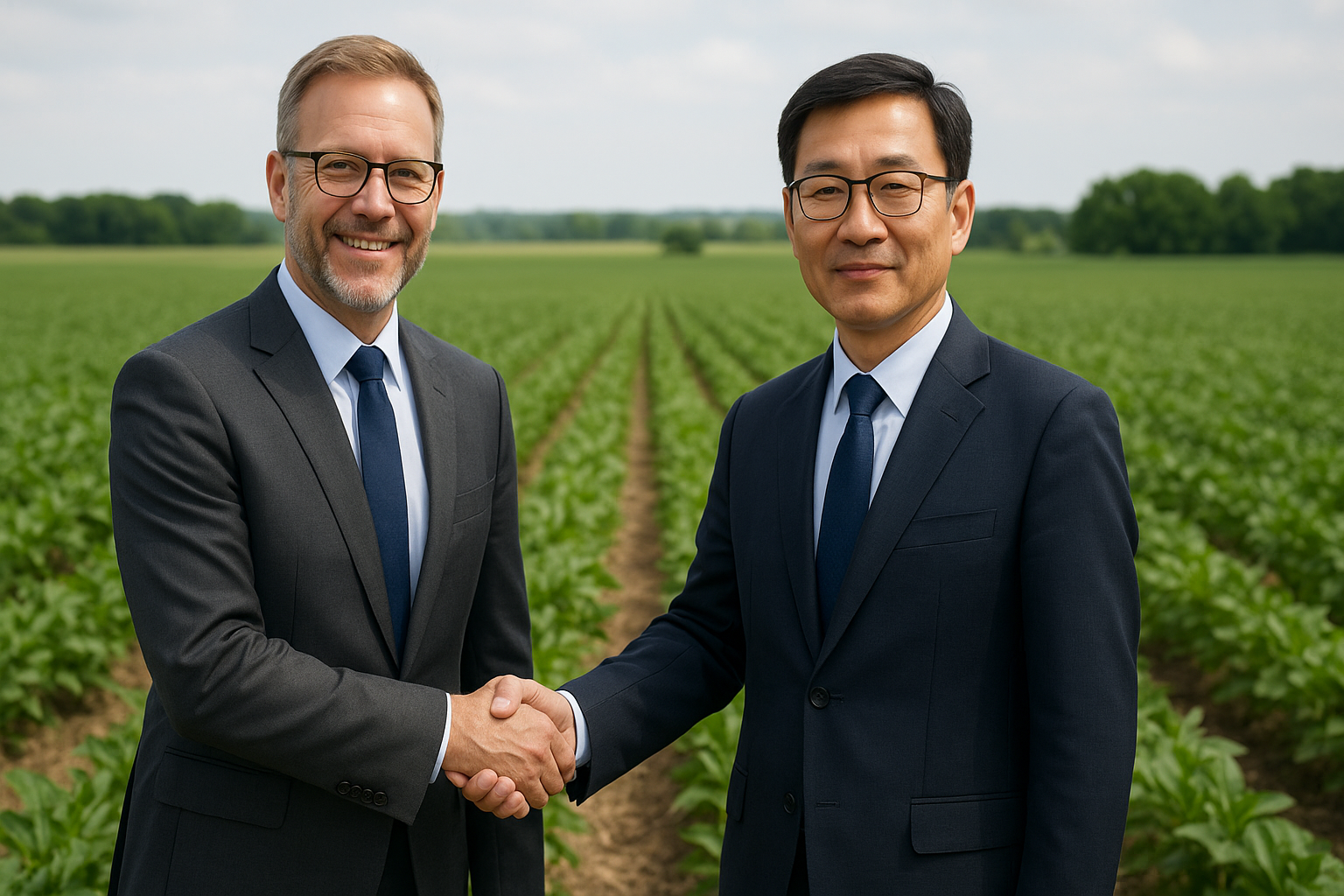
On Friday morning, October 2, 2026, global agribusiness powerhouse Archer Daniels Midland Company (ADM) and South Korea-based biotechnology leader CJ CheilJedang announced a definitive agreement to form a new joint venture to manufacture and commercialize feed-grade amino acids across North and South America. Under the negotiated transaction structure, the joint venture will be majority-controlled by CJ CheilJedang, with its operating subsidiary CJ Bio America holding a 63 percent equity stake, while ADM will retain the remaining 37 percent ownership. To capitalize the new enterprise, CJ CheilJedang will contribute its primary Western Hemisphere amino acid fermentation assets—headlined by its cutting-edge manufacturing facility in Fort Dodge, Iowa, and its major processing complex in Piracicaba, Brazil—together with its regional commercial sales and marketing offices spanning the United States, Mexico, and Brazil. In turn, ADM will contribute all feed-grade amino acid production assets, equipment, and operating infrastructure housed within its flagship processing hub in Decatur, Illinois. The resulting joint venture secures exclusive regional rights to manufacture and market CJ's portfolio of feed-grade amino acids throughout the Americas, combining CJ’s proprietary fermentation strains and strain-engineering intellectual property with ADM’s domestic wet-milling footprint and grain processing capacity.
The strategic alliance represents an operational integration designed to lower unit production costs and insulate domestic livestock supply chains against global market volatility. Modern industrial fermentation of amino acids—particularly L-lysine, L-threonine, and L-tryptophan—demands an immense, continuous supply of high-purity carbohydrate feedstocks, primarily liquid corn dextrose derived directly from wet-milling corn refining. By anchoring the venture’s U.S. manufacturing base within ADM’s massive Decatur wet-milling complex and CJ’s Fort Dodge footprint in the heart of the Corn Belt, the partnership marries CJ’s high-yield microbial strains and metabolic engineering with ADM’s secure, low-cost domestic corn starch grind. This co-location eliminates significant long-haul trucking and transloading costs for raw dextrose syrup while leveraging ADM’s established Midwest utility infrastructure, steam generation, and extensive rail car distribution network. The integration across the Decatur and Fort Dodge facilities creates an integrated domestic manufacturing corridor capable of supplying crystalline lysine monohydrochloride, granular lysine sulfate, and liquid amino acid preparations directly to commercial feed mills, premix blenders, and integrated animal feeding operations across the United States.
The formal creation of the ADM-CJ joint venture arrives immediately following decisive federal trade interventions that fundamentally restructured the North American amino acid marketplace. Just two weeks prior, on September 16, 2026, the U.S. Department of Commerce and the U.S. International Trade Commission (USITC) finalized steep antidumping and countervailing duty orders on Chinese feed-grade L-lysine imports, assessing cumulative tariff rates ranging from 121 percent to over 221 percent. That landmark trade petition was originally spearheaded by the domestic Lysine Fair Trade Coalition, an industry alliance in which both ADM and CJ Bio America served as principal petitioners. Having successfully established prohibitive tariff barriers that effectively halted the flow of low-cost, state-subsidized Chinese amino acid imports into American ports, the two domestic manufacturers are now pooling their operational capacities to capture resulting market share. While the transaction remains subject to customary regulatory reviews and closing conditions, the partnership establishes a dominant domestic supply fortress, replacing previous retail competition between ADM and CJ with a unified, coordinated production and pricing entity across the Western Hemisphere.
Why It Matters:
For commercial feed manufacturers, integrated swine producers, and poultry integrators, this consolidation directly impacts the procurement economics of livestock nutrition's most critical supplemental protein tool. In modern precision animal feeding, synthetic L-lysine serves as the foundational first-limiting amino acid in swine rations and the second-limiting amino acid in broiler and turkey diets. Nutritionists routinely leverage supplemental lysine alongside methionine and threonine to displace 50 to 100 pounds of expensive, intact soybean meal per ton of finished feed, lowering overall crude protein levels by two to three percentage points while dramatically curbing formulation expense and nitrogen excretion. However, following the exclusion of Chinese imports under triple-digit tariffs, spot replacement costs for crystalline lysine have escalated, narrowing historical synthetic-to-intact protein spreads. By combining 63 percent CJ and 37 percent ADM capacity into a single entity, the joint venture creates an unprecedented concentration of domestic market power. While feed formulators gain supply security and guaranteed product availability backed by Midwest corn grind, purchasing desks will confront a consolidated vendor landscape with enhanced pricing discipline, restricting the buyer leverage that mills previously enjoyed when playing independent domestic suppliers against one another.
Beyond daily formulation margins, the joint venture establishes a vital strategic shield against geopolitical disruptions and offshore freight shocks, even as it locks in higher structural baseline costs for micro-ingredients. The vulnerability of North American livestock feeding to overseas supply chain fractures was laid bare during recent ocean container bottlenecks and labor disputes across East and Gulf Coast ports. By solidifying a dedicated Americas supply chain—anchored by Fort Dodge, Decatur, and Piracicaba—the venture guarantees that Midwest swine operations, Carolina poultry complexes, and California dairies maintain uninterrupted access to domestically produced amino acids regardless of Pacific shipping rates or geopolitical flare-ups. However, this domestic independence comes at the price of reduced supplier diversity. Regional feed cooperatives and independent blenders that historically relied on competitive spot bidding to contain feed costs must now navigate a marketplace where domestic amino acid production is concentrated in fewer hands than at any point in modern ag-biotech history. As fourth-quarter feed manufacturing schedules ramp up, nutritionists and procurement directors will be forced to renegotiate forward contracts from a position of reduced bargaining power, cementing supplemental amino acids as a higher fixed share of overall diet costs.
What to Watch:
Over the next 90 to 180 days heading into early 2027, feed industry executives and legal analysts must closely track federal antitrust scrutiny of the transaction. Because ADM and CJ Bio America represent the two dominant domestic producers of feed-grade lysine in North America, federal regulatory authorities—including the Federal Trade Commission (FTC) and the Department of Justice (DOJ) Antitrust Division, alongside South American competition authorities in Brazil (CADE)—will scrutinize the competitive implications of combining their manufacturing and commercial operations. Agricultural trade groups representing livestock producers and commercial feed manufacturers may raise competitive concerns regarding post-merger market concentration, particularly coming so soon after the petitioners secured federal tariff protection against foreign imports. Merchandisers should monitor the regulatory approval timeline, whether regulators demand operational remedies or behavioral commitments, and how commercial sales agreements are managed during the interim transition period prior to formal closing.
In parallel, feed mill operations managers and livestock nutrition desks must proactively adapt dietary formulations to optimize cost efficiency in a consolidated supply environment. Buyers should closely evaluate product availability across different physical forms, tracking whether the new venture expands output of concentrated L-lysine HCl, lower-cost granular L-lysine sulfate, or automated liquid lysine systems. Switching to liquid lysine or high-efficiency bulk tote handling can reduce processing costs and bag disposal overhead at high-volume feed mills, but requires capital investment in bulk liquid storage tanks and precision dosing meters. Concurrently, nutritionists should rerun linear programming models against current cash soybean meal values—with December meal trading near $353 per ton—to determine the optimal economic inclusion break-even between intact plant protein and synthetic amino acids. Procurement desks should also investigate unencumbered non-Chinese import channels from Southeast Asia and Europe while locking in fourth-quarter forward volume commitments with the new joint venture before post-tariff market realignments fully take effect.
The Bottom Line
The landmark joint venture between CJ CheilJedang and ADM to manufacture and commercialize feed-grade amino acids across the Americas marks a transformative realignment of livestock nutrition supply chains. By uniting CJ's advanced fermentation technology and Fort Dodge facility with ADM's Decatur wet-milling infrastructure under a 63/37 partnership, the venture establishes a robust domestic production fortress directly following the imposition of punitive U.S. tariffs on Chinese lysine imports. While the partnership guarantees vital supply chain security, insulation from ocean freight shocks, and consistent access to essential amino acids for American swine and poultry producers, it simultaneously concentrates domestic market power into a single entity. Commercial feed manufacturers, integrated livestock producers, and purchasing directors must immediately audit micro-ingredient contracts, optimize amino acid formulation thresholds, and prepare for a structurally altered, highly disciplined pricing landscape across the 2027 feeding year.